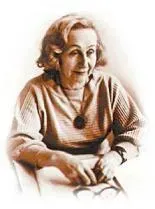
Galina Pugachenkova
Archaeologist and art historian, academician of the Academy of Sciences of Uzbekistan, who studied the ancient and medieval art and architecture of Central Asia and led the excavations at Khalchayan.
- Occupation:
- Scientist, Historian
- Born:
- February 7 1915(92 years old) ♒ — February 18, 2007
- Spouse:
- Mixail Masson
- Children:
- Rostislav Sosnovskiy
Biography
Galina Anatolyevna Pugachenkova was born on 7 February 1915 in Verny (now Almaty). In 1932 she came to Tashkent and entered the architecture department of the Central Asian Industrial Institute, graduating with distinction in 1937. She stayed on as a postgraduate in 1938–1941 and in 1941 defended a candidate’s thesis on the architecture of Navoi’s age.
Already as a student she took part in expeditions led by the archaeologist Mikhail Masson, who later became her husband. In 1942–1960 she taught archaeology at the history faculty of the Central Asian State University (SAGU) as a docent. In 1959 she defended a doctoral thesis on the architecture of southern Turkmenistan, and in 1962 she was made a professor.
From 1946 to 1961 she headed the seventh, architectural, detachment of the South Turkmenistan Archaeological Complex Expedition (YuTAKE). In 1958 she moved to the Hamza Institute of Art Studies, where she founded the department of the history of art and architecture and ran it in 1960–1984; in 1959 she also set up the Uzbek Art-Historical Expedition at the institute and led it until 1984.
The expeditions under her direction excavated Khalchayan, Dalverzin Tepe, Jiga Tepe and the Orlat burial ground, and she took part in digs in Afghanistan, among them the Kushan camp at Zadian, and in surveys of Islamic monuments around Herat. She published more than 700 works in six languages. Her best-known books include the “History of the Arts of Uzbekistan” written with L. I. Rempel (1965), “Khalchayan” (1966), “The Art of Bactria in the Kushan Period” (1979), “The Art of Gandhara” (1982) and “The Architectural Heritage of Temur” (1996).
She was elected a corresponding member of the Academy of Sciences of Uzbekistan in 1968 and a full member (academician) in 1984; in 1986–1989 she served as academician-secretary of the Social Sciences Division of the Uzbek SSR Academy of Sciences, and from 1983 she sat on the editorial board of the journal “Sovet O‘zbekistoni”. In 1964 she received the title Honoured Scientist of the Uzbek SSR, in 1966 the Hamza State Prize of the Uzbek SSR and in 1992 the Beruni State Prize; later she was awarded the Order “Do‘stlik” (1995) and the Order “For Outstanding Merit” (2002).
Galina Pugachenkova died in Tashkent on 18 February 2007 and was buried at the Dombrabad cemetery next to her husband Mikhail Masson. Her personal scholarly archive, 342 folders of documents, has been digitised and published on a dedicated website.
Education
- Central Asian Industrial InstituteUniversity · Tashkent · 1932–1941 · Architect (1937); Candidate of Architecture (1941)
Career
- Academy of Sciences of UzbekistanCorresponding member (1968), academician (1984) · Tashkent · 1968–2007
- Institute of Art Studies (Tashkent)Head of the Department of the History of Art and Architecture · Tashkent · 1958–1984
- Central Asian State UniversityDocent of the Department of Archaeology · Tashkent · 1942–1960
- South Turkmenistan Archaeological Complex Expedition (YuTAKE)Head of the seventh (architectural) detachment · 1946–1961
Awards
 Order «For Outstanding Merit»2002 · Uzbekistan
 Order «Do'stlik» (Friendship)1995 · Uzbekistan
 Medal «Shuhrat» (Glory)Uzbekistan
- Honoured Science Worker of the Uzbek SSR1964 · Uzbek SSR
 Hamza State Prize of the Uzbek SSR1966 · Uzbek SSR
 Order of the Red Banner of Labour1975 · USSR
 Medal «Veteran of Labour»1984 · USSR
Life path
- 1932–1941Central Asian Industrial Institute
Studied in the architecture department (diploma with distinction in 1937), then as a postgraduate, and defended a candidate’s thesis.
- 1942–1960Department of Archaeology at SAGU
Worked as a docent at the history faculty of the Central Asian State University.
- 1946–1961YuTAKE architectural detachment
Headed the seventh detachment of the South Turkmenistan Archaeological Complex Expedition.
- 1958–1984Institute of Art Studies
Senior researcher at the Hamza Institute and, from 1960, head of its department of the history of art and architecture.
- 1959–1984Uzbek Art-Historical Expedition
Founded the expedition and led it for twenty-five years.
- 1959–1962Doctorate and professorship
Defended her doctoral thesis in 1959 and was made a professor in 1962.
- 1964Honoured Scientist
Received the title Honoured Scientist of the Uzbek SSR.
- 1966Hamza State Prize
Awarded together with L. I. Rempel for the “History of the Arts of Uzbekistan”.
- 1968Corresponding member of the Academy
Elected a corresponding member of the Academy of Sciences of Uzbekistan.
- 1984Academician
Elected a full member of the Academy of Sciences of Uzbekistan.
- 1992Beruni State Prize
Became a laureate of the Beruni State Prize in science and technology.
- 2007Death
Died in Tashkent on 18 February and was buried at the Dombrabad cemetery.
Books
- “Outstanding Monuments of Architecture of Uzbekistan”1958 · Monograph
One of her first major books, written with L. I. Rempel.
- “History of the Arts of Uzbekistan from Ancient Times to the Mid-19th Century”1965 · Monograph
Written with L. I. Rempel; it earned the Hamza State Prize in 1966.
- “Khalchayan: On the Artistic Culture of Northern Bactria”1966 · Monograph
A book based on the excavations at Khalchayan.
- “The Sculpture of Khalchayan”1971 · Monograph
On the sculpture found at the Khalchayan site.
- “Architecture of Central Asia, 15th Century”1976 · Monograph
The leading trends and features of Timurid architecture.
- “The Art of Bactria in the Kushan Period”1979 · Monograph
On the artistic culture of Bactria under the Kushans.
- “The Art of Gandhara”1982 · Monograph
On the links between Gandharan art and the Bactrian and Parthian traditions.
- “The Architectural Heritage of Temur”1996 · Monograph
A book on the architectural monuments of Amir Temur’s age.