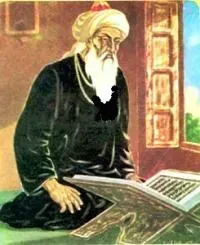
Farid ud-Din Attar
Persian poet and Sufi thinker, an apothecary of Nishapur and author of “The Conference of the Birds”, whose works influenced Rumi and Alisher Navoi.
- Occupation:
- Writer, Religious figure, Poet
- Nickname:
- Attar
- Born:
- c. 1145 — c. 1221
Biography
Farid ud-Din Muhammad ibn Abu Bakr Ibrahim, known by the pen-name Attar, was a Persian poet and Sufi thinker from Nishapur, a city of Khorasan in what is now north-eastern Iran. The name attar means a seller of medicinal herbs and perfumes, in effect an apothecary, and points to his trade. Little is known of his life, much of it is mixed with legend, and sources give different dates; most often his birth is placed around 1145 and his death around 1221.
Judging by his writings and later biographies, Attar grew up in a family that valued Sufi wisdom, received a good education and kept a pharmacy of his own in Nishapur, serving a great many customers. Tradition says that the troubles people confided to him there moved him so deeply that he gave up trade for a spiritual quest; the same biographies speak of journeys to Baghdad, Mecca, Damascus, Khwarazm, Turkestan and India and of meetings with Sufi shaykhs, though this is hard to confirm.
His best-known work is the poem “The Conference of the Birds” (“Mantiq al-tayr”), traditionally dated to about 1175. The birds of the world set out to find their king, the Simurgh, cross seven valleys, from the quest to the dissolving of the self, and at the end realise that the Simurgh is themselves (in Persian si murgh means “thirty birds”). His other writings include the mathnawi poems “Ilahi-nama”, “Musibat-nama”, “Asrar-nama” and “Khusrau-nama”, a divan of ghazals, a collection of quatrains, the “Mukhtar-nama”, and his only prose book, the “Tadhkirat al-awliya” (“Memorial of the Saints”), which gathers tales and sayings of Muslim mystics.
In his own lifetime Attar seems to have been known mainly in his home town; wide fame came in the centuries after. Jalal ad-Din Rumi named him alongside Sanai as a spiritual forerunner, and tradition has it that Attar blessed the young Rumi and gave him a copy of the “Asrar-nama”.
Attar also holds a special place in Turkic literature: according to tradition, Alisher Navoi learned “The Conference of the Birds” by heart as a boy and, under its influence, wrote his poem “Lisan ut-tayr” (“The Language of the Birds”, 1498). In Uzbekistan the “Tadhkirat al-awliya” has been published in Uzbek in a translation by Mirzo Kenjabek (1997), and the Institute of Oriental Studies of the Academy of Sciences holds more than ten manuscripts of it.
By tradition Attar was killed in the Mongol sack of Nishapur in 1221, but scholarly literature gives other dates as well, from 1220 to 1230. The poet’s mausoleum in Nishapur is associated with the name of Alisher Navoi; it was later rebuilt and was restored again in 1940.
Works
- “The Conference of the Birds” (“Mantiq al-tayr”) (1175)Mathnawi
An allegorical poem about the birds’ journey to their king, the Simurgh, through seven valleys; Attar’s principal work.
- “Ilahi-nama” (“The Book of the Divine”)Mathnawi
A poem in which a king uses stories to teach his six sons to give up worldly desires.
- “Musibat-nama” (“The Book of Affliction”)Mathnawi
A poem about a spiritual seeker who turns to every created thing for an answer.
- “Asrar-nama” (“The Book of Secrets”)Mathnawi
A didactic poem on the secrets of the soul and the path to God.
- “Khusrau-nama”Mathnawi
A romantic adventure poem in which earthly love becomes an image of the spiritual quest.
- “Mukhtar-nama”Quatrains
A collection of more than two thousand quatrains on Sufi themes.
- DivanLyric poetry
A collection of ghazals and odes on mystical and ethical themes.
- “Tadhkirat al-awliya” (“Memorial of the Saints”)Prose
Attar’s only prose book: biographies and sayings of Sufi shaykhs and ascetics.
Life path
- c. 1145Birth
Born in Nishapur, Khorasan; sources give other years too, from 1119 to 1151.
- 12th centuryApothecary
Worked as an apothecary in Nishapur, hence the name Attar.
- 12th centuryJourneys
According to tradition, travelled widely across the lands of the East and met Sufi shaykhs.
- c. 1175“The Conference of the Birds”
By the traditional dating, composed the poem “Mantiq al-tayr”, his principal work.
- 12th – early 13th centuryOther works
Wrote the mathnawi poems “Ilahi-nama”, “Musibat-nama” and “Asrar-nama”, a divan and the prose “Memorial of the Saints”.
- c. 1221Death
By tradition killed in the Mongol sack of Nishapur; scholarly literature gives other dates as well.
- 1498Navoi’s “Lisan ut-tayr”
Alisher Navoi wrote “Lisan ut-tayr” under the influence of Attar’s “Conference of the Birds”.
- 1940Restoration of the mausoleum
Attar’s mausoleum in Nishapur was restored anew.
Legacy
“The Conference of the Birds” became one of the great works of Persian Sufi poetry: its imagery and metre influenced Rumi, and in Turkic literature it inspired Alisher Navoi’s “Lisan ut-tayr”. The “Tadhkirat al-awliya” remains a principal source for the history of Sufism. Attar’s mausoleum in Nishapur is a place of pilgrimage and one of the monuments of Persian letters.
Era: Persian Sufi literature of the 12th and early 13th centuries- Mongol sack of Nishapur, in which, by tradition, the poet was killed (1221)
- Alisher Navoi writes “Lisan ut-tayr” under the influence of “The Conference of the Birds” (1498)
- Restoration of Attar’s mausoleum in Nishapur (1940)