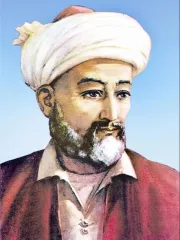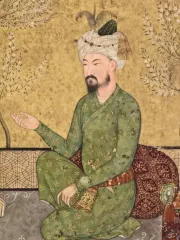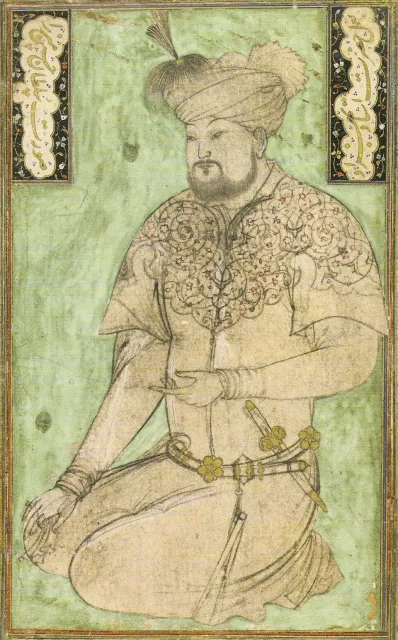
Husayn Bayqara
Ruler of Khorasan (1469–1506), the last major Timurid sultan, under whom Herat became the centre of learning and art of Navoi, Jami and Behzad.
- Occupation:
- Historical figure, Politician, Writer, Ruler, Poet
- Lived:
- 1438 — 1506
- Father:
- Mansur Mirza
- Mother:
- Firuza Sultan Begum
- Spouse:
- Bega Sultan Begum
- Children:
- Badiuzzamon Mirzo, Shohg'arib Mirzo, Muzaffar Husayn Mirzo, Abulhasan Mirzo, Muhammad Muhsin Mirzo, Abu Turob Mirzo, Muhammad Husayn Mirzo, Faridun Husayn Mirzo, Haydar Muhammad Mirzo, Muhammad Ma'sum Mirzo, Farrux Husayn Mirzo, Ibrohim Husayn Mirzo, Ibn Husayn Mirzo, Muhammad Qosim Mirzo, Afrosiyob Mirzo, Ma'sum Ali Mirzo, Sulton Jahongir Mirzo, Jahongir Husayn Mirzo
Biography
Sultan Husayn Bayqara (Husayn Mirza) ruled Khorasan from 1469 to 1506. He was the last great Timurid sultan and made Herat a centre of learning, literature and art. Under the pen name Husayni he also wrote poetry in Turkic.
Husayn was born in July 1438 (Muharram 842 AH) in the Dawlatkhana palace near Herat. His father, Ghiyasiddin Mansur Bayqara Mirza, was a grandson of Umar Shaykh, Timur's second son; his mother, Firuza Begim, descended from Miranshah on her mother's side. Babur therefore called him "Karim at-tarafayn", linked to Timur on both sides. After his father's death in 1445 he went to school, where he befriended the young Alisher.
In 1452 he joined the court of Abu'l-Qasim Babur, ruler of Herat. After Babur died in 1457 he moved to Sanjar Mirza of Merv and married his daughter Beka Sultan, but quarrelled with his father-in-law and left. For over ten years he wandered between Khwarazm, Khorasan, Astarabad, Mazandaran and Jurjan, taking part in the Timurid wars for the throne. After Abu Said Mirza was killed, he entered Herat in triumph on 24 March 1469, and the Friday sermon was read in his name that day.
Sources describe him as brave, just and energetic, and Khorasan lived in relative peace and prosperity under him. Thanks to the efforts of his vizier Alisher Navoi, irrigation works, madrasas, mosques, caravanserais, ribats and bridges multiplied. Husayn built a madrasa in his name near Gazargah and the gardens Bagh-i Bayt al-Iman and Bagh-i Khamsa-Ara outside Herat; the Madrasa-yi Badi'a, named for his son Badi' az-Zaman, also belongs to the era. According to Khondamir, about forty major buildings arose in Khorasan in these years.
At court worked Abdurahman Jami, Alisher Navoi, the painter Kamoliddin Behzad, musicians, calligraphers and illuminators. Navoi says the sultan issued a special decree on the Turkic language, allowing it to be used in writing in a milieu that favoured Arabic and Persian. In Majalis an-nafais Navoi notes that the sultan's verses were many and that his divan was arranged.
The end of his reign was spent putting down revolts over succession among his sons. In spring 1506, though ill, he marched against Muhammad Shaybani Khan toward Transoxiana, but at Baba Ilahi his condition worsened and the march was halted. He died in May 1506 aged 69; most sources give 4 May, the Ziyouz article 5 May. Badi' az-Zaman and Muzaffar Husayn then fought over the throne, and soon Shaybani Khan took Herat.
Career
- Court of Husayn Bayqara in HeratSultan, ruler · 1469–1506
Life path
- 1438Birth
Born in the Dawlatkhana palace near Herat.
- 1452Service at Herat court
Entered the service of Abu'l-Qasim Babur.
- 1457–1469Years of wandering
Wandered between Merv, Khwarazm, Khorasan, Astarabad, Mazandaran and Jurjan, taking part in the struggle for the throne.
- 1469Accession in Herat
Entered Herat on 24 March; the Friday sermon was read in his name.
- 1469–1506Golden age of Herat
Navoi, Jami and Behzad worked at court; many buildings were raised.
- 1506Death
Died aged 69 at Baba Ilahi while marching against Shaybani Khan.
Works
- Divan (Turkic verse under the pen name Husayni)
Navoi records in Majalis an-nafais that the divan was arranged.