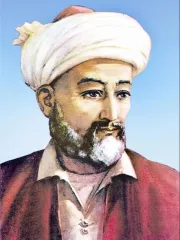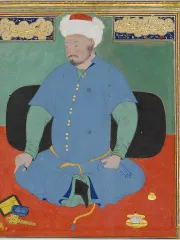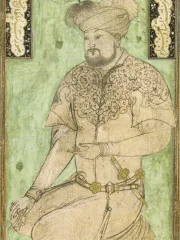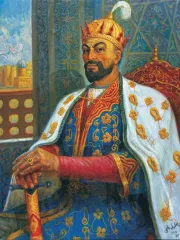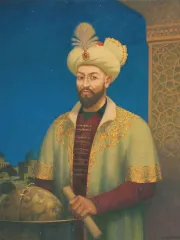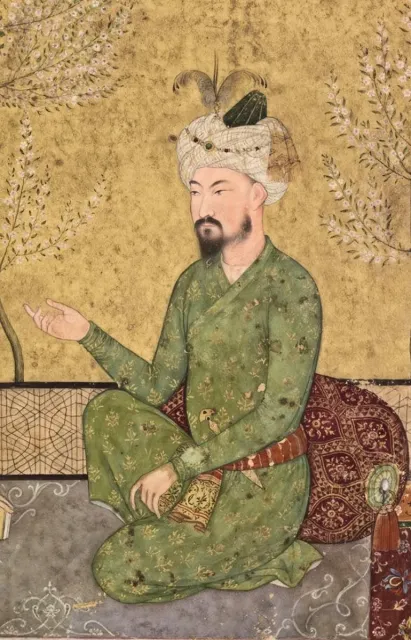
Babur
Military leader and poet, author of the “Baburnama”, founder of the Mughal Empire.
- Occupation:
- Politician, Ruler
- Lived:
- February 14 1483(47 years old) ♒ — December 26, 1530
- Birthplace:
- Andijan
- Father:
- Umarshayx Mirzo
- Mother:
- Qutlug' Nigorxonim
- Spouse:
- Mohim begim
- Children:
Biography
Zahiruddin Muhammad Babur was born on 14 February 1483 in Andijan to Umar Shaikh Mirza II, ruler of Fergana, and Qutlugh Nigar Khanum, daughter of the Moghul khan Yunus Khan. On his father’s side he was a fifth-generation descendant of Amir Timur, and on his mother’s side he traced his line to Chagatai, the son of Genghis Khan.
In 1494, when Babur was eleven, his father was killed when a dovecote collapsed, and Babur inherited the throne of Fergana. In 1497 he briefly took Samarkand, but by 1501 he had lost both it and his native Fergana to Muhammad Shaybani Khan, the leader of the Uzbek tribes. He spent the following years wandering with a small band of followers.
In 1504 Babur took Kabul and made it his own domain, which remained his base for two decades. In 1511, with the help of the Persian shah Ismail I, he regained Samarkand for a few months, but in 1512 he lost Transoxiana for good and turned his eyes to India.
In 1519 Babur led his first campaign through the Khyber Pass into the Punjab. The decisive battle came at Panipat on 21 April 1526, where his small but well-organised army routed the forces of the Delhi sultan Ibrahim Lodi — founding the Baburid empire, later to be called the Mughal Empire. In 1527 at Khanwa he defeated the Rajput prince Rana Sanga, and in 1529 at the Ghaghra an Afghan–Bengali alliance, securing his rule over northern India.
The “Baburnama”, which he wrote in Turki (Chagatai) — a candid journal of his own life and campaigns and of the cities and people he saw — is one of the most famous memoirs in world literature. Babur died on 26 December 1530 in Agra; later, in accordance with his will, his remains were moved to Kabul.
Once on the throne of Andijan, Babur had to fight to keep it against his own kin — his brother Jahangir Mirza, his uncle Sultan Ahmad Mirza and his maternal uncle Sultan Mahmud Khan. Some sources say he agreed to share the Fergana domain with his brother and then threw himself into the contest for Samarkand. In October 1504 he took Kabul and ruled it until 1526; his attempts to win back Transoxiana in 1505–1515 came to nothing.
After his victories in India Babur patronised the building of palaces, gardens and caravanserais, but this work grew on a large scale mainly under his descendants, above all Akbar and Shah Jahan. The Baburid dynasty ruled India for more than three centuries. Babur's sons included Humayun (born 1508), Kamran, Askari and Hindal; Humayun succeeded him.
The “Baburnama” is divided into three parts: the first covers events in Transoxiana and Fergana, the second the Kabul years, the third the Indian campaigns and his life in India. Beyond the chronicle of events, it is rich in detail on cities, landscape, plants and animals, customs, and on contemporaries such as Navoi, Jami and Behzad. It was translated into European languages by Leyden and Erskine, later by Beveridge, and into French by Pavet de Courteille; it has also been published many times in Uzbek and Russian.
Babur's legacy is wider than the “Baburnama”. He wrote ghazals and rubais, and longing for the homeland is especially visible in his Indian poems. His treatise on Islamic law, the “Mubayyin”, the script he devised, the Khatt-i Baburi (in which he is known to have copied the Quran), and a work on the theory of Arabic-based prosody (aruz) show the range of his scholarly interests. His body was first buried in Agra and between 1539 and 1544 was moved to the Bagh-e Babur garden in Kabul.
Career
- Mughal Empire (Baburids)Founder, padishah · 1526–1530
Life path
- 1494Ruler of Fergana
At eleven he inherited the throne of Fergana after the death of his father, Umar Shaikh Mirza II.
- 1497First capture of Samarkand
Briefly took the city but was forced to give it up.
- 1500–1501Loss of Samarkand and Fergana
Muhammad Shaybani Khan took both domains; years of wandering with a small band of followers began.
- 1504Capture of Kabul
Founded his own domain, which became his base for the next two decades.
- 1511Brief return to Samarkand
With the help of the Persian shah Ismail I he regained the city, but lost it for good in 1512.
- 1519First campaign in India
Crossed the Khyber Pass and reached the Chenab River in the Punjab.
- 1526Battle of Panipat
Routed the army of the Delhi sultan Ibrahim Lodi and laid the foundation of the Baburid (Mughal) Empire.
- 1527Battle of Khanwa
Defeated the Rajput prince Rana Sanga, strengthening his hold on northern India.
- 1529Battle of the Ghaghra
Defeated an Afghan–Bengali alliance, completing the conquest of northern India.
Works
- “Baburnama”Memoirs
A journal of his own life and campaigns and of the cities and peoples he saw; begun in 1518 and left unfinished.
- “Divan”Poetry
A collection of poems in Turki (Chagatai).
- “Mubayyin”Theology
A verse exposition of the foundations of Hanafi law, written in 1521.
- Treatise on aruzScience
A work on Turkic prosody written in 1523–1525.
- Khatt-i BaburiWriting system
A script he devised for the Turkic language; according to tradition, he copied the Quran in it with his own hand.
Legacy
The Baburid (Mughal) empire founded by Babur ruled northern India for more than three centuries, until 1857, and left a deep mark on the architecture, language and culture of the region. The “Baburnama” has been translated into dozens of languages and remains one of the key sources on the history of Central Asia and India in the 15th and 16th centuries. In independent Uzbekistan Babur’s memory is honoured in his native Andijan.
Era: The Baburid empire- Andijan State University was named after Babur (1992)
- The Babur International Foundation was established (1992)
- The Babur Park memorial complex, with the museum “Babur and World Culture”, opened in Andijan (1993)