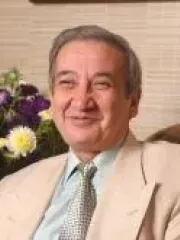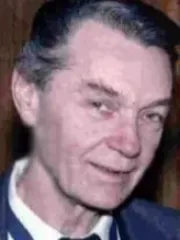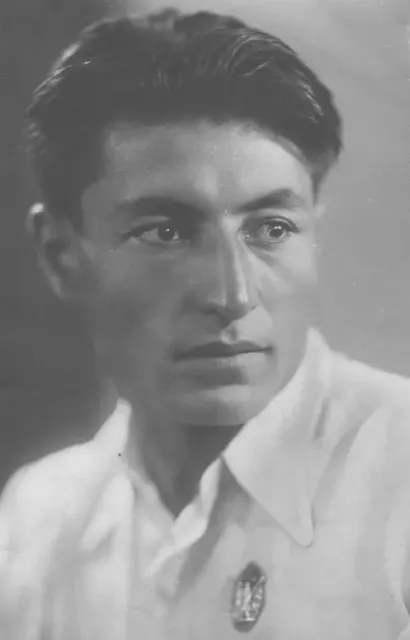
Malik Qayumov
Documentary film director and cameraman, People's Artist of the USSR and Hero of Socialist Labour, who filmed the opening of Timur's tomb and the war on the front.
Biography
Malik Qayumov (Kayumov) was born in Tashkent. His official date of birth is 22 April 1912, although no birth records were kept at the time and some sources place it in 1911. His father, Abdukayum, died when the boy was very young; his mother, Sabriniso, was literate. He attended a neighbourhood school and entered cinema while still in his teens.
In 1929–1930 he worked as an assistant cameraman at the Sharq Yulduzi film factory (now Uzbekfilm) and acted in the first Uzbek films, among them “An American Woman from Baghdad”. He studied for about two years at the cinematography faculty of VGIK in Moscow, but returned to Tashkent without a diploma.
From 1932 he worked as a cameraman at the Tashkent newsreel studio and, at the same time, as Central Asian correspondent of Soyuzkinokhronika. His film “Tashkent Textile Combine” won a gold medal at the New York World's Fair in 1939, and for “The Mighty Stream”, about the building of the Great Fergana Canal, he received the Order of the Badge of Honour in 1940.
In June 1941 Qayumov filmed the scientific expedition that opened the tombs of Timur, Shahrukh and Ulugbek in Samarkand. When the war began he volunteered for the front: as a military cameraman he filmed fighting on the Kalinin Front and later in Belarus, was wounded twice and was discharged as an invalid in March 1945. In later interviews he said he believed the war was connected with the opening of Timur's tomb.
From 1946 he was a director-cameraman, head of the newsreel unit and artistic director at Uzbekfilm, and in 1961–1976 director and then artistic director of the Uzbek studio of popular-science and documentary films. His films deal with Uzbekistan's cities and crafts (“The City of Four Gates”, “Samarkand Is Always with Me”), the 1966 Tashkent earthquake, and with India, Vietnam, Bengal and Afghanistan. “Paranja” won the Golden Dove at the Leipzig festival in 1979. In 1982 he published a memoir, “My Life Is Cinema”.
He was first secretary of the board of the Union of Cinematographers (from the mid-1970s to the mid-1990s, with a break in 1986–1988), a deputy of the Supreme Soviet of the Uzbek SSR of the 9th (1975–1979) and 12th (1990–1994) convocations, a jury member of the Moscow International Film Festival and chairman of the jury of the All-Union Film Festival in 1966 and 1977.
Qayumov was an Honoured Art Worker of the Uzbek SSR, People's Artist of the Uzbek SSR (1965) and People's Artist of the USSR (1967), Hero of Socialist Labour (1990), twice a holder of the Order of Lenin, and winner of the USSR State Prize (1981) and the Hamza State Prize of the Uzbek SSR (1964); in independent Uzbekistan he received the Order “El-yurt hurmati” (1999).
Malik Qayumov died on 29 April 2010 in Moscow, where he was visiting relatives. His body was brought back to Tashkent and buried with Muslim rites at the Sagban cemetery.
Education
- Gerasimov Institute of Cinematography (VGIK)University · 1932 · Cinematography faculty (left without a diploma)
Career
- Supreme Soviet of the Uzbek SSRDeputy (9th convocation 1975–1979, 12th convocation 1990–1994) · Tashkent · 1975–1994
- Uzbekfilm studioActor and assistant cameraman; from 1946 director-cameraman, head of the newsreel unit and artistic director · Tashkent · 1929–1960
- Union of Cinematographers of UzbekistanFirst secretary of the board (with a break in 1986–1988) · Tashkent · 1975–1996
- Studio of Documentary and Popular-Science FilmsDirector, then artistic director · Tashkent · 1961–1976Everyone who held this post →
- Tashkent newsreel studioCameraman, Central Asian correspondent of Soyuzkinokhronika · Tashkent · 1932–1940
Awards
 Order «El-yurt hurmati»1999 · Uzbekistan
 People's Artist of the Uzbek SSR1965 · Uzbek SSR
- Honoured Art Worker of the Uzbek SSRUzbek SSR
 Hamza State Prize of the Uzbek SSR1964 · Uzbek SSR
 Hero of Socialist Labour1990 · USSR
 People's Artist of the USSR1967 · USSR
 Order of Lenin1980 · USSR
- Order of Lenin1990 · USSR
 Order of the Red Banner1944 · USSR
 Order of the Patriotic War, 2nd class1985 · USSR
 Order of the Red Banner of Labour1959 · USSR
- Order of the Red Banner of Labour1971 · USSR
 Order of Friendship of Peoples1989 · USSR
 Order of the Red Star1943 · USSR
 Order of the Badge of Honour1940 · USSR
 USSR State Prize1981 · USSR
Life path
- 1912Birth
Born in Tashkent; the official date is 22 April, and some sources give 1911 as the year.
- 1929–1930Entering cinema
Assistant cameraman at the Sharq Yulduzi film factory; acted in “An American Woman from Baghdad”.
- 1930–1932Studies in Moscow
Studied at the cinematography faculty of VGIK and returned without a diploma.
- 1932–1940Newsreel cameraman
Cameraman at the Tashkent newsreel studio and Central Asian correspondent of Soyuzkinokhronika.
- 1939Gold medal in New York
“Tashkent Textile Combine” won a gold medal at the World's Fair.
- 1941Opening of Timur's tomb
Filmed the opening of the tomb as cameraman of the Samarkand expedition.
- 1941–1945At the front
Military cameraman on the Kalinin Front and in Belarus; wounded twice.
- 1946–1960Uzbekfilm
Director-cameraman, head of the newsreel unit and artistic director.
- 1961–1976Documentary film studio
Director, then artistic director of the Uzbek studio of documentary and popular-science films.
- 1967People's Artist of the USSR
Two years earlier he had become People's Artist of the Uzbek SSR.
- 1968“Tashkent: Earthquake”
A documentary about the aftermath of the 1966 earthquake and the rebuilding of the city.
- 1990Hero of Socialist Labour
Awarded the title on 5 December, together with a second Order of Lenin.
- 2010Death
Died in Moscow on 29 April; buried at the Sagban cemetery in Tashkent.
Filmography
Achievements
- 🥇Gold medal (“Tashkent Textile Combine”)World's Fair, New York (1939)
- 🥇First-degree diploma (“From Spring to Spring”)All-Union Film Festival, Leningrad (1964)
- 🥇Golden Dove for “Paranja”International Festival of Documentary and Animated Films, Leipzig (1979)