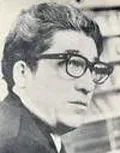
Mirmuhsin
Uzbek writer and poet, long-time editor-in-chief of the magazine “Sharq yulduzi” and author of the novels “The Architect” and “Temur Malik”; People's Writer of the Uzbek SSR.
- Occupation:
- Writer, Educator, Poet, Prose writer
- Born:
- May 3 1921(83 years old) ♉ — February 3, 2005
- Birthplace:
- Tashkent
Biography
Mirmuhsin (real name Mirmuhsin Mirsaidov) was born on 3 May 1921 in Tashkent into a poor potter's family. In 1941 he graduated from the philology faculty of the Nizami Tashkent Pedagogical Institute. He began working as a school teacher of Uzbek language and literature, then worked in the editorial offices of newspapers and magazines and at the Writers' Union of Uzbekistan.
He started writing verse in 1936, and his first books, the collections “Vatan” (“Homeland”) and “Er yurak”, appeared in 1942. After the war he wrote poems about the labour of cotton growers, “Usta G‘iyos” (1947) and “Yashil qishloq” (“The Green Village”, 1948); the poems “Qadrdonlar” and “Shiroq” and the verse novel “Ziyod and Adiba” followed later.
In the following decades he turned increasingly to prose: the novels “Chiniqish” (“Tempering”, 1964) on contemporary life, “Degrez o‘g‘li” (“The Foundryman's Son”, 1972) about a family of workers, and “Chotqol yo‘lbarsi” (“The Tiger of Chatkal”, 1977), as well as the historical novels “The Architect” (1974) and “Temur Malik” (1985). He published more than ten books for children and translated verse by Pushkin, Shevchenko and Mayakovsky into Uzbek.
He was editor-in-chief of the magazine “Sharq yulduzi” in 1950–1960 and again from 1971; according to the sources, he led that magazine for about twenty years in all and the satirical magazine “Mushtum” for about ten. He also worked with the magazine “Guliston”.
In 1968 he was named Honoured Worker of Culture of the Uzbek SSR, in 1974 he received the Hamza State Prize of the Uzbek SSR, and in 1981 he was given the title People's Writer of the Uzbek SSR. In 1998 he was awarded the Order “El-yurt hurmati”.
He kept writing after independence: the novels “Ilon o‘chi” (“The Serpent's Revenge”, 1995) and “Turon malikasi” (“The Queen of Turan”, 1998) date from those years. A three-volume (1971–1973) and a four-volume (1981–1984) edition of his works were published. Mirmuhsin died in Tashkent on 3 February 2005.
Education
- Nizami Tashkent State Pedagogical UniversityUniversity · Tashkent · 1941 · Faculty of Philology (then the Nizami Tashkent State Pedagogical Institute)
Career
- Qizil O'zbekiston newspaperEditorial staff member · Tashkent
- Writers' Union of UzbekistanStaff member · Tashkent
- Communist Party of the Soviet UnionMember · 1946–…
Awards
 Order «El-yurt hurmati»1998 · Uzbekistan
- People's Writer of the Uzbek SSR1981 · Uzbek SSR
 Honoured Worker of Culture of the Uzbek SSR1968 · Uzbek SSR
 Hamza State Prize of the Uzbek SSR1974 · Uzbek SSR
 Order of Lenin1991 · USSR

 Order of Friendship of Peoples1981 · USSR
 Order of the Badge of Honour1951 · USSR
- Order of the Badge of Honour1957 · USSR
Life path
- 1921Birth
Born in Tashkent into a potter's family.
- 1936First poems
Began writing verse and appeared in print the same year.
- 1941Graduates from the pedagogical institute
Finished the philology faculty of the Nizami Tashkent Pedagogical Institute.
- 1942First collections
The verse collections “Vatan” and “Er yurak” were published.
- 1946Joins the party
Became a member of the Communist Party of the Soviet Union.
- 1947–1948“Usta G‘iyos” and “Yashil qishloq”
Wrote two poems about the labour of cotton growers.
- 1950–1960Editor-in-chief of “Sharq yulduzi”
First appointed head of the magazine.
- 1968Honoured Worker of Culture
Given the title Honoured Worker of Culture of the Uzbek SSR.
- 1971Returns to “Sharq yulduzi”
Took the post of the magazine's editor-in-chief again.
- 1974Hamza Prize
In the year “The Architect” appeared he received the Hamza State Prize of the Uzbek SSR.
- 1981People's Writer of the Uzbek SSR
Received the title People's Writer and the Order of Friendship of Peoples.
- 1998Order “El-yurt hurmati”
Awarded on the seventh anniversary of independence.
- 2005Death
Died in Tashkent at the age of 84.
Works
- “Usta G‘iyos” (1947)Poem
A poem about the labour of cotton growers.
- “Yashil qishloq” (“The Green Village”) (1948)Poem
A poem about life in a cotton-growing village.
- “Ziyod and Adiba”Novel in verse
A verse novel that was the fruit of many years of work.
- “Chiniqish” (“Tempering”) (1964)Novel
A novel about contemporary life.
- “Degrez o‘g‘li” (“The Foundryman's Son”) (1972)Novel
A novel about a family of workers; in 1978 it won a prize in an all-Union competition for the best prose about the working class.
- “Umid” (“Hope”)Novel
A novel about the formation of the Uzbek intelligentsia in the Soviet period.
- “The Architect” (1974)Historical novel
- “Chotqol yo‘lbarsi” (“The Tiger of Chatkal”) (1977)Novel
A novel about the life of modern Uzbekistan.
- “Temur Malik” (1985)Historical novel
A historical novel about Temur Malik, defender of the fortress of Khujand.
- “Ilon o‘chi” (“The Serpent's Revenge”) (1995)Novel
- “Turon malikasi” (“The Queen of Turan”) (1998)Novel