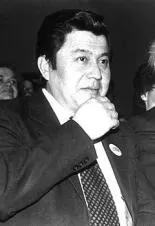
Biography
Mirsodiq Mahmudovich Tojiyev was born on 25 March 1944 in the village of Yunusabad near Tashkent. He studied in the history and theory department of the Hamza Music College in Tashkent, took composition in Malakhov's class, and in 1964–1972 taught at the same college himself.
At the Tashkent State Conservatory he studied composition first under R. Vildanov and then in the class of Felix Yanov-Yanovsky, graduating in 1970. He wrote in many genres as a student; his diploma work was the Second Symphony-Ballet, based on Hamid Olimjon's poem “Oygul and Baxtiyor”.
At the Conservatory he taught in the theory department in 1972–1973 and in the department of composition and orchestration in 1979–1996, becoming an associate professor in 1987. Earlier he was artistic director of the vocal and dance ensemble “Go'zal” (1973–1975) and of the song and dance ensemble “Shodlik” (1975–1976), and from 1976 to 1979 worked at the M. Qori-Yoqubov Uzbek Philharmonic.
He entered the history of Uzbek music as the creator of “maqom symphonism”, which joins the way a maqom develops with the European symphonic form, and wrote nineteen symphonies. They include the Third (1972, for the 50th anniversary of the Uzbek SSR), the Fourth (1975, for the 30th anniversary of Victory) and “Memory” (the Twelfth, 1985, for the 40th anniversary of Victory). The Fifteenth Symphony (“The GULAG Archipelago”) is dedicated to the victims of mass repression and is regarded as one of the most notable works of Uzbek symphonic music.
Among his stage works are the musical comedy “Chollar va kampirlar” (“Old Men and Old Women”, 1979) and the opera “Kumush” (1988), based on Abdulla Qodiriy's novel “Bygone Days” to a libretto by Izzat Sulton. He also wrote chamber works and pieces for an orchestra of folk instruments, rhapsodies for the chang, and music for the film “Bakenshchik” (1967) and other productions.
In 1974 he won the Lenin Komsomol Prize of the Uzbek SSR and in 1976 the Lenin Komsomol Prize for his Fourth Symphony, and in 1981 he was named Honoured Art Worker of the Uzbek SSR. He died in 1996. A documentary film, “Composer Mirsodiq Tojiyev” (2000, directed by A. Fatkhullin), was made about him; the first concert performance of “Kumush” took place on 28 April 2017 in the Great Hall of the State Conservatory of Uzbekistan.
Education
- Hamza Music College, TashkentCollege · Tashkent · History and theory department (composition in Malakhov's class)
- State Conservatory of UzbekistanUniversity · 1970 · Composition (classes of R. Vildanov and F. Yanov-Yanovsky)
Career
- State Conservatory of UzbekistanTeacher (associate professor from 1987) · Tashkent · 1972–1996
Awards
- Honoured Art Worker of the Uzbek SSR1981 · Uzbek SSR
Life path
- 1944Birth
Born on 25 March in the village of Yunusabad near Tashkent.
- 1964–1972Hamza Music College
Studied at the Hamza Music College in Tashkent and taught there.
- 1970Conservatory
Graduated from the Tashkent State Conservatory in the class of F. Yanov-Yanovsky.
- 1973–1976Ensemble director
Artistic director of the ensembles “Go'zal” (1973–1975) and “Shodlik” (1975–1976).
- 1974–1976Komsomol prizes
Won the Uzbek SSR Lenin Komsomol Prize in 1974 and the Lenin Komsomol Prize for his Fourth Symphony in 1976.
- 1976–1979Uzbek Philharmonic
Worked at the M. Qori-Yoqubov Uzbek Philharmonic.
- 1979–1996Conservatory department
Taught in the department of composition and orchestration; associate professor from 1987.
- 1981Honoured Art Worker
Named Honoured Art Worker of the Uzbek SSR.
- 1988Opera “Kumush”
Composed the opera “Kumush” after Qodiriy's novel “Bygone Days”.
- 1996Death
Died.
Works
- “Second Symphony-Ballet” (1970)Symphony-ballet
Diploma work at the end of his conservatory studies; based on Hamid Olimjon's poem “Oygul and Baxtiyor”.
- “Poet's Love” (1968)Symphonic poem
For narrator and symphony orchestra, words by Izzat Sulton and Uyg'un.
- “Third Symphony” (1972)Symphony
Dedicated to the 50th anniversary of the Uzbek SSR; elements of a funeral march reinforce its tragic note.
- “Fourth Symphony” (1975)Symphony
Dedicated to the 30th anniversary of Victory; awarded the Lenin Komsomol Prize in 1976.
- “Old Men and Old Women” (1979)Musical comedy
A musical comedy for the stage.
- “Memory” (Twelfth Symphony) (1985)Symphony
Dedicated to the 40th anniversary of Victory in the Great Patriotic War.
- “Kumush” (1988)Opera
After Abdulla Qodiriy's novel “Bygone Days”, libretto by Izzat Sulton; first concert performance in 2017.
- “Fifteenth Symphony” (“The GULAG Archipelago”)Symphony
A memorial to the victims of mass repression; the march genre interweaves with electronic music and aleatoric techniques.