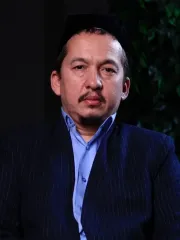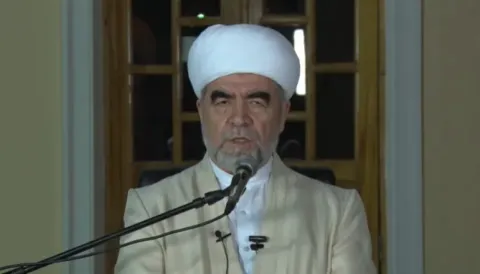
Muhammad Sadiq Muhammad Yusuf
Islamic scholar and theologian, Mufti of the Spiritual Administration of the Muslims of Central Asia and Kazakhstan in 1989–1993, author of the Quran commentary “Tafsiri Hilol” and over a hundred books.
- Occupation:
- Religious figure, Writer
- Nickname:
- Sheikh Muhammad Sadiq Muhammad Yusuf
- Born:
- April 15 1952(62 years old) ♈ — March 10, 2015
- Birthplace:
- Asaka District, Andijan
- Father:
- Muhammad Yusuf
- Mother:
- Sobiraxon
- Spouse:
- Fotimaxon
Biography
Muhammad Sadiq Muhammad Yusuf was born on 15 April 1952 in the village of Niyozbotir in the Asaka district of Andijan region, into the family of the religious scholar Muhammad Yusuf. He received his first religious instruction from his father and then finished secondary school.
In 1970 he entered the Mir-i Arab madrasa in Bukhara and, thanks to what he had already learned, completed its seven-year course in three years. From 1973 to 1975 he studied at the Imam al-Bukhari Islamic Institute in Tashkent, graduating with distinction, and then joined “Muslims of the Soviet East”, the journal of the Spiritual Administration of the Muslims of Central Asia and Kazakhstan. In 1976 the Administration sent him to Libya, and in 1980 he graduated from the Islamic Call College in Tripoli at the top of his class.
From 1981 he taught Quranic exegesis, hadith, the Quranic sciences and creed at the Imam al-Bukhari Islamic Institute in Tashkent, becoming its vice-rector in 1982 and its rector in 1984. In the same years he also worked in the Administration’s foreign relations department.
On 6 February 1989 he was elected chairman of the Spiritual Administration of the Muslims of Central Asia and Kazakhstan and mufti, and later that year he became a People’s Deputy of the USSR. During his tenure the Quran of Uthman was handed over from a museum to the Administration, mosques and madrasas were opened, religious literature began to be published, and in 1990 some five hundred Muslims from the Central Asian republics went on the hajj. After Uzbekistan gained independence in 1991 he became the first mufti of the independent republic; the first parts of his Quran commentary “Tafsiri Hilol” appeared in 1991–1993.
In 1993 he resigned as mufti and went abroad, working first with the Muslim World League in Mecca and then, from 1994 to 2001, living in Libya. In those years he completed “Tafsiri Hilol” and worked on the multi-volume series “Hadith and Life”.
In 2001 he returned to Uzbekistan and devoted the rest of his life to scholarship and religious education: he wrote and published books, made a translation of the meanings of the Quran into Uzbek, and his lectures and talks circulated as audio and video recordings. Under his direction the Uzbek-language Islamic website islom.uz was set up, where he answered more than 25,000 questions from readers. He was a co-founder of the International Union of Muslim Scholars and a member of the Constituent Council of the Muslim World League and of the Royal Aal al-Bayt Institute for Islamic Thought in Jordan.
He died of a heart attack in Tashkent on 10 March 2015, at the age of 62. Tens of thousands of people attended the funeral prayer at the Sheikh Zaynuddin mosque, and he was buried in the Sheikh Zaynuddin cemetery in Kukcha. A congregational mosque in Tashkent’s Chilanzar district, opened in 2019, and a mosque in Shymkent bear his name; in 2023 he was posthumously awarded the Order of Imam al-Bukhari of the highest degree.
Education
- Mir-i Arab MadrasaMadrasa · Bukhara · 1970–1973
- Imam al-Bukhari Tashkent Islamic InstituteUniversity · Tashkent · 1973–1975
- Islamic Call College (Tripoli)University · 1976–1980 · Licence in Arabic and Islamic studies
Career
- Muslims of the Soviet East magazineStaff member · Tashkent · 1975–1976
- Imam al-Bukhari Tashkent Islamic InstituteLecturer, vice-rector, rector · Tashkent · 1981–1989Everyone who held this post →
- Spiritual Administration of the Muslims of Central Asia and KazakhstanChairman and Mufti · Tashkent · 1989–1993Everyone who held this post →
- Congress of People’s Deputies of the USSRPeople’s Deputy of the USSR · 1989–1991
- Muslim World LeagueMember of the Constituent Council
- International Union of Muslim ScholarsCo-founder, member of the Council of Secretaries · …–2015
Life path
- 1952Birth
Born in the village of Niyozbotir in the Asaka district of Andijan region, into the family of the religious scholar Muhammad Yusuf.
- 1970–1973Mir-i Arab madrasa
Completed the seven-year course of the Bukhara madrasa in three years.
- 1973–1975Imam al-Bukhari Islamic Institute
Graduated with distinction from the Tashkent institute and joined the journal “Muslims of the Soviet East”.
- 1976–1980Studies in Tripoli
Sent to Libya by the Spiritual Administration, he studied at the Islamic Call College and graduated at the top of his class.
- 1981–1989Teaching at the institute
Taught Quranic exegesis, hadith, the Quranic sciences and creed; vice-rector from 1982 and rector from 1984.
- 1989Mufti and People’s Deputy
Elected chairman of the Spiritual Administration of the Muslims of Central Asia and Kazakhstan and mufti on 6 February; became a People’s Deputy of the USSR the same year.
- 1991First mufti of independent Uzbekistan
Remained mufti of the republic’s Muslims after independence; the first parts of “Tafsiri Hilol” appeared in 1991–1993.
- 1993–2001Years abroad
After resigning, worked with the Muslim World League in Mecca and from 1994 lived in Libya, where he completed “Tafsiri Hilol”.
- 2001–2015Scholarship at home
Back in Uzbekistan, he wrote books, translated the meanings of the Quran into Uzbek and answered readers’ questions on islom.uz.
- 2015Death
Died in Tashkent on 10 March and was buried in the Sheikh Zaynuddin cemetery in Kukcha.
Works
- “Tafsiri Hilol”Quran commentary
A six-volume commentary on the Quran; the first parts appeared in 1991–1993 and the rest was completed abroad.
- “The Meanings of the Holy Quran in Uzbek”Translation
A translation of the meanings of the Quran into Uzbek; the verses with their translation, based on “Tafsiri Hilol”, were also published as a separate book.
- “Hadith and Life”Hadith translation and commentary
A translation of and commentary on Mansur Ali Nasif’s collection “Al-Taj al-jami’ li-l-usul fi ahadith al-rasul”, in thirty-nine parts.
- “Kifoya”Islamic law
A three-volume translation of and commentary on “Al-Nuqaya”, the Hanafi legal compendium of Ubaydullah ibn Mas’ud.
- “Spiritual Education”Ethics and Sufism
A work in three volumes: “Purification”, “Restoration” and “Refinement of Character”.
- “Sunni Beliefs”Creed
An exposition of Sunni creed; also published in Russian.
- “Disagreements: Causes and Solutions”Islamic law
On the causes of disagreements among Muslims and the ways to overcome them; also published in Russian.
- “The Treasury of Manners”Hadith commentary
A four-volume translation of and commentary on al-Bukhari’s “Al-Adab al-Mufrad”.
- “A Happy Family”On the family
A book on the family, marriage and the upbringing of children in Islamic teaching.
Legacy
His years as mufti coincided with the revival of religious life after Soviet restrictions: mosques and madrasas opened, religious literature was published and the pilgrimage to Mecca grew. More than a hundred of his books on Quranic exegesis, hadith, Islamic law, creed and ethics have been published in Uzbek, some translated into Russian and other languages, and they continue to be reprinted. The website islom.uz, set up under his direction, continues to distribute his lectures and answers.
Era: The late Soviet period and the years of independence, late 20th – early 21st century- The Quran of Uthman was handed over to the Spiritual Administration of the Muslims of Central Asia and Kazakhstan (1989)
- A mosque named after him opened in Shymkent, Kazakhstan (2015)
- A congregational mosque named after him opened in Tashkent’s Chilanzar district (2019)
- Posthumously awarded the Order of Imam al-Bukhari of the highest degree (2023)