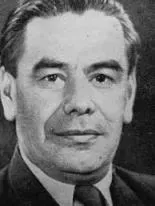
Nazir Safarov
Nazir Safarov was an Uzbek Soviet writer, playwright and war correspondent, author of the novel “Navro'z” and, from 1975, People's Writer of the Uzbek SSR.
- Occupation:
- Writer, Prose writer, Playwright
- Born:
- January 9 1905 ♑ — 1985
- Birthplace:
- Jizzakh
Biography
Nazir Safarov was born on 9 January 1905 in Jizzakh into a blacksmith's family. He went first to an old-method school and then to a Soviet one, studied in evening classes after the revolution and continued at a party-training school in Samarkand. He joined the Communist Party in 1925 and was active in Komsomol work.
His first sketches and feuilletons appeared in the newspaper “Rabochiy” in 1926, and he made his literary debut in 1928 with “Unforgettable Days”, a story of the peasant uprising of 1916. From 1931 he wrote regularly for the republic's press, producing a cycle of sketches called “The Struggle for a New Life” and the book “Shadows of Black Days” about the Jizzakh uprising. In 1932–1935 he was executive secretary of the organizing bureau and then of the Writers' Union of the Uzbek SSR.
In 1934 he went as a delegate from Uzbekistan to the First All-Union Congress of Soviet Writers and became one of the first members of the Union of Soviet Writers. In 1935 he graduated from the Institute of Marxism-Leninism attached to the Central Committee of the Communist Party of Uzbekistan.
His first major success in drama was the revolutionary play “History Has Spoken”, written with Ziyo Said; the production at the Hamza Theatre set the course of the young writer's later work. “Awakening”, about the 1916 uprising in Central Asia, and “Dawn of the East”, about the revolutionary events in Uzbekistan, became notable productions in the history of Uzbek theatre. On contemporary themes he wrote the drama “School of Life” (1954) and the play “Elmurod” with M. Khudoykulov.
During the Second World War he served in the field army as a political officer and war correspondent, going with the troops from the Caucasus to Vienna. His war sketches, including “The Bulletproof Hero”, “Commissar Karaboyev”, “Sons and Daughters of Uzbekistan” and “The Birth of a Hero”, were printed in newspapers and magazines across the country and were collected in his first post-war book, “Fellow Countrymen” (1958), published in Russian.
His post-war prose includes the collections “Oltinoy” (1961) and “A Drop of Blood” (1967), the novella “A Far-Sighted Woman” (1961) and “What I Have Seen and Lived Through” (1968), for which he received the Hamza State Prize of the Uzbek SSR in 1968. The novel “Navro'z”, also known as “The Time of the White Storks”, appeared in 1973.
In 1975 he was named People's Writer of the Uzbek SSR, having earlier received the title Honoured Art Worker of the Uzbek SSR. His decorations include the Orders of Lenin, the October Revolution, the Red Banner of Labour and the Friendship of Peoples, the Badge of Honour (twice), the Order of the Patriotic War, 2nd class, and the Order of the Red Star. His works were translated into many languages of the USSR. Nazir Safarov died in Tashkent in 1985.
Career
- Writers' Union of UzbekistanExecutive secretary · Tashkent · 1932–1935
- Union of Soviet WritersMember · 1934–…
Awards
- People's Writer of the Uzbek SSR1975 · Uzbek SSR
- Honoured Art Worker of the Uzbek SSRUzbek SSR
 Hamza State Prize of the Uzbek SSR1968 · Uzbek SSR
 Order of Lenin1985 · USSR


 Order of the Red Banner of Labour1980 · USSR
 Order of Friendship of Peoples1975 · USSR

 Order of the Badge of Honour1959 · USSR

Life path
- 1905Birth
Born on 9 January in Jizzakh into a blacksmith's family.
- 1925Joined the Party
Studied at a party-training school in Samarkand and worked in Komsomol organizations.
- 1926First sketches and feuilletons
His first sketches and feuilletons appeared in the newspaper “Rabochiy”.
- 1928Literary debut
Published “Unforgettable Days”, about the peasant uprising of 1916.
- 1932–1935Executive secretary of the Writers' Union
Served as executive secretary of the organizing bureau and then of the Writers' Union of the Uzbek SSR.
- 1934First Congress of Soviet Writers
Delegate from Uzbekistan and one of the first members of the Union of Soviet Writers.
- 1935Institute of Marxism-Leninism
Graduated from the institute attached to the Central Committee of the Communist Party of Uzbekistan.
- 1941–1945War correspondent
Went from the Caucasus to Vienna as a political officer and correspondent in the field army.
- 1954“School of Life”
Wrote a drama on a contemporary theme; the play “Elmurod” was written in the same years.
- 1958“Fellow Countrymen”
His first post-war book, in Russian, which included his war sketches.
- 1968Hamza Prize
Received the Hamza State Prize of the Uzbek SSR for “What I Have Seen and Lived Through”.
- 1973Novel “Navro'z”
The novel was published.
- 1975People's Writer
Named People's Writer of the Uzbek SSR and also received the Order of the Friendship of Peoples.
- 1985Death
Died in Tashkent; the Order of Lenin was awarded to him that year.
Works
- “Unforgettable Days” (1928)Debut work
His first work, about the peasant uprising of 1916.
- “Shadows of Black Days”Book
A book about the Jizzakh uprising of 1916.
- “History Has Spoken”Drama
Revolutionary drama written with Ziyo Said and staged at the Hamza Theatre.
- “Awakening”Play
A play about the 1916 uprising in Central Asia.
- “Dawn of the East”Play
A play about the revolutionary events in Uzbekistan.
- “School of Life” (1954)Drama
A drama on a contemporary theme.
- “Fellow Countrymen” (1958)Collection of stories and sketches
A Russian-language book that included his war sketches.
- “Oltinoy” (1961)Collection of stories and sketches
A collection published in the post-war years.
- “A Far-Sighted Woman” (1961)Novella
A novella about new developments in post-war life.
- “A Drop of Blood” (1967)Collection of stories and sketches
A collection of the 1960s.
- “What I Have Seen and Lived Through” (1968)Novella
The work for which he received the Hamza State Prize in 1968.
- “Navro'z” (1973)Novel
A novel also known as “The Time of the White Storks”.