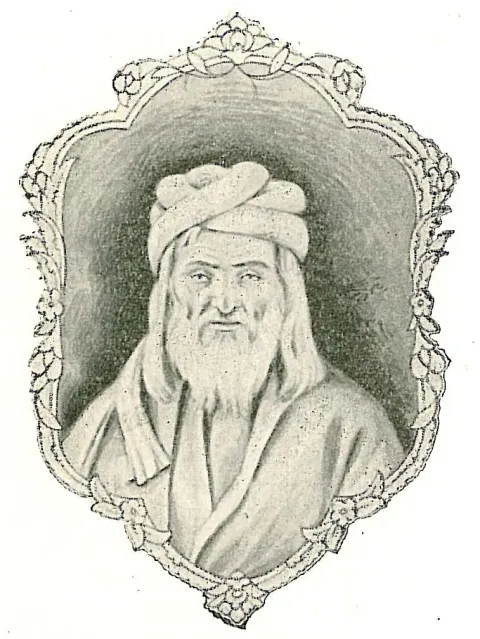
Nasir Khusraw
Persian poet, philosopher and traveller of the 11th century (1004 – after 1072), an Isma'ili missionary and author of the «Safarnama» and philosophical treatises, revered as the founder of the Isma'ili community of Badakhshan.
- Occupation:
- Writer, Religious figure, Historical figure, Poet
- Real name:
- Abu Mu'in Hamid al-Din Nasir ibn Khusraw al-Qubadiyani al-Marvazi
- Nickname:
- Hujjat
- Born:
- 1004 — c. 1088
Biography
Nasir Khusraw was born in 1004 in Qubadiyan near Balkh (its ruins lie today in Tajikistan's Shahritus district), into a family of officials and landowners. In his Persian works he called himself Abu Mu'in Hamid al-Din Nasir ibn Khusraw al-Qubadiyani al-Marvazi. Little is known of his youth, but his later books show an educated man at home in Arabic, literature and the learning of his day.
He spent the first half of his life as a Khurasan official, working in finance and taxation in Marv and Balkh, with access to the court under the Ghaznavids. When Khurasan passed to the Seljuks in 1040 he kept his post. Later he remembered these years as a life spent in wine and amusement.
Around the age of forty he went through a deep spiritual crisis: after a dream-like vision he left office and set out to look for true knowledge and a guide. In December 1045 he decided to make the pilgrimage to Mecca, and in March 1046 he left with his brother Abu Sa'id and an attendant. The journey lasted almost seven years: he crossed northern and western Iran, Armenia, Asia Minor, Syria, Palestine and Arabia, performed the hajj, and described what he saw in the «Safarnama» («Book of Travels»).
In 1047 he reached Cairo, the capital of the Fatimid caliphate, and stayed about three years. There he studied Isma'ili doctrine, met the leading Isma'ili missionary al-Mu'ayyad fi'l-Din al-Shirazi, and was named «hujjat» — the head of the Isma'ili mission in Khurasan, a word he later used as a pen name. In 1052 he returned to Balkh and began preaching Isma'ili ideas openly.
His preaching met fierce resistance from Sunni scholars: he was accused of heresy and of Qarmatian sympathies, his house was wrecked, and he had to leave Khurasan. He made his way to the Yumgan valley in the mountains of Badakhshan in the Pamirs, where the local Isma'ili ruler Abu al-Ma'ali Ali ibn Asad gave him shelter. He spent the rest of his life there and gathered many followers; the Isma'ilis of Badakhshan still revere him as the founder of their community.
He kept writing in Yumgan. His Persian divan consists of qasidas and quatrains; his prose includes the «Safarnama», «Zad al-Musafirin», «Jami' al-Hikmatayn», «Wajh-i Din», «Khwan al-Ikhwan» and «Gushayish va Rahayish», and he wrote the verse romances «Rawshana'i-nama» and «Sa'adat-nama». That he wrote his Isma'ili philosophy in Persian rather than Arabic was a rarity for the time. In his poems he condemned unjust rulers, the ignorant and the greedy, and praised the labour of the farmer and the craftsman.
The exact date of his death is unknown: scholars place it after 1072, some in 1088. His mausoleum stands in Badakhshan, in the village of Hazrat-i Sayyid near Fayzabad in Afghanistan; an inscription records that it was renovated in 1697. Local Isma'ilis call him «Pir» and «Shah Sayyid Nasir». His poems and the «Safarnama» have been translated into Uzbek, among others by Munirkhon Muinzoda and Shoislom Shomuhamedov.
Career
- Court of the Great SeljuksFinance and tax official (in Khurasan) · 1040–1045
- Fatimid CaliphateHujjat, head of the Isma'ili mission in Khurasan
Life path
- 1004Birth
Born in Qubadiyan near Balkh into a family of officials and landowners.
- until the mid-1040sKhurasan official
Worked in finance and taxation in Marv and Balkh, with access to the court under the Ghaznavids.
- 1040Seljuk rule
Kept his post when Khurasan passed to the Seljuks.
- 1045Spiritual crisis
Around the age of forty he left office and resolved to make the pilgrimage to Mecca.
- 1046–1052Seven-year journey
Travelled through Iran, Armenia, Asia Minor, Syria, Palestine and Arabia and performed the hajj; recorded what he saw in the «Safarnama».
- 1047–1050sIn Cairo
In the Fatimid capital he studied Isma'ili doctrine, met al-Mu'ayyad al-Shirazi and was named hujjat of Khurasan.
- 1052Return to Balkh
Went back to Khurasan and preached Isma'ilism openly; faced accusations and persecution from Sunni scholars.
- c. 1060In Yumgan
Found shelter in the Yumgan valley of Badakhshan under Ali ibn Asad and lived there for the rest of his life.
- after 1072Death
The exact date is unknown: scholars give the years after 1072, tradition 1088.
Works
- «Safarnama»Travel book
An account of the 1046–1052 journey: its cities, mosques, markets, rulers and the people he met; one of the best-known works of Persian prose.
- «Zad al-Musafirin»Philosophical treatise
The most systematic statement of his philosophy, dealing with substance and accident, motion, the soul and knowledge.
- «Jami' al-Hikmatayn»Philosophical treatise
An attempt to reconcile philosophical reasoning with religious knowledge; the title means «collection of two wisdoms».
- «Wajh-i Din»Religious-philosophical treatise
Interprets religious duties and rites through their inner meaning (the method of ta'wil).
- «Khwan al-Ikhwan»Treatise
A work that joins philosophical argument to moral and religious teaching.
- «Gushayish va Rahayish»Philosophical treatise
On creation, the soul and knowledge; an early example of philosophical prose in New Persian.
- «Rawshana'i-nama» and «Sa'adat-nama»Mathnawi poems
Didactic verse romances on the fleeting world and on the good and bad qualities of man.
- DivanPoetry collection
A Persian collection of qasidas, ghazals, qit'as and quatrains, full of moral lessons and rebukes of unjust rulers and ignorance.
Legacy
Nasir Khusraw wrote his Isma'ili philosophical works in Persian rather than Arabic, which helped establish Persian as a language of learning and philosophy. In his poems he turned away from court panegyric toward a call for knowledge, justice and honest labour. The Isma'ilis of Badakhshan (in Tajikistan, Afghanistan and northern Pakistan) regard him as the founder of their teaching, and his poetry is studied in Iran and Tajikistan.
Era: 11th century, Khurasan under the Ghaznavids and Seljuks- Born in Qubadiyan (1004)
- Set out on a seven-year journey (1046)
- Arrived in Cairo (1047)
- Returned to Balkh and began preaching Isma'ilism (1052)
- Found refuge in Yumgan (1060)
- His mausoleum was renovated (1697)