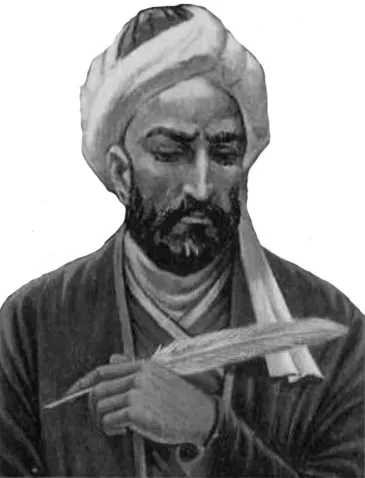
Nasir al-Din al-Tusi
Medieval astronomer, mathematician and philosopher, founder of the Maragha Observatory and author of the Ilkhanic Tables, who presented trigonometry as an independent science.
- Occupation:
- Scientist, Mathematician, Astronomer, Philosopher
- Real name:
- Muhammad ibn Muhammad ibn al-Hasan al-Tusi
- Nickname:
- Khwaja Nasir
- Born:
- 1201 — 1274
Biography
Abu Ja’far Muhammad ibn Muhammad ibn al-Hasan Nasir al-Din al-Tusi was born in 1201 in the city of Tus in Khorasan, in what is now north-eastern Iran. His father was a jurist of the Twelver Shi’a school. Nasir al-Din began his studies in Tus, where his uncle taught him logic, physics and metaphysics, and continued in Nishapur with philosophy, medicine and mathematics, studying mathematics and astronomy under Kamal al-Din ibn Yunus.
As the Mongol conquests swept over the region, al-Tusi entered the service of the Ismaili governor of Quhistan, Nasir al-Din Abd al-Rahim ibn Abi Mansur, for whom he wrote the Persian work on ethics “Akhlaq-i Nasiri” around 1235. He later lived in the Nizari Ismaili strongholds of Alamut and Maymun-Diz and produced important works on logic, philosophy, mathematics and astronomy.
In 1256 the Mongol army under Hulegu captured Alamut and al-Tusi entered Hulegu’s service as a scientific adviser; he was with Hulegu in 1258 when Baghdad was taken. Historians judge his role in these events differently. He was later put in charge of religious endowments, and according to some accounts he helped to preserve libraries and scholarly institutions.
Al-Tusi persuaded Hulegu to build an observatory: construction near Maragha in Azerbaijan began in 1259, and the observatory was working by 1262. Scholars from different countries worked there, and a large library was assembled. Observations over twelve years produced the “Zij-i Ilkhani” (Ilkhanic Tables), completed in 1272. In his astronomical treatise “Al-Tadhkira fi ilm al-hay’a” he proposed planetary models that differed from Ptolemy’s and used the geometric device now called the Tusi couple.
In mathematics his “Treatise on the Quadrilateral” (“Shakl al-qatta’”) is regarded as one of the first works to present trigonometry as a discipline in its own right, separate from astronomy. He wrote commentaries on and edited the works of Euclid, Archimedes, Ptolemy and other Greek authors, and attempted a proof of Euclid’s fifth postulate.
Nasir al-Din al-Tusi died in 1274 in Kadhimiyya, near Baghdad. Some 150 works are ascribed to him, about twenty-five of them in Persian and the rest in Arabic. A lunar crater and the asteroid 10269 Tusi are named after him, and the manuscript collection of the Institute of Oriental Studies of the Academy of Sciences of Uzbekistan holds more than twenty rare copies of his works.
Career
- Nizari Ismaili state (Alamut)Court scholar · …–1256
- Court of Hulegu Khan (the Ilkhanate)Scientific adviser · 1256–…
Life path
- 1201Birth
Born in the city of Tus in Khorasan, in present-day north-eastern Iran.
- YouthStudies in Nishapur
After Tus he studied philosophy, medicine and mathematics in Nishapur, among his teachers Kamal al-Din ibn Yunus.
- 1235“Akhlaq-i Nasiri”
In the service of the Ismaili governor of Quhistan he wrote his Persian work on ethics.
- 1247“Tahrir al-Majisti”
Wrote his commentary on Ptolemy’s Almagest, with trigonometric methods for computing sine tables.
- 1256Fall of Alamut
After Hulegu’s army captured Alamut he entered his service as a scientific adviser.
- 1258Capture of Baghdad
Was with Hulegu during the siege and capture of Baghdad.
- 1259–1262Maragha Observatory
Began the construction of the observatory near Maragha; it was operating by 1262.
- 1260“Shakl al-qatta’”
In Maragha he wrote the shorter Arabic version of his treatise on trigonometry.
- 1265Arithmetic treatise
Wrote his work on arithmetic with board and dust, describing a method of extracting roots.
- 1272“Zij-i Ilkhani”
Completed the astronomical tables based on twelve years of observations at Maragha.
- 1274Death
Died in Kadhimiyya, near Baghdad.
Works
- “Akhlaq-i Nasiri” (“The Nasirean Ethics”) (1235)Work on ethics
A work on ethics written in Persian that circulated widely in the Muslim world; it compares Islamic teaching with the ethics of Aristotle and Plato.
- “Tajrid al-I’tiqad”Theological work
A work of Shi’a theology that attracted over 400 commentaries.
- “Tahrir al-Majisti” (“Commentary on the Almagest”) (1247)Astronomical work
A commentary on Ptolemy’s Almagest that introduces trigonometric methods for computing sine tables.
- “Shakl al-qatta’” (“Treatise on the Quadrilateral”) (1260)Mathematical work
One of the first works to present trigonometry as an independent discipline separate from astronomy; its Arabic version was written at Maragha.
- “Al-Tadhkira fi ilm al-hay’a” (“Memoir on Astronomy”)Astronomical work
Sets out models of planetary and lunar motion that differ from Ptolemy’s and uses the Tusi couple.
- “Zij-i Ilkhani” (“Ilkhanic Tables”) (1272)Astronomical tables
The result of twelve years of observation at Maragha; contains tables for computing planetary positions and a star catalogue.
- “Collection on Arithmetic with Board and Dust” (1265)Mathematical work
Describes a method for extracting roots of any degree and gives a table of binomial coefficients in the form known as Pascal’s triangle.
- Recension of Euclid’s “Elements”Mathematical work
A recension of Euclid’s work containing an attempt to prove the fifth postulate; one version was published in Latin in Rome in 1594.
- “Sayr wa-Suluk” (“The Voyage”)Autobiography
His autobiographical account of his life and his ties with the Ismailis.
Legacy
Al-Tusi helped to establish trigonometry as an independent mathematical discipline, founded the Maragha Observatory and its scholarly school, and compiled the Ilkhanic Tables. The Tusi couple, which he proposed as a replacement for Ptolemy’s equant, appears later in the work of Ibn al-Shatir, and a similar geometric device occurs in Copernicus; whether Copernicus knew al-Tusi’s text is still debated. A lunar crater (named in 1935), the asteroid 10269 Tusi and a technological university in Tehran bear his name.
Era: The Mongol conquests and the Ilkhanate, 13th century- The Mongols take Alamut; al-Tusi enters Hulegu’s service (1256)
- Construction of the Maragha Observatory begins (1259)
- The Ilkhanic Tables are completed (1272)
- The International Astronomical Union names a lunar crater after al-Tusi (1935)