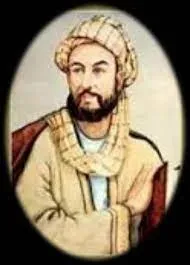
Nasir ad-Din Rabghuzi
Turkic writer from Khwarazm of the late 13th and early 14th centuries, author of the “Qisas-i Rabghuzi” (1310), a book of 72 stories of the prophets.
- Occupation:
- Writer, Religious figure, Prose writer
- Real name:
- Nasir al-Din ibn Burhan al-Din
- Born:
- c. 1250
- Birthplace:
- Khorezm
- Father:
- Burhoniddin
Biography
Nasir ad-Din Rabghuzi was a Turkic writer of the late 13th and early 14th centuries. Very little is known of his life, and the main source is the preface to the only book of his that has survived. There the author introduces himself as Nasir ad-Din, son of Burhan, the qadi of Rabat-i Oghuz; his pen name Rabghuzi comes from the name of that place. Uzbek scholars place Rabat-i Oghuz in Khwarazm, while some scholars elsewhere suggest it lay near the town of Jand on the Syr Darya. His year of birth is unknown; he is thought to have been born around the middle of the 13th century.
His book shows a good command of Arabic and Persian, of the commentaries on the Quran and of Islamic tradition. In Rabat-i Oghuz he served as qadi, a judge who decided cases according to sharia law.
In 709 AH (1309–1310) Nasir ad-Din Toq-Buga, a Mongol bek who had converted to Islam, asked Rabghuzi to compile for him the stories of the prophets in a form that was reliable and easy to read and learn from. The author completed the work in 710 AH (1310–1311) and dedicated it to his patron. The result was the “Qisas-i Rabghuzi”, also known as the “Qisas al-anbiya-i turki” (“The Turkic Stories of the Prophets”), regarded as the earliest and most widely read version of these stories in a Turkic language.
The book consists of 72 stories, running from the creation of the world and of Adam through the prophets of the Torah and the Quran to the life of the Prophet Muhammad. They vary greatly in length, the longest being the story of Yusuf (Joseph). The prose is interspersed with verse: 43 Turkic poems totalling 484 couplets, as well as lines in Arabic. Rabghuzi drew on Arabic and Persian sources, among them the “Qisas al-anbiya” of Abu Ishaq al-Nishapuri and the commentaries on the Quran, and enriched them with popular legends. Uzbek literary scholars single out his wide use of dialogue in prose.
When and where Rabghuzi died is unknown; it was certainly after 1310, and some publications give around 1330. The author’s own manuscript has not survived. For a long time a 15th-century manuscript in the British Museum in London was held to be the oldest copy; a study published in 2025 argues that a copy in the library of the University of Tehran is older still, made in the first half of the 14th century. Manuscripts of the work are also kept in St Petersburg, Paris and at the Beruni Institute of Oriental Studies in Tashkent.
The “Qisas-i Rabghuzi” spread widely among the Turkic peoples. It was first printed in Kazan in 1859 and in the 19th and early 20th centuries went through dozens of lithographed and typeset editions in Kazan, Tashkent and other cities; Tatar madrasas used it as a textbook. A facsimile of the London manuscript, prepared by Kaare Grønbech, appeared in Copenhagen in 1948; the Yozuvchi publishing house in Tashkent issued it in two volumes in 1990–1991; and in 1995 a scholarly edition with a complete English translation was published in Leiden (a revised second edition followed in 2015).
Life path
- Mid-13th centuryBirth
His exact year and place of birth are unknown; his pen name comes from Rabat-i Oghuz, where he served as qadi.
- Education
Learned Arabic and Persian, the commentaries on the Quran and Islamic tradition, as the sources of his book show.
- Late 13th – early 14th centuryQadi of Rabat-i Oghuz
Served in Rabat-i Oghuz as qadi, a judge ruling according to sharia.
- 1309–1310Commission from Toq-Buga
In 709 AH, at the request of Nasir ad-Din Toq-Buga, a Mongol bek who had converted to Islam, began compiling the stories of the prophets in Turkic.
- 1310–1311Completion of the “Qisas-i Rabghuzi”
In 710 AH finished his book of 72 stories and dedicated it to Toq-Buga.
- After 1310Death
When and where he died is unknown; some publications give around 1330.
Works
- “Qisas-i Rabghuzi” (1310)Stories of the prophets, prose and verse
A book of 72 stories written for Nasir ad-Din Toq-Buga, also known as the “Qisas al-anbiya-i turki”; the author’s only surviving work.
- “The Story of Yusuf”Story within the book
The longest story in the book, telling the life of the prophet Yusuf (Joseph) together with lyric poems.
- The stories of the Prophet MuhammadSection of the book
A sizeable account of the life of the Prophet and his family, unusual for works of this genre.
- The poems of the bookVerse within the prose
43 Turkic poems totalling 484 couplets — eulogies, ghazals and quatrains — along with lines in Arabic.
Legacy
As the first and most influential Turkic version of the stories of the prophets, the “Qisas-i Rabghuzi” was read for centuries in Transoxiana, Khwarazm, the Volga region and the Kipchak steppe: Tatar madrasas used it as a textbook, and it left its mark on Tatar and Kazakh literature. The work is one of the main sources for the Turkic literary language of the 13th and 14th centuries, and Uzbek literary scholarship regards it as a mature example of classical artistic prose.
Era: Khwarazm and Transoxiana under Mongol rule, late 13th – early 14th century- The “Qisas-i Rabghuzi” completed (710 AH) (1310)
- First printed edition of the book in Kazan (1859)
- Facsimile of the London manuscript published in Copenhagen (1948)
- First volume of a two-volume edition published by Yozuvchi in Tashkent (1990)
- Scholarly edition with a complete English translation published in Leiden (1995)