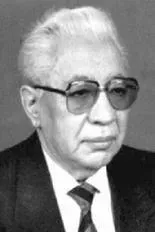
Uktam Aripov
Surgeon and medical scientist, academician of the Academy of Sciences of Uzbekistan; performed the first kidney transplant in Tashkent and was rector of the Tashkent Medical Institute in 1971–1984.
Biography
Uktam Aripov was born on 3 January 1927 in the Jizzakh district, then part of the Samarkand Region, into a family of an office employee. In 1948 he graduated with distinction from the Samarkand State Medical Institute and stayed on there: he was a clinical resident, then assistant (1950), docent (1956) and professor (1964), headed the department of general surgery, and served as dean of the medical faculty and vice-rector for academic affairs.
He defended his candidate’s dissertation in 1953 and his doctoral dissertation in 1963. In 1964 he was appointed first deputy minister of health of the Uzbek SSR, a post he held until 1971. That year he became rector of the Tashkent Medical Institute, which he led until 1984.
In 1971 Aripov set up a problem research laboratory at the institute to overcome tissue incompatibility in organ and tissue transplantation. According to biographical reference works, the laboratory produced anti-lymphocyte serum and globulin from donkey blood, which were used in kidney transplants. On 14 September 1972 he performed the first kidney transplant operation in Tashkent.
In 1983 he and his colleagues received the Beruni State Prize of the Uzbek SSR for introducing new treatments for chronic kidney failure into clinical practice and for creating immunosuppressive drugs. Under his guidance a method of transplanting pancreatic islet cells from karakul sheep, used in type 1 diabetes, was also developed.
From 1984 to 1997 he headed the department of hospital surgery, and from 1991 he led the Ministry of Health’s scientific specialised centre for hepatopancreatobiliary surgery. Twenty-six doctoral and 65 candidate dissertations were defended under his supervision; he wrote about 500 scientific works, 16 monographs and three textbooks.
He was named Honoured Science Worker of the Uzbek SSR in 1967, elected a full member of the Academy of Sciences of the Uzbek SSR in 1974, and became a member of the Russian Academy of Medical Sciences in 2001. He died in Tashkent on 14 December 2001 and was buried in the Minor cemetery. In August 2025 he was posthumously awarded the Order «For Selfless Service» by presidential decree.
Education
- Samarkand State Medical InstituteUniversity · Samarkand · 1948 · General medicine (with distinction)
Career
- Academy of Sciences of UzbekistanAcademician · Tashkent · 1974–…
- Tashkent State Medical InstituteRector; head of the department of hospital surgery · Tashkent · 1971–1997Everyone who held this post →
- Ministry of Health of UzbekistanFirst Deputy Minister of Health of the Uzbek SSR · Tashkent · 1964–1971
- Samarkand State Medical InstituteResident, assistant, docent, professor, head of department, dean, vice-rector · Samarkand · 1948–1964
- Scientific Specialised Centre of Hepatopancreatobiliary SurgeryHead of the centre · Tashkent · 1991–…Everyone who held this post →
Awards
 Order «For Selfless Service»2025, posthumously · Uzbekistan
- Honoured Science Worker of the Uzbek SSR1967 · Uzbek SSR
 Beruni State Prize of the Uzbek SSR1983 · Uzbek SSR


Life path
- 1948Graduated from the Samarkand State Medical Institute
Graduated with distinction and began work there as a clinical resident.
- 1950–1964Teaching and research at the Samarkand Medical Institute
Assistant (1950), docent (1956), professor (1964); head of the department of general surgery, dean of the medical faculty, vice-rector.
- 1953, 1963Defended his dissertations
Candidate’s dissertation in 1953, doctoral dissertation in 1963.
- 1964–1971First Deputy Minister of Health of the Uzbek SSR
Helped run the republic’s health service.
- 1971–1984Rector of the Tashkent Medical Institute
In 1971 he founded a problem laboratory on tissue incompatibility.
- 1972First kidney transplant in Tashkent
On 14 September 1972 he performed the city’s first kidney transplant operation.
- 1974Academician of the Academy of Sciences of the Uzbek SSR
Elected a full member of the academy.
- 1983Beruni State Prize
For treatments of chronic kidney failure and immunosuppressive drugs.
- 1984–1997Head of the department of hospital surgery
At the Tashkent Medical Institute.
- 1991Head of the hepatopancreatobiliary surgery centre
Led the Ministry of Health’s scientific specialised centre.
- 2001Death
Died in Tashkent on 14 December and was buried in the Minor cemetery.