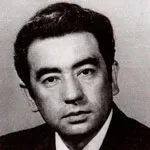
Ulmas Umarbekov
Uzbek writer, playwright and screenwriter, author of the novel “It Is Hard to Be a Human”; he directed Uzbekfilm, served as minister of culture and chaired the Writers’ Union of Uzbekistan.
- Occupation:
- Writer, Politician, Prose writer, Playwright, Screenwriter
- Born:
- January 25 1934(60 years old) ♒ — November 10, 1994
- Birthplace:
- Tashkent
- Children:
- Umida
Biography
Ulmas Umarbekov was born in Tashkent on 25 January 1934. After school he entered the philology faculty of the university in Tashkent (today the National University of Uzbekistan), studied in its journalism department and graduated in 1956.
For many years he worked at the republic’s State Committee for Television and Radio, first as an editor and then as chief editor. In 1971–1974 he headed a sector of the Central Committee of the Communist Party of Uzbekistan, and from 1974 he directed the Uzbekfilm studio, which he led until 1981.
He came into literature in the late 1950s: his first book, the collection “Stories”, appeared in 1958. It was followed by the story collection “Life Is Eternal” (1964), the novellas “My Beloved” (1963) and “Summer Rain” (1973), and “The Two Springs of Damir Usmonov” (1978). The novel “It Is Hard to Be a Human”, written in 1969 and first printed in 1970, made his name; it came out in Russian in 1972 as “The Green Star” and has been reissued many times.
Umarbekov also worked as a playwright and screenwriter. His plays “Flowing Waters” (1971) and “The Commission” (1974), and in the 1980s “Qiyomat qarz”, were staged at the Hamza Theatre; later he wrote the dramas “Slander” (1987) and “The Elder” (1991). Films made from his scripts include “Tale of Two Soldiers” and “For the Sake of Others”; his novella “The Meeting” became the film “Meeting at High Snows” (1981), and he was one of the screenwriters of the Soviet–Indian pictures “Legend of Love” (1984) and “Shikari” (1991).
Alongside writing he held state and public posts: from 1982 deputy minister of culture of Uzbekistan, minister in 1987–1989, chairman of the Writers’ Union of Uzbekistan in 1985–1989, and deputy chairman of the republic’s Council of Ministers in 1989–1991.
He received the Hamza State Prize of the Uzbek SSR in 1980 and the Order of the Badge of Honour in 1981, was named Honoured Art Worker of the Uzbek SSR in 1984 and People’s Writer of Uzbekistan in 1991. Ulmas Umarbekov died in Tashkent on 10 November 1994 after a serious illness. His novel “Fotima and Zuhra” was published after his death and staged at the Muqimi Theatre. In 2021 he was posthumously awarded the Order “For Selfless Service”; a street and a school in Tashkent bear his name.
Education
- National University of UzbekistanUniversity · Tashkent · 1956 · Faculty of Philology, journalism department
Career
- Ministry of Culture of the Republic of UzbekistanDeputy minister (1982–1986), minister (1987–1989) · 1982–1989
- Communist Party of UzbekistanHead of a Central Committee sector · Tashkent · 1971–1974
Awards
 People's Writer of Uzbekistan1991 · Uzbekistan
 Order «For Selfless Service»2021, posthumously · Uzbekistan
- Honoured Art Worker of the Uzbek SSR1984 · Uzbek SSR
 Hamza State Prize of the Uzbek SSR1980 · Uzbek SSR
 Order of the Badge of Honour1981 · USSR
Life path
- 1934Born
Born in Tashkent.
- 1956Graduated from university
Graduated from the journalism department of the philology faculty of the university in Tashkent.
- 1956–1971Television and Radio Committee
Worked as an editor and then chief editor at the republic’s state committee.
- 1958First book
The collection “Stories” was published.
- 1971–1974At the Party’s Central Committee
Head of a sector of the Central Committee of the Communist Party of Uzbekistan.
- 1974–1981Director of Uzbekfilm
Headed the Uzbekfilm studio.
- 1980Hamza State Prize
Became a laureate of the Hamza State Prize of the Uzbek SSR.
- 1982–1989At the Ministry of Culture
Deputy minister of culture (from 1982), minister (1987–1989).
- 1985–1989Chairman of the Writers’ Union
Led the Writers’ Union of Uzbekistan.
- 1989–1991Deputy chairman of the Council of Ministers
Served as deputy chairman of the republic’s Council of Ministers.
- 1991People’s Writer
Awarded the title People’s Writer of the Uzbekistan.
- 1994Death
Died in Tashkent on 10 November; the novel “Fotima and Zuhra” was published posthumously.
Books
- “Stories”1958 · Story collection
The writer’s first book.
- “My Beloved”1963 · Novella
A novella about love.
- “Life Is Eternal”1964 · Story collection
Stories about the moral character of ordinary people.
- “It Is Hard to Be a Human”1970 · Novel
His first novel, written in 1969; published in Russian in 1972 as “The Green Star”.
- “Flowing Waters”1971 · Play
One of the writer’s first plays for the theatre.
- “Summer Rain”1973 · Novella
A novella close to the detective genre.
- “The Two Springs of Damir Usmonov”1978 · Novella
About a party official’s duty and moral choices.
- “Slander”1987 · Drama
A drama written in the late 1980s.
- “The Elder”1991 · Drama
One of the writer’s late dramas.
- “Fotima and Zuhra”1994 · Novel
A novel published after the author’s death and later staged at the Muqimi Theatre.
Filmography
| Title | Year |
|---|---|
| The Boy and the Girl | 1968 |
| The Main Day | 1971 |
| Tale of Two Soldiers | 1976 |
| For the Sake of Others | 1976 |
| Meeting at High Snows | 1981 |
| Memory Grove | 1981 |
| Legend of Love | 1984 |
| Shikari (By the Law of the Jungle) | 1991 |