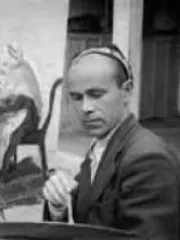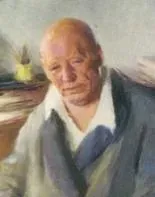
Pavel Benkov
Painter and teacher who worked in Kazan and, from 1930, in Samarkand; known for portraits and views of Bukhara and Samarkand; Honoured Art Worker of the Uzbek SSR.
- Occupation:
- Artist
- Born:
- December 20 1879(69 years old) ♐ — January 16, 1949
Biography
Pavel Petrovich Benkov was born in Kazan on 20 December 1879 (8 December in the old style) into a family of craftsmen whose parents ran a furrier’s workshop. In 1895 he entered the first intake of the art school that had just opened in the city.
From 1901 Benkov studied at the Higher Art School of the Imperial Academy of Arts in St Petersburg, in the studio of Dmitry Kardovsky, and on his own initiative also attended Ilya Repin’s classes. He took lessons at the private Académie Julian in Paris and travelled in Italy and Spain.
In 1909 the artist returned to Kazan to teach at the art school, where he worked, with interruptions, until 1929 and, together with Nikolai Feshin, was regarded as its leading teacher. In 1913–1918 he designed productions for the Kazan City Theatre and gave private lessons — among his pupils was the future poet Velimir Khlebnikov. In 1919 Benkov left for Siberia with the retreating troops of Admiral Kolchak and worked as a theatre designer in Irkutsk and Omsk until 1920; he returned to Kazan in 1921 and in 1922 joined the Association of Artists of Revolutionary Russia.
In 1928 he first travelled to Bukhara, in 1929–1930 he also visited Khiva and Samarkand, and in 1930 he moved to Samarkand for good. There he taught at the art school and took part in founding the Union of Artists of the Uzbek SSR (a member of the board of its organising committee in 1932–1938 and of the board of the Union of Artists of Uzbekistan from 1938). His pupils included Abdulhaq Abdullayev, Yusuf Yelizarov, Zinaida Kovalevskaya and other painters of the republic.
In his Samarkand years Benkov painted scenes of everyday life (bazaars, tea houses), compositions about women’s work in factories and cotton fields, portraits, and city views with old mosques, pools and courtyards with irrigation channels. The discipline of academic drawing and painting from life were combined in his work with Impressionist techniques. His paintings, among them “Khivan Girl” (1931), are held by the Tretyakov Gallery and by museums in Kazan, Tashkent, Samarkand, Bukhara and Nukus.
In 1939 Benkov was given the title of Honoured Art Worker of the Uzbek SSR. He died in Samarkand on 16 January 1949 and was buried in the city’s Central Cemetery. That year the street where he had lived and the art school were named after him; merged with the Tashkent art technical school, the school kept his name for decades.
Education
- Kazan Art SchoolSchool · 1895–1901
- Imperial Academy of Arts (St Petersburg)University · 1901 · Higher Art School, studio of D. N. Kardovsky
Career
- Union of Artists of UzbekistanMember of the organising committee’s and the Union’s board · Tashkent · 1932–…
- Kazan Art SchoolTeacher · 1909–1929
- Association of Artists of Revolutionary Russia (AKhRR)Member · 1922–…
- Samarkand Art SchoolTeacher · Samarkand · 1930–1949
Awards
- Honoured Art Worker of the Uzbek SSR1939 · Uzbek SSR
Life path
- 1879Born in Kazan
Born into a family of craftsmen who kept a furrier’s workshop.
- 1895–1901Kazan Art School
Entered the school’s first intake and graduated in 1901.
- From 1901Academy of Arts in St Petersburg
Studied at the Higher Art School in Dmitry Kardovsky’s studio; attended Ilya Repin’s classes.
- 1905–1906Paris and travels in Europe
Took lessons at the Académie Julian and travelled in Italy and Spain.
- 1909–1929Teaching in Kazan
Taught at the Kazan Art School (with interruptions) alongside Nikolai Feshin.
- 1913–1918Theatre designer
Made sets and costume sketches for the Kazan City Theatre.
- 1919–1921Siberia
Worked as a theatre designer in Irkutsk and Omsk, then returned to Kazan.
- 1922Joined AKhRR
Became a member of the Association of Artists of Revolutionary Russia.
- 1928–1930Journeys to Central Asia
Travelled to Bukhara for the first time, then to Khiva and Samarkand.
- 1930Move to Samarkand
Settled in Samarkand for good and worked there for the rest of his life.
- 1932–1938Union of Artists of the Uzbek SSR
Sat on the board of the Union’s organising committee; in 1938 elected to the board of the Union of Artists of Uzbekistan.
- 1939Honoured Art Worker of the Uzbek SSR
Given the title for his work as a painter and teacher.
Works
- “Portrait of the Writer G. Ibragimov” (1926)Portrait
Portrait of the Tatar writer Galimzhan Ibragimov from the Kazan period; held by the Museum of Fine Arts of the Republic of Tatarstan.
- “Bukharan Official” (1928)Portrait
A portrait of a Bukharan dignitary; held by the Bukhara museum-reserve.
- “Hauz with Water-Carriers” (1929)Cityscape
A scene by a city pool; held by the State Museum of Arts of Uzbekistan in Tashkent.
- “Khivan Girl” (1931)Portrait
A portrait from his early years in Central Asia; in the Tretyakov Gallery.
- “Old Bukhara” (1931)Cityscape
A view of the old city; held by the State Museum of Oriental Art in Moscow.
- “The First Kurultai. Proclamation of the Uzbek SSR” (1940)Thematic painting
A multi-figure composition; held by the State Museum of Arts of Uzbekistan.
- “Artists at Shah-i-Zinda” (1943)Genre painting
One of his Samarkand paintings of the war years; held by the Samarkand museum-reserve.
- “Girlfriends. A Letter from the Front” (1945)Genre painting
A wartime genre scene connected with a letter from the front; held by the State Museum of Oriental Art.
- “Girl with a Dutar” (1947)Portrait
One of the painter’s late works.
Legacy
At the Samarkand art school Benkov trained a generation of Uzbek painters; the art historian S. M. Krukovskaya wrote of a Samarkand school he created. A street in Samarkand and the art school were named after him.
Era: Soviet Uzbekistan, 1930s–1940s- Move to Samarkand (1930)
- The Samarkand art school named after him (1949)