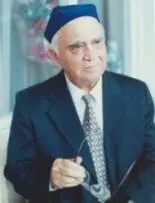
Pirimqul Qodirov
Uzbek novelist and literary scholar, author of “Starry Nights”, a historical novel about Babur, and its sequel “The Pass of Generations”; People’s Writer of the Uzbek SSR.
- Occupation:
- Writer, Prose writer
- Born:
- October 25 1928(82 years old) ♏ — December 20, 2010
- Spouse:
- Sofiya
Biography
Pirimqul Qodirov was born on 25 October 1928 in the village of Kengko'l at the foot of the Turkestan Range. The village then belonged to the Ura-Tyube district and now lies in the Shahriston district of Tajikistan’s Sughd region. His father spent most of his life as a shepherd in the mountains; the writer later drew on the juniper forests and the shepherds’ work in his novel “Black Eyes”. By his own account, in 1930 his father was exiled for five years for throwing a lavish feast to celebrate having four sons in a row, and the family spent those years in the village of Iskandar in the Xovos district. During the war he left school after the eighth grade and worked on the village collective farm in place of the men who had gone to the front.
After the war he came to Tashkent, went through the preparatory department of the Central Asian State University and then its Faculty of Oriental Studies, graduating in 1951. His first book, “Students”, came out in 1950 while he was still a student. Abdulla Qahhor became the young writer’s mentor and advised him to continue his studies in Moscow. In 1951–1954 Qodirov was a postgraduate at the Gorky Institute of World Literature, where he defended a candidate’s dissertation on Qahhor’s post-war writing. From 1954 to 1963 he worked as the consultant on Uzbek literature at the Union of Soviet Writers.
In Moscow he wrote his first novel, “Three Roots” (1958), about young people of his generation; a Russian translation was published in Moscow in 1959. Back in Tashkent from 1963, he was a senior research fellow at the Institute of Language and Literature of the Academy of Sciences of Uzbekistan until 1983. In these years he published the novellas “My Treasure” (1961), “Freedom” (1968) and “Legacy” (1974), the novel “Black Eyes” (1966), about mountain shepherds facing the abuses of officials, and “The Diamond Belt” (1976), which raised the problems of village life. The National Encyclopedia of Uzbekistan notes that “Legacy” was the first work of Uzbek literature to show what the cotton monoculture had cost the people. “The Diamond Belt” won the prize of the Union of Soviet Writers in 1983, and “My Treasure” was made into the feature film “Your Traces”. For children he wrote the novellas “The Adventures of Akram” (1974) and “Yayra Wants to Go to College” (1979).
His best-known book is “Starry Nights” (“Yulduzli tunlar”), a novel about Zahiriddin Muhammad Babur. Written in 1969–1978 and published in 1979, it brought him the Hamza State Prize of the Uzbek SSR in 1981. At a time when Soviet ideology discouraged historical subjects, Qodirov carried on the tradition of the historical novel begun by Abdulla Qodiriy and Oybek. Readers welcomed the book, but official critics accused the author of idealising the past. The novel was reprinted many times in Moscow and Tashkent and translated into Hindi, Urdu, Kazakh, Kyrgyz, Karakalpak and other languages, and later into English as “Babur: Starry Nights”. Its sequel, “The Pass of Generations” (“Avlodlar dovoni”), set in the reigns of Humayun and Akbar, appeared in the magazine “Sharq yulduzi” in 1988. “Starry Nights” was adapted as a video serial, and his play “Babur” ran for many years at today’s Uzbek National Academic Drama Theatre.
As a literary scholar Qodirov studied the language of fiction and the creative process: he wrote “Language and Heart” and “Folk Language and Realist Prose” and the chapters on the language of the literary work and on the literary process for a two-volume “Theory of Literature”. He translated into Uzbek Leo Tolstoy’s “The Cossacks”, Mikhail Lermontov’s “Bela”, Konstantin Fedin’s “Early Joys” and the novel “Fate” by the Turkmen writer Hydyr Derýaýew.
Around independence and in its first years he was active in public life: in 1989–1994 he chaired the committee for State Prizes in literature, art and architecture, in 1991–1995 he was a deputy of the Supreme Council and chaired its committee on culture and cultural heritage, and in 1997–2000 he was a deputy of the Oliy Majlis and deputy chair of its committee on science, education, culture and sport. In the early 2000s he published “The Mother Falcon’s Farewell”, a novel about Transoxiana in the time of Shahrukh and Gawharshad, and the books “Language and People” (2005) and “The Image of Amir Temur”. In his last years he led the prose council of the Writers’ Union of Uzbekistan.
He was named Honoured Worker of Culture of the Uzbek SSR in 1978 and People’s Writer of the Uzbek SSR in 1988, and received the “Shuhrat” medal (1994) and the orders “El-yurt hurmati” (1998) and “Buyuk xizmatlari uchun” (“For Outstanding Merit”, 2006). He and his wife Sofiya raised four children; he said that she typed out the manuscripts of all his books. Pirimqul Qodirov died in Tashkent on 20 December 2010 and was buried in the Chig'atoy cemetery. In 2017 he was posthumously awarded the State Prize of the Republic of Uzbekistan.
Education
- National University of UzbekistanUniversity · Tashkent · 1945–1951 · Faculty of Oriental Studies (then the Central Asian State University)
- Gorky Institute of World LiteratureOther · 1951–1954 · Postgraduate studies, candidate’s dissertation (Abdulla Qahhor’s post-war writing)
Career
- Academy of Sciences of UzbekistanSenior research fellow at the Institute of Language and Literature · Tashkent · 1963–1983
- Writers' Union of UzbekistanHead of the prose council (in his last years) · Tashkent
- Oliy Majlis of the Republic of UzbekistanDeputy, deputy chairman of the committee on science, education, culture and sport · Tashkent · 1997–2000
- Supreme Soviet of the Uzbek SSRDeputy, chairman of the committee on culture and cultural heritage · Tashkent · 1991–1995
- Union of Soviet WritersConsultant on Uzbek literature · 1954–1963
- Committee for State Prizes in Literature, Art and ArchitectureChairman · Tashkent · 1989–1994Everyone who held this post →
Awards
 Order «For Outstanding Merit»2006 · Uzbekistan
 Order «El-yurt hurmati»1998 · Uzbekistan
 Medal «Shuhrat» (Glory)1994 · Uzbekistan
- People's Writer of the Uzbek SSR1988 · Uzbek SSR
 Honoured Worker of Culture of the Uzbek SSR1978 · Uzbek SSR
 Hamza State Prize of the Uzbek SSR1981 · Uzbek SSR
Life path
- 1941–1945War years
Left school after the eighth grade and worked on his village’s collective farm.
- 1945–1951University
Preparatory department and Faculty of Oriental Studies of the Central Asian State University.
- 1950First book
Published “Students” while still at university.
- 1951–1954Postgraduate studies
Studied at the Gorky Institute of World Literature in Moscow and defended a dissertation on Abdulla Qahhor.
- 1954–1963Union of Soviet Writers
Consultant on Uzbek literature; his novel “Three Roots” came out in 1958.
- 1963–1983Institute of Language and Literature
Senior research fellow at the institute of the Academy of Sciences of Uzbekistan; wrote “Black Eyes” and “The Diamond Belt”.
- 1979–1981“Starry Nights”
The novel about Babur was published and won the Hamza State Prize of the Uzbek SSR.
- 1988People’s Writer
Named People’s Writer of the Uzbek SSR; “The Pass of Generations” appeared in the magazine “Sharq yulduzi”.
- 1989–1994State Prize committee
Chaired the committee for State Prizes in literature, art and architecture.
- 1991–2000Member of parliament
Deputy of the Supreme Council (1991–1995) and of the Oliy Majlis (1997–2000), with leading posts on committees dealing with culture.
- 2010Death
Died in Tashkent on 20 December and was buried in the Chig'atoy cemetery.
Works
- “Students” (1950)Short story
His first book, published while he was a student.
- “Three Roots” (1958)Novel
His first novel, about young people; published in Russian in Moscow in 1959.
- “My Treasure” (1961)Novella
Adapted as the feature film “Your Traces”.
- “Black Eyes” (1966)Novel
About mountain shepherds facing the abuses of officials.
- “Folk Language and Realist Prose” (1973)Literary scholarship
A study of the language of fiction.
- “Legacy” (1974)Novella
About the hardships brought by the cotton monoculture.
- “The Diamond Belt” (1976)Novel
About the problems of village life; won the prize of the Union of Soviet Writers in 1983.
- “Starry Nights” (1979)Historical novel
About Zahiriddin Muhammad Babur; won the Hamza State Prize of the Uzbek SSR in 1981 and was translated into many languages.
- “The Pass of Generations” (1988)Historical novel
The sequel to “Starry Nights”, set in the reigns of Humayun and Akbar; published in the magazine “Sharq yulduzi”.
- “The Mother Falcon’s Farewell”Historical novel
About 15th-century Transoxiana in the time of Shahrukh and Gawharshad; published in the early 2000s.
- “Language and People” (2005)Popular scholarship
Reflections on language and the spiritual life of a people.
- “The Image of Amir Temur” (2006)Historical essay
On the figure of Amir Temur.
Legacy
The National Encyclopedia of Uzbekistan sees Qodirov as the writer who, when Soviet ideology restricted historical subjects, carried on the tradition of Abdulla Qodiriy, Oybek, Shayxzoda and Mirkarim Osim: “Starry Nights” and “The Pass of Generations” trace the rise of the Mughal empire through the lives of Babur, Humayun and Akbar. “Starry Nights” has been translated into many languages, English among them, was adapted as a video serial, and his play “Babur” held the stage for years. His novella “Legacy” was among the first works to bring the cotton monoculture into Uzbek literature.
Era: 20th-century Uzbek literature: the Soviet period and independence- The novel “Starry Nights” was published (1979)
- The novel won the Hamza State Prize of the Uzbek SSR (1981)
- “The Pass of Generations” appeared in the magazine “Sharq yulduzi” (1988)
- Posthumously awarded the State Prize of the Republic of Uzbekistan (2017)