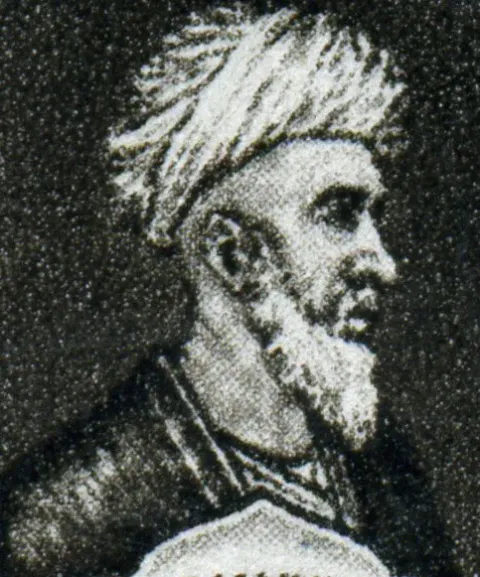
Saadi Shirazi
Persian poet and prose writer from Shiraz (c. 1210 – 1291/92), author of the verse “Bustan” and the prose-and-verse “Gulistan”, and one of the masters of the classical Persian ghazal.
- Occupation:
- Writer, Poet, Prose writer
- Real name:
- Abu Muhammad Musharrif al-Din Muslih ibn Abdallah Shirazi
- Nickname:
- Sheikh Saadi
- Born:
- c. 1210 — c. 1291
Biography
Saadi is the poet’s pen name, and it signs every one of his ghazals. His full name is recorded in many different forms; the Encyclopaedia Iranica adopts Abu Muhammad Musharrif al-Din Muslih ibn Abdallah Shirazi. He was born in Shiraz, the chief city of Fars, which was then ruled by atabegs of the Salghurid dynasty. The year is uncertain: going by the poet’s own lines in the “Gulistan” about fifty years gone by, most scholars date his birth to about 1209–1210, while others argue for 1213–1219. The pen name most likely declares his loyalty to the Salghurid house, two of whose rulers bore the name Sa'd.
His father gave him his first lessons and died while Saadi was still a boy. As a teenager, probably around 1223–1224, he went to Baghdad to study and for a time held a stipend at the Nizamiyya madrasa. Among his teachers he names the Baghdad preacher Abu’l-Faraj ibn al-Jawzi, whom scholars identify as the grandson of the famous theologian of that name. His teachings also show a kinship with those of the Sufi master Shihab al-Din Umar Suhrawardi.
Some thirty years of travel followed his studies. In the “Bustan” and the “Gulistan” Saadi tells, in the first person, of being taken prisoner by the Crusaders in Syria, of an adventure in an Indian temple and of a meeting in Kashgar, yet many of these tales are literary inventions. Homa Katouzian concludes that the poet very probably visited Iraq, Syria, Palestine and Arabia, but is unlikely to have reached Khorasan, India or Kashgar.
Around 1257 Saadi came back to Shiraz already a famous poet, his ghazals having travelled far ahead of him. Late that year he finished the “Bustan” and dedicated it to the ruler of Fars, the atabeg Abu Bakr ibn Sa'd; in 1258 he completed the “Gulistan”, a book of prose interspersed with verse, presented to Abu Bakr and his son Sa'd. When the Mongols took Baghdad in that same year and put to death the last Abbasid caliph, al-Musta'sim, he mourned the catastrophe in two qasidas, one in Arabic and one in Persian.
The Salghurids soon lost their hold: Abu Bakr died in 1260, his son twelve days later, and Shiraz passed under the Mongol Ilkhanate. Saadi addressed poems to local rulers, to Mongol governors and to their Persian officials, the Juvayni brothers among them, yet these read less as panegyrics than as counsel on just government. He apparently never held a post at court and, according to the sources, lived in a Sufi lodge (khanqah).
His last datable poem is addressed to an official who served in Shiraz in 1287–1289. Saadi died in Shiraz in 1291 or 1292: Zabihollah Safa dates his death to December 1291, Saeed Nafisi to 9 December 1292. His tomb in the city was restored in the 18th century by Karim Khan Zand. His collected works, the “Kulliyat”, were put in order in 1326 and 1334 by a fellow townsman, Ali ibn Ahmad Bisutun.
Saadi’s books crossed the borders of the Persian-speaking world early on. In 1391 Sayf Sarayi translated the “Gulistan” into Kipchak Turkic; in the madrasas of Central Asia the “Gulistan” and the “Bustan” were read as textbooks, Alisher Navoi wrote twenty-two ghazals in imitation of Saadi in his Persian divan, and in the 19th century Ogahiy translated the “Gulistan” into Uzbek. Europe came to know the poet through André du Ryer’s partial French translation (1634) and Adam Olearius’s German one (1654).
Education
- Nizamiyya Madrasa (Baghdad)Madrasa · Islamic sciences
Life path
- c. 1210Born in Shiraz
Born in the chief city of Fars, then ruled by the Salghurid atabegs.
- c. 1223–1224Studies in Baghdad
Went to Baghdad as a teenager and studied on a stipend at the Nizamiyya madrasa.
- 1220s–1250sYears of travel
Spent some thirty years travelling the Muslim lands, most probably Iraq, Syria, Palestine and Arabia.
- c. 1257Return to Shiraz
Came home a well-known poet and renewed his ties with the Salghurid house.
- 1257The “Bustan”
Finished the ten-chapter didactic poem and dedicated it to the atabeg Abu Bakr ibn Sa'd.
- 1258The “Gulistan” and the lament for Baghdad
Completed the book of prose and verse; mourned the Mongol sack of Baghdad in Arabic and Persian qasidas.
- 1260Elegies for the Salghurids
Wrote elegies on the deaths of Abu Bakr ibn Sa'd and of his son Sa'd, who died twelve days later.
- 1268–1272Qasidas to governor Ankyanu
Addressed four qasidas, essentially advice on just rule, to the Mongol governor of Shiraz.
- 1287–1289Last datable poem
A short qasida to the Shiraz official Majd al-Din Rumi, probably the last of his poems that can be dated.
- 1291/1292Death
Died in Shiraz and was buried there.
Works
- “Bustan” (“The Orchard”) (1257)Narrative poem (masnavi)
A didactic poem of some 4,100 couplets in ten chapters: on justice, beneficence, love, humility, submission, contentment, education, gratitude, repentance and prayer. Dedicated to the atabeg Abu Bakr ibn Sa'd; early sources also call it the “Sa'di-nama”.
- “Gulistan” (“The Rose Garden”) (1258)Prose and verse
A book of tales in eight chapters, short prose stories punctuated by verses that draw the moral. It contains the famous lines on the children of Adam as limbs of one body.
- GhazalsLyric poetry
About seven hundred ghazals gathered in four books — “Tayyibat”, “Bada'i”, “Khawatim” and “Ghazaliyat-e qadim” — each signed with the pen name Saadi.
- Persian qasidasQasidas
Odes to Salghurid rulers, Mongol governors and their officials, more often counsel on just government than praise.
- Arabic qasidasQasidas
Poems in Arabic, among them a lament for the Mongol sack of Baghdad in 1258 and the death of the last Abbasid caliph.
- “Five Sermons” (“Majalis-e panjgana”)Sermons
Five sermons in prose.
- “Treatise on Reason and Love”Treatise
A prose treatise on reason and love.
- “Advice to Kings” (“Nasihat al-muluk”)Advice literature
Short prose counsels addressed to rulers.
- “Sahebiya”Poetic fragments (qit'a)
Fragments composed in honour of the Ilkhanid vizier Shams al-Din Juvayni, found in some older manuscripts.
Legacy
The “Gulistan” is regarded as one of the most influential prose works in Persian: many of its phrases have become proverbs, and for centuries the book served as a textbook of the Persian language and of ethics in the Ottoman lands, India and Central Asia. Saadi’s ghazal shaped the poetry of Amir Khusraw and Hasan Dehlavi in India and, later, of Hafez in Shiraz. In Uzbek literature Alisher Navoi’s “Mahbub ul-qulub” (“Beloved of Hearts”) was written under the influence of the “Gulistan”, and the title of Abdulla Avloniy’s “A Turkic Gulistan, or Ethics” goes back to the same tradition; the “Gulistan” has been translated into Uzbek several times. In Europe Saadi was read by Voltaire and Goethe. In Iran the first day of the month of Ordibehesht (around 21 April) is marked as Saadi Day.
Era: 13th century; Shiraz under the Salghurids and the Ilkhanids, classical Persian literature- Ali ibn Ahmad Bisutun arranged the poet’s “Kulliyat” (1326)
- Sayf Sarayi translated the “Gulistan” into Kipchak Turkic (1391)
- André du Ryer published a partial French translation of the “Gulistan” (1634)
- Adam Olearius translated the “Gulistan” into German (1654)
- A Soviet postage stamp marked 700 years of the “Gulistan” (1959)
- A crater on Mercury was named after Saadi (1976)
- A carpet bearing Saadi’s lines on the children of Adam was installed in the UN building in New York (2005)