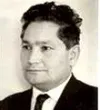
Sadyk Azimov
Physicist, academician of the Academy of Sciences of the Uzbek SSR, founder of the nuclear and high-energy physics schools in Uzbekistan and initiator of the Big Solar Furnace at Parkent.
Biography
Sadyk Azimovich Azimov was born on 7 November 1914 in Tashkent into an educated family. His maternal grandfather, Olim-qozi, was a judge of Tashkent, and his father, Sayid Azimbay (1891–1942), was a landowner and flour-milling entrepreneur who opened a new-method school in his own house. In a household that included a sick mother, two younger sisters and a brother, Azimov became the main breadwinner.
From 1936 to 1940 he studied at the physics and mathematics faculty of Central Asian State University and then took part in a Pamir expedition to study cosmic rays. He entered postgraduate study in 1948, defended a candidate dissertation, and in 1955 defended his doctoral dissertation at the Lebedev Physical Institute in Moscow under the academician V. I. Veksler.
In 1954, on his initiative, a Department of Nuclear Physics and Cosmic Rays was set up at Tashkent State University; he headed it for the rest of his life. When the Soviet government decided in 1956 to create an Institute of Nuclear Physics in Tashkent, the design and construction of its scientific complex, a settlement for staff (now Ulugbek) and the building of the research team were entrusted to Azimov on the proposal of I. V. Kurchatov. He became deputy director in 1956, was elected an academician and director of the Institute of Nuclear Physics in 1962, and from 1966 to 1988 headed the Physical-Technical Institute.
The high-energy physics school he led studied the elastic scattering of hadrons, the diffraction of pions on nuclei and inelastic interactions of particles with nuclei; in 1964 it observed the narrowing of the diffraction cone in elastic proton-proton scattering. Azimov himself showed in 1948 that cosmic rays contain electrons and photons unrelated to mesons. Under him the Kumbel observatory was built, a cyclotron, a neutron generator and a helium-production building were commissioned, and he trained 14 doctors and more than 70 candidates of science.
In the 1970s Azimov put forward the idea of a Big Solar Furnace, looking to renewable energy. Construction began in the early 1980s at Parkent near Tashkent and was completed by the end of the decade; the 1-megawatt installation was meant, among other things, for producing ultra-pure semiconductor materials with solar energy. From 1986 he was general director of the Physics-Sun research and production association.
Sadyk Azimov died in Tashkent in 1988 of a heart attack and was buried in the scientists’ alley of the Chigatay cemetery. He was an Honoured Scientist and Technician of the Uzbek SSR (1964), a laureate of the Beruni State Prize of the Uzbek SSR (1970) and a holder of the Orders of the Red Banner of Labour and of the Friendship of Peoples; in 2002 he was posthumously awarded the Order “Buyuk xizmatlari uchun” (“For Outstanding Merit”). A street in Tashkent bears his name, and a monument to him was unveiled at the Institute of Materials Science for the 110th anniversary of his birth.
Education
- Central Asian State UniversityUniversity · Tashkent · 1936–1940 · Physics and mathematics faculty
Career
- Academy of Sciences of UzbekistanAcademician of the Academy of Sciences of the Uzbek SSR · Tashkent · 1962–1988
- National University of UzbekistanHead of the Department of Nuclear Physics and Cosmic Rays (at Tashkent State University) · Tashkent · 1954–1988
- Physical-Technical Institute of the Academy of Sciences of the Uzbek SSRHead of laboratory, deputy director, director · Tashkent · 1948–1988
- Institute of Nuclear Physics of the Academy of Sciences of the Uzbek SSRDeputy director, director (from 1962) · Tashkent · 1956–1966
- Physics-Sun research and production associationGeneral director · Tashkent · 1986–1988Everyone who held this post →
Awards
 Order «For Outstanding Merit»2002, posthumously · Uzbekistan
- Honoured Science Worker of the Uzbek SSR1964 · Uzbek SSR
 Beruni State Prize of the Uzbek SSR1970 · Uzbek SSR


Life path
- 1914Birth
Born in Tashkent into an educated family.
- 1936–1940University studies
Studied at the physics and mathematics faculty of Central Asian State University. After graduating, worked on a Pamir expedition studying cosmic rays.
- 1948Postgraduate study and cosmic rays
Entered postgraduate study; showed that cosmic rays contain electrons and photons unrelated to mesons.
- 1954Department of Nuclear Physics
Founded the Department of Nuclear Physics and Cosmic Rays at Tashkent State University and headed it for the rest of his life.
- 1955Doctoral dissertation
Defended his doctoral dissertation at the Lebedev Physical Institute in Moscow.
- 1956Institute of Nuclear Physics
Became deputy director of the newly founded Institute of Nuclear Physics in Tashkent and was entrusted with building its complex.
- 1962Academician and institute director
Elected an academician of the Academy of Sciences of the Uzbek SSR and appointed director of the Institute of Nuclear Physics.
- 1964Honorary title
Awarded the title Honoured Scientist and Technician of the Uzbek SSR.
- 1966–1988Director of the Physical-Technical Institute
Headed the Physical-Technical Institute of the Academy of Sciences.
- 1970State Prize
Became a laureate of the Beruni State Prize of the Uzbek SSR.
- 1980sBig Solar Furnace
Led the construction of the 1-megawatt solar furnace at Parkent; from 1986 general director of the Physics-Sun association.
- 1988Death
Died in Tashkent and was buried in the scientists’ alley of the Chigatay cemetery.
Works
- “Inelastic Collisions of High-Energy Particles with Nucleons and Nuclei” (1974)Monograph
Co-written with T. S. Yuldashbaev and published by the Physical-Technical Institute.
- “Interactions of Particles with Nuclei at High Energies” (1981)Collected volume
A volume of papers by the staff of the Physical-Technical Institute, edited by Azimov.
- “Silicon-Lithium Detectors of Nuclear Radiation” (1981)Monograph
Co-written with R. A. Muminov, S. Kh. Shamirzaev and A. Ya. Yafasov.
- “Epitaxial Hall Sensors and Their Applications” (1986)Monograph
Co-written with K. D. Potaenko and V. I. Tikhonov.