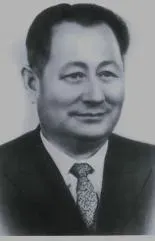
Ubay Orifov
Physicist and academician, President of the Academy of Sciences of the Uzbek SSR (1962–1966); researcher of surface and nuclear physics and solar technology who headed three of the academy's institutes.
Biography
Ubay Orifov (in Russian, Ubay Arifov) was born on 15 June 1909 (2 June in the old style) in Kokand. In 1931 he graduated from the Uzbek Pedagogical Academy in Samarkand, then worked as an assistant at the Central Asian State University in Tashkent (1935–1941).
He took part in the Second World War and joined the Communist Party in 1944. In 1945 he became head of the Physico-Technical Institute of the Academy of Sciences of the Uzbek SSR, a post he held twice: in 1945–1956 and again in 1963–1967.
Elected an academician in 1956, he directed the Institute of Nuclear Physics from 1956 to 1962 and is named in sources as one of its founders. From 23 January 1962 to 26 February 1966 he was President of the Academy of Sciences of the Uzbek SSR, and in those years he also edited the academy’s Doklady.
His research covered physical electronics, solid-surface physics, nuclear and radiation physics, mass spectrometry and solar technology: he studied non-stationary processes on metal surfaces, surface ionisation and the interaction of atomic particles with solids, and took part in building solar furnaces and photovoltaic devices. He founded and edited the journal Geliotekhnika (1965–1976).
In 1966 he organised the Institute of Electronics and led it until 1975; from 1963 he also headed a department at the Tashkent Polytechnic Institute. He received the Order of Lenin, the Order of the Red Banner of Labour (1965), the Order of the Red Star and two Orders of the Badge of Honour, and was a laureate of the Beruni State Prize of the Uzbek SSR (1968).
He died in Tashkent on 24 December 1976 and was buried in the Alley of Scholars at the Chigatay cemetery. In 2002 he was posthumously awarded the Order “For Outstanding Merit”. The academy’s Institute of Electronics bore his name until its renaming in 2012, and a street in Tashkent’s Yunusabad district is also named after him.
Education
- Uzbek Pedagogical AcademyUniversity · Samarkand · 1931
Career
- Physical-Technical Institute of the Academy of Sciences of the Uzbek SSRDirector · Tashkent · 1945–1956Everyone who held this post →
- Institute of Nuclear Physics of the Academy of Sciences of the Uzbek SSRDirector · Tashkent · 1956–1962Everyone who held this post →
- Central Asian State UniversityAssistant · Tashkent · 1935–1941
- Tashkent Polytechnic InstituteHead of department · Tashkent · 1963–…
- Institute of Electronics of the Academy of Sciences of the Uzbek SSRDirector · Tashkent · 1966–1975Everyone who held this post →
Awards
 Order «For Outstanding Merit»2002, posthumously · Uzbekistan
 Beruni State Prize of the Uzbek SSR1968 · Uzbek SSR
 Order of LeninUSSR
 Order of the Red Banner of Labour1965 · USSR


Works
- “Interaction of Atomic Particles with a Solid Surface” (1969)Monograph
A study of ion bombardment, scattering and surface processes; published in English in New York in 1969.
Life path
- 1909Birth
Born in Kokand (15 June, new style).
- 1931Education
Graduated from the Uzbek Pedagogical Academy in Samarkand.
- 1935–1941Central Asian State University
Worked as an assistant at the university in Tashkent.
- 1945–1956Physico-Technical Institute
Headed the Physico-Technical Institute of the Academy of Sciences of the Uzbek SSR; returned to the post in 1963–1967.
- 1956–1962Institute of Nuclear Physics
Elected an academician and directed the Institute of Nuclear Physics.
- 1962–1966President of the Academy of Sciences
Served as President of the Academy of Sciences of the Uzbek SSR.
- 1965Journal Geliotekhnika
Became chief editor of the international journal Geliotekhnika (until 1976); the same year he received the Order of the Red Banner of Labour.
- 1966–1975Institute of Electronics
Organised the Institute of Electronics and directed it.
- 1968State Prize
Became a laureate of the Beruni State Prize of the Uzbek SSR.
- 1976Death
Died in Tashkent on 24 December and was buried at the Chigatay cemetery.
- 2002Posthumous honour
Awarded the Order “For Outstanding Merit”.