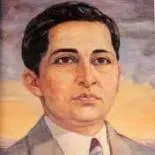
Usmon Nosir
Uzbek poet, playwright and translator, author of the collections “Heart” and “My Love” and of Uzbek versions of poems by Pushkin and Lermontov; arrested in 1937, he died in a Siberian labour camp.
- Occupation:
- Writer, Poet, Playwright
- Real name:
- Usmon Nosirov
- Born:
- November 13 1912(31 years old) ♏ — March 9, 1944
- Birthplace:
- Namangan
- Mother:
- Xolambibi Masodiqova
Biography
Usmon Nosir was born on 13 November 1912 in Namangan. He lost his father early and was brought up first by an uncle and then by his stepfather, Nosirhoji, whose name gave him the surname Nosirov and later his literary name. After the family moved to Kokand he spent his childhood in a boarding school there and finished secondary school in the same town.
His first poem appeared in print in 1927, when he was fifteen. In 1929–1930 he studied at the screenwriting faculty of the State Institute of Cinematography in Moscow, and then, briefly, at the Faculty of Language and Literature of the Pedagogical Academy in Samarkand. His first collection, “Conversation with the Sun”, came out in 1932, followed the same year by the collection “Mobilized Lines” and the narrative poem “Norbo'ta”, set during the Civil War in Uzbekistan. In 1933–1934 he worked for the newspaper “Yosh Leninchi” in Tashkent, and in 1934 he joined the Writers’ Union of Uzbekistan.
The mid-1930s brought the collections “Traktorobod” (1934), “Heart” (1935) and “My Love” (1936) and the narrative poem “Naxshon” (1934), about the Armenian people’s struggle for freedom. In poems such as “Monologue” and “The Nile and Rome” he voiced the lyric hero’s feelings with an openness and intensity uncommon in the Uzbek poetry of the time. He wrote the plays “Nazirjon Xalilov”, “Zafar” and “The Enemy”; his play “Atlas” (1935) was staged by an amateur theatre. He translated Pushkin’s “The Fountain of Bakhchisaray” and Lermontov’s “The Demon” into Uzbek, and Moscow newspapers of those years hailed him as a new Pushkin who had appeared in the East.
On 27 January 1937 the tenth anniversary of his literary career was widely celebrated in the republic. Six months later a meeting of the Writers’ Union discussed the poet’s “behaviour” and expelled him, and on 13 July 1937 he was arrested as an “enemy of the people”. The indictment accused him of nationalist agitation and of deliberately distorting Pushkin in translation. On 5 October 1938 a visiting session of the Military Collegium of the USSR Supreme Court sentenced him to ten years’ imprisonment and five years’ loss of civil rights.
In January 1939 he was sent to the prison in Zlatoust, and that summer, via Vladivostok, to the camps of Kolyma. On 20 August 1940 he wrote to Stalin from Magadan, protesting his innocence and saying that in prison he had written a novel in verse, three plays and a number of poems; the fate of those manuscripts is still unknown. Later, gravely ill, he was transferred to a camp near the village of Suslovo in the Mariinsk district of the Kemerovo region, where he spent his last months in the camp hospital. Usmon Nosir died on 9 March 1944, aged 31, and was buried on 15 March in the prisoners’ cemetery at Suslovo (now Pervomayskoye).
His appeal and a petition from his mother, Xolambibi Masodiqova, led to a review of the case. In 1944 a commission made up of the linguist A. K. Borovkov, the poet Maqsud Shayxzoda and Siddiq Rajabov, editor of the newspaper “Qizil O'zbekiston”, concluded that the charges against him were groundless, but by then the poet was already dead. On 21 March 1957 the Military Collegium of the USSR Supreme Court quashed the 1938 sentence, and Usmon Nosir was posthumously rehabilitated.
In the Kemerovo region a memorial to the poet stands on the site of the former cemetery for political prisoners, and a museum bearing his name and literary readings keep his memory alive. In Uzbekistan his 90th anniversary was marked in 2003 and, by a presidential resolution, his 110th in 2022. On 13 November 2022 a statue by the sculptor Qodir Namozov was unveiled in Namangan, in the alley named after him, and on 4 September 2023 a monument by Konstantin Zinich was put up in the town of Mariinsk.
Education
- Gerasimov Institute of Cinematography (VGIK)University · 1929–1930 · Screenwriting faculty (then the State Institute of Cinematography)
- Uzbek Pedagogical AcademyUniversity · Samarkand · Faculty of Language and Literature
Career
- Writers' Union of UzbekistanMember (expelled in 1937) · Tashkent · 1934–1937
- Yosh Leninchi newspaperStaff member · Tashkent · 1933–1934
Life path
- 1927First poem
Saw his first poem in print at the age of fifteen.
- 1929–1930Studies in Moscow
Studied at the screenwriting faculty of the State Institute of Cinematography; then briefly at the Pedagogical Academy in Samarkand.
- 1932“Conversation with the Sun”
His first poetry collection came out, together with the collection “Mobilized Lines” and the narrative poem “Norbo'ta”.
- 1933–1934“Yosh Leninchi” newspaper
Worked for the newspaper in Tashkent.
- 1934Writers’ Union
Joined the Writers’ Union of Uzbekistan; the collection “Traktorobod” and the narrative poem “Naxshon” were published.
- 1935–1936“Heart” and “My Love”
His best-known collections came out and his play “Atlas” was staged.
- 1937Arrest
The tenth anniversary of his literary career was marked in January; on 13 July, expelled from the Writers’ Union, he was arrested as an “enemy of the people”.
- 1938Sentence
On 5 October a visiting session of the Military Collegium of the USSR Supreme Court sentenced him to ten years.
- 1939–1944Prison and camps
Zlatoust prison, the Kolyma camps, then the camp at Suslovo in the Kemerovo region; in 1940 he wrote to Stalin from Magadan.
- 1944Death
Died on 9 March in the Suslovo camp.
- 1957Rehabilitation
On 21 March the Military Collegium of the USSR Supreme Court quashed the sentence; he was rehabilitated posthumously.
- 2022110th anniversary
The poet’s 110th anniversary was marked by a presidential resolution, and a statue of him was unveiled in Namangan.
Works
- “Conversation with the Sun” (1932)Poetry collection
The poet’s first book.
- “Mobilized Lines” (1932)Poetry collection
Early poems in a campaigning, journalistic spirit.
- “Norbo'ta” (1932)Narrative poem
About the Civil War years in Uzbekistan.
- “Monologue” (1933)Poem
A lyric monologue on love and suffering, told through the fates of famous lovers of world literature.
- “Traktorobod” (1934)Poetry collection
The poet’s third collection of verse.
- “Naxshon” (1934)Narrative poem
About the Armenian people’s struggle for freedom.
- “Heart” (1935)Poetry collection
Its title poem is among his best-known works.
- “Atlas” (1935)Play
Staged by an amateur theatre.
- “My Love” (1936)Poetry collection
His last collection before his arrest.
- “The Nile and Rome”Poem
About the struggle of slaves in ancient Egypt and Rome.
- “The Fountain of Bakhchisaray”Translation
Alexander Pushkin’s poem in Uzbek.
- “The Demon”Translation
Mikhail Lermontov’s poem in Uzbek.
Legacy
Literary historians regard Usmon Nosir as the poet who brought a new tone into Uzbek poetry of the 1930s, laying bare the lyric hero’s inner world with open and passionate feeling. His translations of Pushkin and Lermontov are counted among the achievements of Uzbek literary translation, and his poems are included in school literature textbooks. After his rehabilitation his books were published again, and between 1971 and 1992 collections of his poetry in Russian translation also appeared in Tashkent.
Era: Uzbek poetry of the 1930s- Posthumously rehabilitated (1957)
- His 90th anniversary was marked in Uzbekistan (2003)
- His 110th anniversary was marked by a presidential resolution (2022)
- A statue of Usmon Nosir was unveiled in Namangan (2022)
- A monument to the poet was put up in Mariinsk, Kemerovo region (2023)