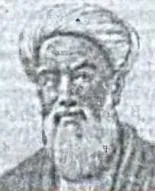
Biography
Ubaydulla Solih oghli, known by his pen name Zavqiy, was born in 1853 in Kokand into a craftsman’s family. His youth fell in years when the khans and beks of Kokand were fighting each other for power. His parents were illiterate but wanted their son educated, and he attended a traditional primary school in his neighbourhood.
From 1870 to 1874 he studied at the Kokand madrasas Madrasai Oliy and Madrasai Chalpak, helped by his uncle Muhammad Siddiq, who loved literature. There he met Muqimiy and Furqat and began writing poetry under the pen name Zavqiy. When his father fell ill and was bedridden, he left his studies and worked as a bootmaker to support the family.
Later he served for a time as a clerk (mirza) and travelled on business to Khujand, Samarkand, Bukhara, Tashkent, Osh, Andijan and Margilan. In 1900 he made a pilgrimage to Medina with his uncle, and in 1903 he returned to Kokand.
In his ghazals, muxammas and muvashshah poems Zavqiy carried on the tradition of Navoi, Muqimiy and Furqat, singing of love, fidelity and separation. He also developed the satirical line begun by Muqimiy, writing verse that exposed social inequality under colonial rule, bribe-taking officials and greedy merchants: “Ahli rasta hajvi”, “Obid mingboshi haqida hajv”, “Kajdor zamona”. In the dastans “Voqeai qozi saylov” and “Qahatchilik” he portrayed social events of his time.
His muxammas “Ajab ermas” (1916) is regarded as a notable event in early twentieth-century Uzbek poetry: in it the poet reflects on the future of a country under colonial rule. In his poems after 1917 Zavqiy supported the new authorities, and in the Soviet period his name was linked with the formation of new Uzbek literature.
Zavqiy died in Kokand in 1921. His poems have come down through manuscript collections, periodicals and oral tradition, and many of his ghazals and muxammas were set to music by hafiz singers. A monograph on his life and work by H. Razzoqov appeared in 1955. A neighbourhood, a village, a school and a street in Kokand carry his name.
Education
- Madrasai Oliy Madrasa (Kokand)Madrasa · Kokand · 1870–1874
- Madrasai Chalpak Madrasa (Kokand)Madrasa · Kokand · 1870–1874
Life path
- 1853Born in Kokand
Born into a craftsman’s family.
- 1870–1874Studies at the madrasas
Studied at Madrasai Oliy and Madrasai Chalpak in Kokand and met Muqimiy and Furqat.
- 1870sCraft and poetry
Left his studies when his father fell ill and worked as a bootmaker; wrote poems under the name Zavqiy.
- 1880sClerk and travels
Served for a time as a clerk (mirza); visited Khujand, Samarkand, Bukhara, Tashkent and other cities.
- 1900–1903Pilgrimage to Medina
Made the pilgrimage with his uncle Muhammad Siddiq and returned to Kokand in 1903.
- 1905–1906“Ahli rasta hajvi”
A satirical poem on the merchants and officials of Kokand.
- 1909–1910“Voqeai qozi saylov”
A dastan on the events around the election of a qazi.
- 1916“Qahatchilik” and “Ajab ermas”
Works on the hardships of the war years and the country’s future.
- 1921Death
Died in Kokand.
Works
- “Ahli rasta hajvi” (“Satire on the Merchants”) (1905)Satirical poem
A satire on the merchants, brokers and officials of Kokand.
- “Kajdor zamona” (1905)Poem
A political poem exposing injustice under colonial rule.
- “Obid mingboshi haqida hajv” (“Satire on Obid the Mingboshi”) (1906)Satire
A satire continuing Muqimiy’s tradition.
- “Voqeai qozi saylov” (“The Affair of the Qazi Election”) (1909)Dastan
A dastan of 1909–1910 exposing social injustice.
- “Qahatchilik” (“Famine”) (1916)Dastan
A dastan reflecting hard years and popular protests against oppression.
- “Ajab ermas” (“No Wonder”) (1916)Muxammas
A muxammas on the future of a country under colonial rule.
- “Shohimardon sayohati” (“A Journey to Shohimardon”)Verse travelogue
Written under the influence of Muqimiy’s “Sayohatnoma”, it depicts village life.
- “Suv janjali” (“The Water Quarrel”)Poem
A work about the life of peasants.
- “Kelmasa-kelmasun netay” (“If She Will Not Come”)Ghazal
A love ghazal performed by hafiz singers to music.