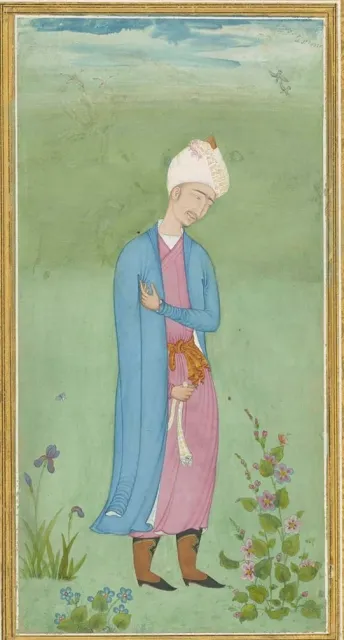
Abd al-Mumin Khan
Shaybanid khan of Bukhara (1598), the only son of Abdullah Khan II; he ruled Balkh from 1582 to 1598, campaigned in Badakhshan and Khorasan, and was killed after about six months on the throne.
- Occupation:
- Historical figure, Politician, Military officer
- Real name:
- Abd al-Mumin ibn Abdallah
- Born:
- 1568 — 1598
- Birthplace:
- Bukhara
- Father:
- Abdullah Khan II
Biography
Abd al-Mumin Khan (also spelt Abdulmumin) was born in 1568 in Bukhara. A Shaybanid, descended from Abu’l-Khayr Khan, he was the only son of Abdullah Khan II, ruler of Bukhara.
In September 1582, aged about fifteen, he was appointed governor of Balkh, and by 1583 at the latest he was proclaimed his father’s heir and given the honorary title “little khan” (kichik khan). In the first years the province was run on the young governor’s behalf by his atalyq, the emir Jankeldi Biy. Balkh remained in his hands until 1598, and after 1587 his father also ceded Termez and Kulob to him.
Under Abd al-Mumin extensive building took place in Balkh. The south-western stretch of the outer city wall, which ran to more than forty kilometres, was rebuilt, two gates of the inner city were restored, and he oversaw work on the mausoleum-mosque of Khwaja Abu Nasr Parsa, the tomb of Khwaja Ukkasha and the dome of the Janbaz Baba market. The Dah Shaykh gate is also attributed to him.
From February 1584, with his father’s armed support, he began to extend the Balkh appanage at the expense of Tokharistan and Badakhshan. Khuttalan was taken in June 1586, and by 1589 Timurid rule in Badakhshan and Tokharistan was ended for good: Muhammad Zaman Mirza, the last Timurid to offer the Shaybanids armed resistance, was defeated and fled into the Badakhshan mountains.
He was also active in Khorasan. In 1588–89 he helped his father in the long siege of Herat, and was said to be displeased when the city was given to the emir Qulbaba Kukeldash rather than to him. In the late 1580s he took Mashhad, and by 1591 the Shaybanids held more than twenty towns, among them Mashhad, Nishapur and Jam. The Safavids allied with Hajji Muhammad Khan of Khwarazm against him, yet Abd al-Mumin recovered Nishapur in 1594, and in 1596–97 he campaigned against Astarabad.
Between 1596 and 1598 relations with the ageing Abdullah Khan II were strained more than once; the son sought independence and matters reached armed clashes. After his father’s death in early 1598 Abd al-Mumin was proclaimed khan of Bukhara at Samarkand and had many of his cousins put to death so that no rival to the throne would remain. Contemporaries described him as resolute but excessively cruel and suspicious.
He held power for about six months and was killed in the summer of 1598 in a plot by his father’s former associates. His cousin Pir Muhammad Khan II took the throne. After the deaths of Abdullah Khan II and Abd al-Mumin the Shaybanids lost their holdings in Khorasan and Khwarazm, and power in Bukhara passed in time to the Ashtarkhanid dynasty.
Career
Life path
- 1568Birth
Born in Bukhara, the only son of Abdullah Khan II.
- 1582Governor of Balkh
Appointed governor of Balkh in September; the atalyq, Emir Jankeldi Biy, ran the province.
- 1583Heir to the throne
Proclaimed his father’s heir and given the title “little khan”.
- 1584–1589Expansion of the Balkh appanage
Annexed lands in Tokharistan and Badakhshan; took Khuttalan in June 1586.
- 1588–1589Siege of Herat
Helped his father in the siege of Herat.
- 1589End of Timurid resistance
The defeat of Muhammad Zaman Mirza ended Timurid rule in Badakhshan and Tokharistan.
- 1580-yillar oxiri – 1591Campaigns in Khorasan
Mashhad, Nishapur, Jam and more than twenty other towns were taken.
- 1594Nishapur recovered
Retook Nishapur, which the Safavids had won back.
- 1596–1598Quarrel with his father
Relations with Abdullah Khan II worsened to the point of armed clashes.
- 1598Khan of Bukhara
Proclaimed khan at Samarkand after his father’s death.
- 1598Death
Killed in a plot in the summer; Pir Muhammad Khan II took the throne.
Legacy
For sixteen years Abd al-Mumin ruled Balkh, rebuilt its walls and shrines, and led Shaybanid campaigns in Badakhshan and Khorasan. His death hastened the break-up of the state his father had built: the holdings in Khorasan and Khwarazm were lost. Central Asian sources call him the last Shaybanid ruler, but Howorth, Lane-Poole and Bosworth hold that the dynasty’s history ends with his cousin Pir Muhammad Khan II.
Era: Late 16th century, the Shaybanid period of the Khanate of Bukhara- Capture of Khuttalan (1586)
- End of Timurid rule in Badakhshan (1589)
- Death of Abdullah Khan II (1598)
- Killing of Abd al-Mumin Khan (1598)