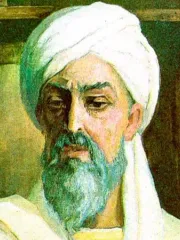
Biography
Abu Mansur al-Hasan ibn Nuh al-Qumri was a physician who lived and worked in Bukhara in the 10th century. The dates of his life are not known exactly: Uzbek publications place his birth in the early 10th century and name Bukhara as his home town, while Western reference works say only that he practised in Bukhara around the middle of the century. “Al-Qumri” (sometimes written “al-Qamari”) in his name is a nisba.
Qumri was a court physician of the Samanids. According to some accounts he served the emir Mansur ibn Nuh (961–976); the 13th-century biographer Ibn Abi Usaybi‘a calls him the leading physician of his generation, a master of medical theory with praiseworthy methods, and says that rulers held him in esteem.
Medieval and modern tradition names Qumri among Ibn Sina’s teachers of medicine. But Ibn Sina was born in 980, and if Qumri died between 980 and 990, direct tutoring is unlikely: Ibn Sina may rather have used his writings. In his own account of how he learned medicine, Ibn Sina names no teacher.
According to Uzbek sources Qumri wrote eight medical works, of which two survive. The first is “Kitab al-ghina wa-l-muna” (“The Book of Wealth and Wishes”), a medical handbook in three parts — diseases from head to foot, external diseases and fevers — known in Persian as “Kunnash-i Abu Mansur”. It gives information on more than thirty physicians, predecessors and contemporaries of the author, and dozens of its manuscripts are kept in libraries in Asia, Africa and Europe. It is one of the large medical works written in Bukhara shortly before Ibn Sina’s “Canon of Medicine”.
The second is “Kitab at-tanwir fi-l-istilahat at-tibbiyya” (“The Book of Illumination on Medical Terms”), a glossary explaining more than 350 medical terms, among them diets, drinks and instruments used by physicians. It was translated into Persian in the 16th century and has since been published in a scholarly edition. A third work, “The Causes of Maladies”, is presumed lost.
Qumri died between 980 and 990 (some historians put his death around 999) and was buried in Bukhara.
Career
- Samanid court in BukharaCourt physician · Bukhara
Works
- “Kitab al-ghina wa-l-muna” (“The Book of Wealth and Wishes”)Medical handbook
A three-part book on diseases from head to foot, external diseases and fevers; known in Persian as “Kunnash-i Abu Mansur”. Dozens of manuscripts survive.
- “Kitab at-tanwir fi-l-istilahat at-tibbiyya” (“The Book of Illumination on Medical Terms”)Medical glossary
Explains more than 350 medical terms, including diets, drinks and instruments; translated into Persian in the 16th century.
- “The Causes of Maladies”Medical work
Presumed lost; according to Uzbek sources Qumri wrote eight medical works in all.
Life path
- Early 10th centuryBirth
According to Uzbek sources, born in Bukhara; the exact year is unknown.
- Mid-10th centuryPhysician in Bukhara
Practised medicine in Bukhara and served as a court physician of the Samanids.
- 961–976The reign of Mansur ibn Nuh
By some accounts he served at the court of this emir.
- 10th century“Kitab al-ghina wa-l-muna”
Wrote a three-part medical handbook on diseases and their treatment.
- 10th century“Kitab at-tanwir”
Compiled a glossary explaining more than 350 medical terms.
- 980–990Death
Died in Bukhara; some historians date his death to around 999.
- 16th centuryPersian translation of the glossary
“Kitab at-tanwir” was translated into Persian.
Legacy
Qumri’s “Kitab al-ghina wa-l-muna” is one of the major medical works written in Bukhara before Ibn Sina’s “Canon of Medicine”, and its information on dozens of physicians is valuable to historians of medicine. His glossary “Kitab at-tanwir” matters for the study of the medical terminology of Ibn Sina’s time: its explanations of diets, drinks and instruments are found neither in other dictionaries nor in the “Canon”. By tradition Qumri is counted among Ibn Sina’s teachers of medicine.
Era: Samanid Bukhara, 10th century- The glossary “Kitab at-tanwir” is translated into Persian (16th century)