Biography
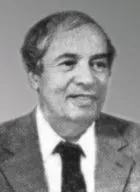
Aleksey Fyodorovich Kozlovsky was born on 15 October 1905 (2 October Old Style) in Kyiv, into the family of a teacher. In 1923 he moved to Moscow, studying at the First State Music Technicum founded by Boleslav Yavorsky and then at the Moscow Conservatory in Nikolai Myaskovsky’s composition class. He graduated in 1931 with the “Heroic Overture” for symphony orchestra, and for three years also studied conducting with A. B. Hessin.
From 1931 to 1933 he was a conductor at the Stanislavsky Opera Theatre in Moscow. In 1936 he came to Tashkent (according to Russian Wikipedia, exiled there for three years), became absorbed in the culture of the East and stayed for the rest of his life. From 1938 to 1941 he conducted at the Uzbek Opera and Ballet Theatre.
In Tashkent Kozlovsky notated Uzbek and Karakalpak folk melodies, among them songs sung by Halima Nasyrova, and arranged them for symphony orchestra; works such as “Tanovar”, “Uzghancha”, “Gulyuz-uzra” and “Fighon” grew out of this. His orchestral output includes the Ferghana suite “Lola” (1937), “Dastan”, an “Indian Poem” and “Frescoes of Sogdiana”.
His major stage work is the opera “Ulughbek”, about the astronomer-ruler (1942, revised 1958). With Tolib Sodiqov he wrote the musical drama “Davron Ota”, and with Sergei Vasilenko and Mukhtar Ashrafi “Sherali”; his ballet “Tanovar” was staged in Tashkent in 1971. Most of his stage libretti were written by his wife, Galina Kozlovskaya. He also composed film scores, among them “Tahir and Zuhra” and “The Adventures of Nasreddin”.
From 1943 he taught at the Tashkent Conservatory, becoming a professor in 1957; he headed the composition department in 1949–1954 and again from 1962, and from 1972 taught instrumentation. From 1949 to 1963 he was chief conductor and artistic director of the Symphony Orchestra of the Uzbek Philharmonic.
He received the title Honoured Art Worker of the Uzbek SSR in 1944 and People’s Artist of the Uzbek SSR in 1955, and was awarded the Order of Lenin (1959) and two Orders of the Badge of Honour. During the war years in Tashkent he befriended Anna Akhmatova, whose poem “The Appearance of the Moon” is dedicated to him.
He died in Tashkent on 9 January 1977 and is buried at the Botkin Cemetery. His archive went to the Glinka Museum of Musical Culture in Moscow, and in 2015 a conference in Tashkent marked the 110th anniversary of his birth.
Education
- Tchaikovsky Moscow State ConservatoryUniversity · 1928–1931 · Composition, class of Nikolai Myaskovsky
Career
- Uzbek State PhilharmonicChief conductor and artistic director of the symphony orchestra · Tashkent · 1949–1963
- Union of Composers of UzbekistanMember, member of the board · Tashkent
- Alisher Navoi State Academic Bolshoi TheatreConductor · Tashkent · 1938–1941
- State Conservatory of UzbekistanProfessor, head of the composition department · Tashkent · 1943–1977
Awards
 People's Artist of the Uzbek SSR1955 · Uzbek SSR
- Honoured Art Worker of the Uzbek SSR1944 · Uzbek SSR
 Order of Lenin1959 · USSR
 Order of the Badge of Honour1951 · USSR
Life path
- 1905Birth
Born on 15 October in Kyiv, into a teacher’s family.
- 1923–1927Moscow music technicum
Moved to Moscow and studied at the First State Music Technicum founded by Boleslav Yavorsky.
- 1928–1931Moscow Conservatory
Studied composition in Nikolai Myaskovsky’s class; graduation work, the “Heroic Overture”.
- 1931–1933Stanislavsky Opera Theatre
Conductor at the Stanislavsky Opera Theatre in Moscow.
- 1936Arrival in Tashkent
Came to Tashkent and remained there for the rest of his life.
- 1938–1941Opera and Ballet Theatre
Conductor at the Uzbek Opera and Ballet Theatre.
- 1942Opera “Ulughbek”
The first version of the opera was staged in Tashkent; a revised version followed in 1958.
- 1943Tashkent Conservatory
Began teaching at the conservatory; professor from 1957.
- 1944Honoured Art Worker
Received the title Honoured Art Worker of the Uzbek SSR.
- 1949–1963Philharmonic symphony orchestra
Chief conductor and artistic director of the Symphony Orchestra of the Uzbek Philharmonic.
- 1955People’s Artist
Received the title People’s Artist of the Uzbek SSR.
- 1971Ballet “Tanovar”
The ballet was staged in Tashkent.
- 1977Death
Died in Tashkent on 9 January and was buried at the Botkin Cemetery.
Works
- “Heroic Overture” (1931)Symphonic overture
Graduation work at the Moscow Conservatory, for symphony orchestra.
- “Lola” (1937)Ferghana symphonic suite
An orchestral suite, one of the composer’s best-known works.
- “Davron Ota” (1941)Musical drama
Written jointly with Tolib Sodiqov.
- “Ulughbek” (1942)Opera
About Mirzo Ulughbek; revised in 1958.
- “Sherali” (1942)Musical drama
Written jointly with Sergei Vasilenko and Mukhtar Ashrafi.
- “The Feat of Bektash” (1943)One-act opera
To a libretto by Mirtemir.
- Cantata “Counsel to the Wise” (1948)Cantata
To words by Alisher Navoi.
- “Dastan” (1954)Symphonic poem
A poem for symphony orchestra.
- “Indian Poem” (1955)Symphonic poem
A poem for symphony orchestra.
- “Tanovar” (1971)Ballet
A ballet based on the symphonic poem built on a folk song.
Filmography
| Title | Year |
|---|---|
| Tahir and Zuhra | 1945 |
| The Adventures of Nasreddin | 1946 |
| The Daughter of Fergana | 1948 |