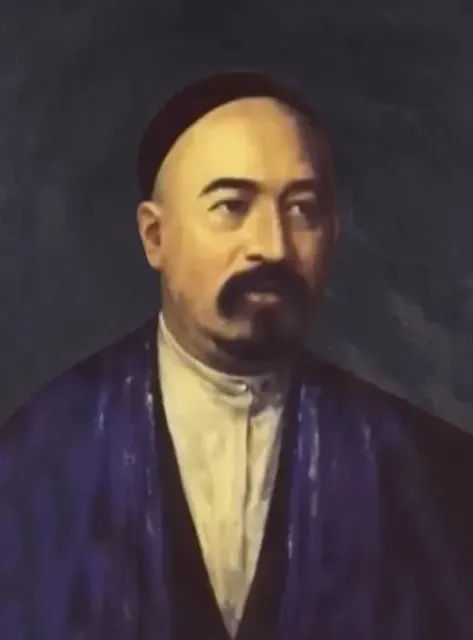
Biography
Ashurali Zohiriy was born in 1885 in the village of Oyim near Kokand. He studied first at an old-style school and then at the Muhammad Alikhan (Madalikhan) madrasa in Kokand, learning Arabic and Persian and the classical literature of the East and of the Uzbeks; later he also knew Turkish, Tatar and Russian.
From 1908 to 1913 he taught at a “new method” school, and afterwards taught Uzbek language and literature at a Russian-native school. In 1912 he compiled, with S. Okayev, the “Turkic Reader, or a Collection”, and in 1916 he published in Kazan “Imlo” (“Spelling”), the first Uzbek-language spelling textbook for primary classes. In Kokand he opened the Ghayrat library and publishing house.
From 1914 he wrote actively for the press: the first issue of the newspaper “Sadoyi Farg’ona” carried his article “Preface” (“So’zboshi”), and the same year he wrote “The Mother Tongue”. He did textual work on Alisher Navoi’s “Muhokamat ul-lug’atayn”, copying it out and having it published in 1916–1917; he also prepared the “Waqfiya” for print, but it did not appear. Ahmad Zeki Validi Togan recalled in his memoirs that in 1913–1914 he lived in Zohiriy’s house in Ferghana.
In 1917 he joined the movement for the autonomy of Turkestan, working in Kokand on the newspaper “El bayrog’i” and the journal “Yurt”, which printed poems and articles by Cho’lpon and other young writers. From September of that year he taught at a darulmuallimin, a school training teachers. In 1921–1930 he wrote about literature, language and education for the newspaper “Yangi Farg’ona” (published as “Farg’ona” in 1921–1926). With Cho’lpon he compiled the reader “Adabiyot parchalari” (1925) and he compiled a Russian–Uzbek dictionary (1925).
At the end of 1930 he was arrested on a charge of belonging to a secret nationalist organization called “Botir gapchilar”, and on 25 April 1931 a court commission of the OGPU sentenced him to ten years. He returned from the camp in 1936 but remained under watch. He was arrested again on 5 September 1937, accused of ties to the “Milliy ittihod” organization; on 4 December a troika attached to the Uzbek NKVD sentenced him to death. The sentence was carried out on 28 December 1937.
He was rehabilitated on 15 September 1958. A mahalla in Kokand is named after him. His legacy began to be studied anew in the years of independence.
Education
- Muhammad Alikhan (Madalikhan) Madrasa (Kokand)Madrasa · Kokand
Career
- El bayrog’i newspaperStaff member · Kokand · 1917–1918
- Yangi Farg’ona newspaperLiterary staff member · Kokand · 1921–1930
Life path
- 1885Born in Oyim
Born in a village near Kokand; studied at the Madalikhan madrasa.
- 1908–1913At a “new method” school
Taught at a school of the Jadid type.
- 1912Reader
Compiled, with S. Okayev, the “Turkic Reader, or a Collection”.
- 1914First articles in the press
Published “Preface” in “Sadoyi Farg’ona” and the article “The Mother Tongue”.
- 1916The textbook “Imlo”
An Uzbek-language spelling textbook for primary classes, published in Kazan.
- 1916–1917Edition of Navoi
Copied “Muhokamat ul-lug’atayn” and had it printed in Kokand.
- 1917“El bayrog’i” and “Yurt”
Worked on the newspaper and the journal during the Turkestan autonomy; began teaching at a darulmuallimin.
- 1921–1930“Yangi Farg’ona” newspaper
Wrote on literature, language and education.
- 1925Reader and dictionary
Compiled “Adabiyot parchalari” with Cho’lpon and a Russian–Uzbek dictionary.
- 1930–1936Arrest and camp
Sentenced to ten years in 1931; returned in 1936.
- 1937Execution
Arrested again on 5 September; shot on 28 December.
- 1958Rehabilitated
Rehabilitated on 15 September.
Works
- “Turkic Reader, or a Collection” (1912)Textbook (reader)
Compiled with S. Okayev for “new method” schools; a collection of literary and instructive texts.
- “The Mother Tongue” (1914)Article
On the place of Navoi’s “Muhokamat ul-lug’atayn” in the history of the Uzbek language.
- “Preface” (1914)Article
In the first issue of “Sadoyi Farg’ona”; on the importance of the national press and literature.
- “Imlo” (“Spelling”) (1916)Textbook
The first Uzbek-language spelling textbook for primary classes; published in Kazan.
- Edition of “Muhokamat ul-lug’atayn” (1917)Edition of a text
Navoi’s work in Zohiriy’s copy, printed in Kokand.
- “Adabiyot parchalari” (1925)Reader
Compiled with Cho’lpon; samples from Navoi, Babur and Muqimiy to contemporary authors.
- Russian–Uzbek dictionary (1925)Dictionary
A dictionary for translating from Russian into Uzbek.
Legacy
Zohiriy is remembered as one of the leaders of the Jadid movement in the Ferghana Valley: he compiled textbooks for “new method” schools, wrote an Uzbek spelling textbook and used the national press to draw attention to the mother tongue and literature. He was shot in 1937 and rehabilitated in 1958; his legacy began to be studied anew in the years of independence. A mahalla in Kokand bears his name.
Era: Early 20th century, Jadidism in Turkestan- First issue of “Sadoyi Farg’ona” (1914)
- “El bayrog’i” and “Yurt” (Turkestan autonomy) (1917)
- Verdict of the OGPU court commission (1931)
- Execution (1937)
- Rehabilitation (1958)