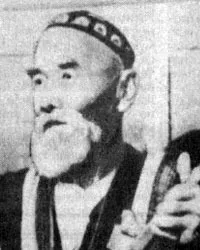
Biography
Fozil Yo‘ldosh o‘g‘li was born in 1872 into a peasant family in the village of Loyqa, which today belongs to the Baxmal district of the Jizzakh region (at the time the area was part of the Bulungur district of the Samarkand region). He lost his father early, grew up an orphan and worked as a shepherd from the age of nine.
From youth he practised the dombra and the singing of terma verse. In his twenties he learned the craft of the epic singer from Yo‘ldosh shoir and, having passed a test set by his teacher, was recognised as an accomplished dostonchi at about 25–26. He took over the tradition of the Bulungur school — of Amin shoir, Chini shoir, Sultonmurod shoir and others — and enriched it with his gift for improvisation; he is regarded as the school’s greatest and last representative.
His repertoire ran to more than forty dastans, about thirty of which were written down. They include heroic epics (“Alpomish”, “Rustamkhan”, “Yusuf and Ahmad”, “The Birth of Goroghli”), romantic ones (“Shirin and Shakar”, “Zevarkhan”, “Malika Ayyor”) and popular retellings of written poems. “Alpomish” holds a special place: of the roughly forty versions recorded from Uzbek bards, his is the fullest (about 14,000 lines) and the most accomplished artistically.
He also turned to contemporary subjects, composing the dastans “The Jizzakh Uprising” about the events of 1916, “Ochildiyov” about the fight against the basmachi and “Mamatkarim Polvon”, the termas “My Days”, “To My Children” and “To Pushkin”, and, during the Second World War, termas and songs meant to raise the soldiers’ spirits. He was a member of the All-Union Communist Party (Bolsheviks) from 1942 and received the Order of Lenin.
The first part of “Alpomish” appeared in an abridged Russian translation in Tashkent in 1939, edited by the poet Hamid Olimjon, and in 1958 a Russian edition of the epic based on Fozil Yo‘ldosh o‘g‘li’s version was published in Moscow. He died in Bulungur on 17 March 1955 and was buried there. A memorial museum has been opened in Bulungur and a monument erected; in 2022 the 150th anniversary of his birth was marked.
Awards
 Order of LeninUSSR
Life path
- 1872Born
Born into a peasant family in the village of Loyqa (now Baxmal district, Jizzakh region).
- 1880-yillarOrphanhood and shepherding
Lost his father early and worked as a shepherd from the age of nine.
- 1890-yillarApprenticeship with Yo'ldosh shoir
Around the age of twenty learned the art of the epic singer from Yo'ldosh shoir.
- 1897–1898Recognised as a master
Passed the test set by his teacher and by 25–26 became an independent dostonchi.
- 1939“Alpomish” in Russian
The first part of “Alpomish” was published in Russian in Tashkent under the editorship of Hamid Olimjon.
- 1942Party member
Joined the All-Union Communist Party (Bolsheviks).
- 1955Death
Died on 17 March in Bulungur and was buried there.
- 1958Russian edition
“Alpomish” was published in Moscow in Russian, based on his version.
- 2022150th anniversary
The 150th anniversary of his birth was marked in the Bulungur district.
Works
- “Alpomish”Heroic dastan
A celebrated heroic epic of the Turkic peoples; his version is regarded as the fullest, at about 14,000 lines.
- “The Birth of Goroghli”Dastan
A dastan from the Goroghli cycle.
- “Yusuf and Ahmad”Heroic dastan
One of the heroic dastans in his repertoire.
- “Rustamkhan”Heroic dastan
A heroic dastan built around the figure of Rustam; also published in Russian.
- “Shirin and Shakar”Romantic dastan
One of the romantic dastans he performed.
- “Zevarkhan”Romantic dastan
A romantic dastan, published in Tashkent in 1970.
- “Malika Ayyor”Dastan
One of the dastans in his repertoire, published in 1988.
- “The Jizzakh Uprising”Dastan on a contemporary theme
About the popular uprising of 1916.
- “Ochildiyov”Dastan on a contemporary theme
A dastan about the fight against the basmachi.
- “My Days”Terma
A terma about his orphaned childhood.
Legacy
Fozil Yo‘ldosh o‘g‘li is regarded as the greatest and last representative of the Bulungur school of epic singers. His version of “Alpomish” is recognised as the fullest of those recorded from Uzbek bards and has been translated into Russian. A memorial museum in his name operates in Bulungur.
Era: late 19th – mid-20th century, the Bulungur school of epic singers- First part of “Alpomish” published in Russian (1939)
- Died in Bulungur (1955)
- Russian edition of “Alpomish” based on his version published in Moscow (1958)
- 150th anniversary of his birth marked (2022)