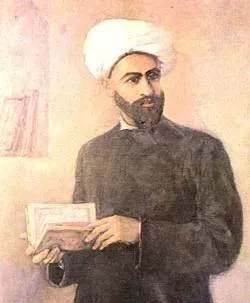
Furqat
Kokand poet and enlightener, one of the founders of Uzbek journalism, known for his lyric ghazals and his poems in praise of science and schooling; he spent his last years in Yarkand.
Biography
Furqat (born Zokirjon Xolmuhammad o'g'li) was born in Kokand into the family of Mulla Xolmuhammad. Sources disagree on the year: Soviet encyclopedias give 1858, the National Encyclopedia of Uzbekistan 1859. His father lived by petty trade and craft; he was an educated man with a love of literature who wrote poetry himself. Zokirjon learned to read at the neighbourhood school and studied Arabic and calligraphy with teachers and scribes. According to his own life story, he wrote his first lines at the age of nine and was praised by his teacher.
In 1873 he entered a madrasa in Kokand, where he studied the legacy of Alisher Navoi and the Persian poets and mastered Persian. When the madrasa closed amid the bloody events of 1875–1876 in the Kokand Khanate, his studies broke off. In 1876, at the request of his merchant uncle, he moved to New Margilan (now Fergana) to help in his trade, later opened a small shop of his own and worked as a mirza, writing petitions to the offices for people. There he began signing his ghazals with the pen name Furqat (“separation”) and became known as a poet.
In the early 1880s he returned to Kokand, married and devoted himself mainly to writing. He joined the circle of poets gathered around Muqimiy and Muhyi — Zavqiy, Nodim, Nisbat, Muhayyir — and took part in their literary gatherings. In those years he wrote love ghazals and mukhammases and takhmis and nazira poems on Navoi’s ghazals; some of his verse turned to the lawlessness and poverty of the people and other themes of the day, such as a mukhammas in the voice of Khudoyor Khan, who lost his throne when the khanate was abolished. By his own account he wrote the treatise “Hammomi xayol” and the verse book “Nuh manzar”, translated the tale “Chor darvesh” from Persian and first gathered his poems into a collection, but none of these has been found. Around 1886–1887 he lived in Margilan.
Early in 1889 he set out for Tashkent, meeting the poets led by Toshxo'ja Asiriy in Khujand on the way, and in June arrived in Tashkent, where he took a cell in the Kukeldash madrasa. For a while he also wrote as Farhat (“joy”). In Tashkent he came to know the Russian intelligentsia and the European way of life, visiting the gymnasium, the theatre, concerts and exhibitions. These impressions went into enlightenment pieces such as “The Virtue of Knowledge”, “The Gymnasium”, “On the Exhibition”, “On the Ceremonial Assembly”, “On a Musical Evening in Tashkent” and “Suvorov”, printed in the 1890s in “Turkiston viloyatining gazeti”. In “On the Poet’s Condition and Poetic Hyperbole” he raised the question of truthful depiction of life in poetry.
From 1890 he worked officially for “Turkiston viloyatining gazeti”, edited by N. P. Ostroumov, helping to prepare its issues and publishing articles, which is why he is regarded as one of the founders of Uzbek journalism. In January–June 1891 the paper serialized his autobiography, “The Life of the Kokand Poet Zokirjon Furqat, Written by Himself”. In May 1891 he went to Samarkand, stayed with the patron Mirzo Buxoriy and saw the ancient monuments, then visited Bukhara.
In July 1891 he left for Istanbul by way of Merv, Ashgabat, Baku and Batumi. Why he left his homeland is not clear: some accounts say he was sent away so that he would not return. From Istanbul he sent his friends “An Appeal to the Morning Breeze”, a verse letter full of longing for home, and he visited Bulgaria and Greece. In March 1892 he sailed to Arabia, performed the hajj, saw Mecca, Jeddah and Medina and marked the journey with his “Hajnoma”. In the autumn of 1892 he reached Bombay and travelled across India; the poems with the refrain “Adashganman” (“I have lost my way”) and the ghazals “In Kashmir” and “The Nightingale” belong to these years.
In March 1893 he crossed through Kashmir and Tibet into East Turkestan and settled in Yarkand, where he started a family; the Great Soviet Encyclopedia puts his staying there down to persecution by the nobles he had ridiculed. Versed in medicine, he kept a shop of medicinal herbs and worked as a calligrapher. He continued the travel book “Sayohatnoma” begun on the road (it has not been found), wrote “Masarratnoma”, a qasida and a masnavi on the Russo-Japanese War, and also composed ghazals in Persian. He kept sending letters and articles to the Tashkent paper; his “An Indian Trickster in Yarkand” (1905) began the feuilleton genre in the Uzbek press. He never gave up the hope of returning home and never renounced his homeland’s citizenship.
Furqat died in Yarkand in 1909 after a serious illness and was buried in the town’s Dongdor cemetery; in 1990 a mausoleum was built over his grave. His poems were first printed in 1913 in a lithographed anthology together with those of Muqimiy, and his “Selected Works” came out in two volumes in 1959; many of his ghazals are sung as songs. In 1959 Uzbekfilm released the feature film “Furqat”, directed by Yuldash Agzamov. Furqat District in the Fergana Region and a street in Tashkent bear his name, and in 2020 a monument to him was put up on the Alley of Writers in Tashkent.
Career
- Turkiston viloyatining gazeti (Turkestan Native Newspaper)Staff writer · Tashkent · 1890–1891
Life path
- 1873–1876Madrasa
Studied at a madrasa in Kokand, which closed amid the turmoil in the khanate.
- 1876New Margilan
Helped his uncle in trade, opened a shop and worked as a scribe; took the pen name Furqat.
- 1880sLiterary Kokand
Returned to Kokand, married and wrote in the circle of poets around Muqimiy and Muhyi.
- 1889Tashkent
Arrived in Tashkent in June and lived in the Kukeldash madrasa; wrote for a while as Farhat.
- 1890–1891“Turkiston viloyatining gazeti”
Worked for the newspaper, which printed his enlightenment poems and his autobiography.
- 1891Departure abroad
Visited Samarkand and Bukhara in May and in July left for Istanbul by way of Merv, Baku and Batumi.
- 1891–1892Istanbul and the Balkans
Wrote the verse letter “An Appeal to the Morning Breeze” and visited Bulgaria and Greece.
- 1892Hajj and India
Visited Mecca, Jeddah and Medina and wrote the “Hajnoma”; then reached Bombay and travelled across India.
- 1893Yarkand
Crossed through Kashmir and Tibet into East Turkestan, settled in Yarkand and started a family.
- 1905First feuilleton
“An Indian Trickster in Yarkand” appeared in the Tashkent newspaper.
- 1909Death
Died in Yarkand and was buried in the Dongdor cemetery.
Works
- “The Virtue of Knowledge” (1890)Poem
On the benefits of science and modern learning, mentioning the railway, the telegraph and other technical novelties.
- “On the Exhibition” (1890)Poem
Impressions of an exhibition in Tashkent, in three parts.
- “On a Musical Evening in Tashkent” (1890)Poem
About a musical evening held in Tashkent.
- “The Gymnasium”Poem
Written after his visit to the Tashkent gymnasium.
- “On the Poet’s Condition and Poetic Hyperbole”Critical essay
On the poet’s calling and truthful depiction of life in poetry.
- “The Life of the Kokand Poet Zokirjon Furqat, Written by Himself” (1891)Autobiography
Serialized in “Turkiston viloyatining gazeti”; also known as “Sarguzashtnoma”.
- “Let Your Prey Go, Hunter”Musaddas
A poem defending a person’s right to live free and condemning tyranny.
- “An Appeal to the Morning Breeze”Verse letter
Sent to his friends from Istanbul, full of longing for home.
- “Hajnoma” (1892)Travel work
Written on the occasion of his pilgrimage to Mecca.
- “An Indian Trickster in Yarkand” (1905)Feuilleton
The piece that began the feuilleton genre in the Uzbek press.
Legacy
The Great Soviet Encyclopedia names Furqat, together with Muqimiy, as the leader of a group of progressive poets that included Zavqiy and Avaz O'tar, and as the head of the enlightenment movement in Uzbek letters. He brought science, schooling, the theatre and modern technology into Uzbek poetry and wrote the first feuilletons and pamphlets of the Uzbek press. His ghazals became folk songs, and his poems have been translated into Russian, Tajik, Uyghur and other languages.
Era: The end of the Kokand Khanate and the Governorate-General of Turkestan, late 19th – early 20th century- His enlightenment poems were printed in “Turkiston viloyatining gazeti” (1890)
- The feuilleton “An Indian Trickster in Yarkand” was published (1905)
- His poems were first printed, together with Muqimiy’s (1913)
- Uzbekfilm released the film “Furqat” (1959)
- A mausoleum was built over his grave in Yarkand (1990)
- A monument was put up on the Alley of Writers in Tashkent (2020)