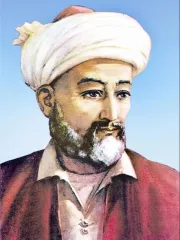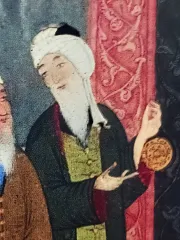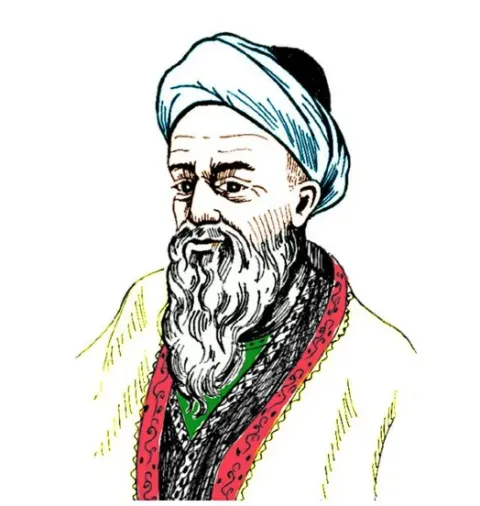
Husayn Va'iz Kashifi
Preacher, scholar and prose writer of Timurid Herat who worked under the patronage of Alisher Navoi; author of the “Anvar-i Suhayli”, the “Akhlaq-i Muhsini” and the “Rawzat al-shuhada”.
- Occupation:
- Writer, Religious figure, Prose writer
- Real name:
- Kamal al-Din Husayn ibn Ali
- Born:
- c. 1436 — c. 1505
- Father:
- Ali
- Children:
- Faxriddin Ali Safiy
Biography
Husayn Va'iz Kashifi was a preacher, scholar and prose writer of Timurid Khorasan whose full name was Kamal al-Din Husayn ibn Ali. Kashifi (“the Unveiler”) was his pen name, and Va'iz (“the preacher”) his profession: unlike the khatib, who delivered the set Friday sermon, a va'iz was a free preacher who expounded the Qur’an and the Traditions at his own gatherings. His contemporaries called him Mawlana Va'iz Kashifi or simply Mulla Husayn. According to the Encyclopaedia Iranica, he was born around 840 AH (1436–1437) in Sabzavar, the chief town of the Bayhaq district of Khorasan (now in Iran); Uzbek sources also give 1440 or the 1440s. Almost nothing is known of his family and youth.
Kashifi first preached in his home town and then moved to Nishapur and on to Mashhad. According to tradition, in 1456 the recently deceased Naqshbandi master Sa’d al-Din Kashghari appeared to him in a dream and summoned him to Herat. There he came under the influence of Kashghari’s successor, the poet and Sufi Abd al-Rahman Jami, and entered the Naqshbandi order. He later returned to Sabzavar, where the Timurid ruler of Khorasan, Abu Sa’id (1458–1469), appointed him chief qadi of the Bayhaq district.
After Husayn Bayqara came to power, Kashifi settled in Herat around 1470, possibly at the sultan’s invitation, and lived there for the rest of his life. He enjoyed the patronage of the sultan and his court, above all of Alisher Navoi, to whom he dedicated several of his works. Husayn Bayqara built a Sufi lodge for him, the Dar al-Siyada, in the Chorsu, Herat’s central market, and made him its shaykh. Kashifi preached there on Friday mornings, at the congregational mosque built by Navoi after the Friday prayer, at the sultan’s madrasa and lodge on Tuesdays and at the shrine of Abu’l-Walid Ahmad on Wednesdays. Contemporaries wrote that crowds came to hear him for his fine voice, his eloquence and his gift for explaining the verses of the Qur’an and the Traditions in plain words.
In his anthology of poets, the “Majalis al-nafa’is”, Navoi describes Kashifi as a man versed in many sciences, noted especially for preaching, epistolary composition and astrology, who had by then lived in Herat for almost twenty years. The historian Khwandamir also praised his skill in astrology and letter-writing and wrote that as a commentator on the Qur’an he had no equal in the Khorasan of his day. Kashifi wrote about forty works, nearly all in Persian, on Qur’anic exegesis and hadith, ethics and statecraft, rhetoric and letter-writing, poetics, Sufism and futuwwa (spiritual chivalry), astrology, the science of letters and magic. Modern scholars see him as an encyclopaedic author who gathered the learning of late fifteenth-century Khorasan and made it accessible to a wide readership.
For Navoi he wrote two commentaries on the Qur’an: the “Javahir al-tafsir”, whose first volume was finished in 1485 but which was never completed, and the full but more concise “Mavahib-i aliyya” (1491–1494), also known as the “Tafsir-i Husayni”, which was widely read in Afghanistan and India for centuries. At the request of the amir Nizam al-Din Shaykh Ahmad Suhayli he produced the “Anvar-i Suhayli” (“The Lights of Canopus”), a new Persian prose version of the fables of “Kalila and Dimna” in fourteen chapters. His book on ethics and statecraft in forty chapters, the “Akhlaq-i Muhsini” (“The Morals of the Beneficent”, 1501–1502), was dedicated to Husayn Bayqara and written for his son Abu’l-Muhsin Mirza. He also wrote the “Futuvvat-nama-yi sultani”, the letter-writing manual “Makhzan al-insha” (1501–1502), the treatise on Hatim al-Ta’i “Risala-yi Hatimiyya” (1486), the “Lubb-i lubab-i Masnavi” (1470–1471), a selection from Rumi’s “Masnavi”, and the treatise on poetic figures “Bada’i al-afkar”.
The “Rawzat al-shuhada” (“The Garden of the Martyrs”), written in 1502–1503, is devoted to Imam Husayn and the tragedy of Karbala. The Safavids later made it the principal text of the Muharram mourning rites: in Iran the recitation of the Karbala story is still called rawza-khwani after its title, and Fuzuli rendered it into Turkic as the “Hadiqat al-su’ada”. Because of this work Kashifi was often taken for a Shi’ite, but modern scholarship, including the Encyclopaedia Iranica, stresses that he was a Sunni and a member of the Naqshbandi order, and that his veneration of the Prophet’s family was typical of Sunnis in pre-Safavid Khorasan.
Kashifi died in Herat in 910 AH (1504–1505) and was buried in the Idgah cemetery near the graves of Jami and Sa’d al-Din Kashghari. His son Fakhr al-Din Ali Safi (d. 1532–1533) also preached at the congregational mosque of Herat and is known for his book on the Naqshbandi masters, the “Rashahat-i ayn al-hayat”. Kashifi’s works were translated into Turkish, Uzbek and European languages: in the sixteenth century Ali Chalabi turned the “Anvar-i Suhayli” into Turkish as the “Humayun-nama”, and it appeared in English in 1854 and 1877; in the nineteenth century Muhammad Rizo Ogahiy translated the “Akhlaq-i Muhsini” into Uzbek. The Institute of Oriental Studies of the Uzbek Academy of Sciences holds 197 manuscripts and 75 lithographed copies of 45 of his works, and the “Futuvvat-nama-yi sultani” was published in Uzbek in 1994.
Career
- Court of Husayn Bayqara in HeratPreacher, shaykh of the Dar al-Siyada Sufi lodge · 1470–1505
- Timurid EmpireChief qadi of the Bayhaq district (under Abu Sa’id)
- Naqshbandi Sufi orderDisciple · 1456–…
Life path
- c. 1436Born in Sabzavar
Born in Sabzavar, the chief town of the Bayhaq district of Khorasan.
- 1450sSabzavar, Nishapur, Mashhad
Preached in his home town, then in Nishapur and Mashhad.
- 1456Herat and Jami
According to tradition, summoned to Herat in a dream; there he came under Jami’s influence and entered the Naqshbandi order.
- 1460sQadi of Bayhaq
Returned to Sabzavar and under Abu Sa’id became chief qadi of the Bayhaq district.
- c. 1470Move to Herat
Settled in Herat under Husayn Bayqara and worked under Navoi’s patronage; shaykh of the Dar al-Siyada lodge.
- 1470–1471“Lubb-i lubab-i Masnavi”
Compiled a selection from Rumi’s “Masnavi” and a commentary on forty hadiths.
- 1485–1494Commentaries on the Qur’an
Wrote the “Javahir al-tafsir” and the “Mavahib-i aliyya” for Navoi.
- 1501–1502“Akhlaq-i Muhsini”
Completed his book on ethics dedicated to Husayn Bayqara and the “Makhzan al-insha”.
- 1502–1503“Rawzat al-shuhada”
Wrote his book on Imam Husayn and the tragedy of Karbala.
- 1504–1505Death
Died in Herat and was buried in the Idgah cemetery near Jami’s grave.
Works
- “The Kernel of the Kernel of the Masnavi” (“Lubb-i lubab-i Masnavi”) (1470)Anthology
A selection of verses from the “Masnavi” of Jalal al-Din Rumi (875 AH, 1470–1471).
- “The Exalted Treatise on the Prophetic Traditions” (“al-Risala al-aliyya fi’l-ahadith al-nabawiyya”) (1470)Hadith commentary
A commentary on forty hadiths in eight chapters, dedicated to the marshal of the sayyids of Sabzavar.
- “Choices of the Stars” (“Ikhtiyarat al-nujum”) (1473)Astrological treatise
Written for the vizier Majd al-Din Muhammad Khwafi; the only surviving part of the seven-book astrological series “Sab’a-yi Kashifiyya”.
- “Jewels of Exegesis” (“Javahir al-tafsir”) (1485)Qur’anic commentary
A vast commentary on the Qur’an begun for Navoi; the first volume was finished in 1485, and the work was never completed.
- “The Treatise on Hatim” (“Risala-yi Hatimiyya”) (1486)Treatise
Stories of the pre-Islamic Arab Hatim al-Ta’i, whose generosity became legendary; dedicated to Husayn Bayqara.
- “Lofty Gifts” (“Mavahib-i aliyya”, or “Tafsir-i Husayni”) (1491)Qur’anic commentary
A complete Persian commentary on the Qur’an written for Navoi in 1491–1494; widely read in Afghanistan and India.
- “The Lights of Canopus” (“Anvar-i Suhayli”)Fables
A Persian prose version of “Kalila and Dimna” in fourteen chapters, dedicated to the amir Shaykh Ahmad Suhayli and translated into Turkish and English.
- “The Morals of the Beneficent” (“Akhlaq-i Muhsini”) (1501)Ethics and statecraft
A work in forty chapters dedicated to Husayn Bayqara and written for his son Abu’l-Muhsin Mirza; translated into Uzbek by Ogahiy.
- “The Treasury of Composition” (“Makhzan al-insha”) (1501)Letter-writing manual
On the art of composing letters and official documents; written for Navoi and dedicated to Husayn Bayqara.
- “The Garden of the Martyrs” (“Rawzat al-shuhada”) (1502)Martyrology
A book on Imam Husayn and the tragedy of Karbala in ten chapters and a conclusion; recited in Iran at the Muharram mourning gatherings.
- “The Royal Book of Spiritual Chivalry” (“Futuvvat-nama-yi sultani”)Treatise
On futuwwa, spiritual chivalry, and its ties to Sufism and the craft guilds; published in Uzbek in 1994 and in English in 2000.
Legacy
Kashifi’s works were among the most copied and read Persian prose of the Timurid age: the commentary “Mavahib-i aliyya” spread widely in Afghanistan and India, the “Rawzat al-shuhada” became the principal text of the Muharram rites in Iran, and the “Anvar-i Suhayli” was translated into Ottoman Turkish and copied again and again in lavishly illustrated manuscripts at the Mughal court. The “Akhlaq-i Muhsini” was translated into Uzbek by Ogahiy. Modern scholars study Kashifi as an author who gathered the learning and outlook of late fifteenth-century Herat and passed them on to later generations.
Era: The Timurid age: Herat under Husayn Bayqara (second half of the 15th century)- A partial English translation of the “Akhlaq-i Muhsini” was published (1850)
- E. B. Eastwick’s English translation of the “Anvar-i Suhayli” appeared (1854)
- A. N. Wollaston’s translation of the “Anvar-i Suhayli” was published in London (1877)
- The “Futuvvat-nama-yi sultani” was published in Uzbek (1994)
- The “Futuvvat-nama-yi sultani” appeared in English (2000)
- The journal “Iranian Studies” devoted a special issue to Kashifi (2003)