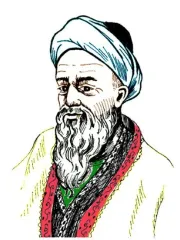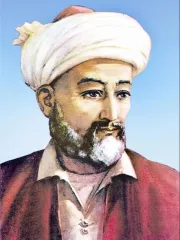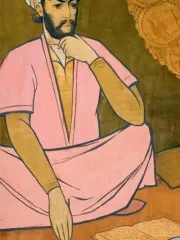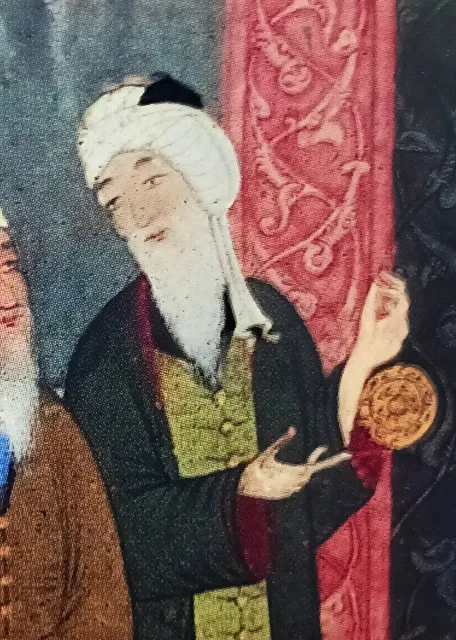
Jami
Persian poet, scholar and Naqshbandi Sufi shaykh of Herat, author of the “Haft Awrang” and the “Baharestan”, and the teacher and close friend of Alisher Navoi.
- Occupation:
- Writer, Scientist, Religious figure, Poet
- Real name:
- Nur al-Din Abd al-Rahman ibn Ahmad
- Born:
- November 7 1414(78 years old) ♏ — November 9, 1492
- Father:
- Nizomiddin Ahmad Dashtiy
- Children:
- Ziyouddin Yusuf
Biography
Nur al-Din Abd al-Rahman ibn Ahmad Jami was born on 7 November 1414 in the hamlet of Kharjird near the small town of Jam in Khorasan, roughly halfway between Mashhad and Herat. His family had come from the Dasht district near Isfahan, so his father, Nizam al-Din Ahmad, was known as Dashti, and the son at first signed his verse with the same name. He later took the pen name Jami and explained its double meaning in a poem: he was born in Jam, and his pen had drunk from the “cup” (jam) of the Shaykh al-Islam Ahmad-i Jam. His father gave him his first lessons in Persian and Arabic.
In his teens he moved with his father to Herat, where he studied theology, Arabic grammar and literature at the city’s madrasas, among them the Nizamiyya. He went on to Samarkand, the leading centre of learning in the Timurid realm, and studied at the madrasa of Ulugh Beg; his biographers say he attended the lessons of the astronomer Qadizada Rumi. By his late twenties he was known as a brilliant scholar in fields ranging from hadith to astronomy and mathematics.
In his thirties Jami gave up an academic career for the Sufi path under the Naqshbandi shaykh Sa’d al-Din Kashghari in Herat. His ties with the court began at the same time: he dedicated his treatise on riddles (mu’amma), “Hilya-yi hulal” (1452), to the Timurid Abu’l-Qasim Babur, and his first divan (1463) to Sultan Abu Sa’id. After Kashghari died in 1456, the Naqshbandi leader of Samarkand, Khwaja Ubaydullah Ahrar, became his spiritual guide; Jami travelled to meet him in Samarkand, Merv and Tashkent and kept in touch with him for nearly thirty years. His first commentaries on the works of Ibn Arabi date from the same period.
When Sultan Husayn Bayqara took Herat in 1469, Jami was one of the city’s most respected teachers and already close to Alisher Navoi. In 1472 he set out on the pilgrimage to Mecca, leaving his affairs in Navoi’s hands; the sultan equipped his caravan and gave him letters to the rulers along the way. Travelling through Nishapur, Qazvin and Hamadan, he reached Baghdad and stayed about six months; lines of his poem “The Chain of Gold”, read as an attack on Shi’ites, forced him to defend himself before a public assembly. After performing the hajj in May 1473 he returned by way of Damascus and Aleppo, declined an invitation to Istanbul from the Ottoman Sultan Mehmed II and an offer from the Aq Qoyunlu ruler Uzun Hasan to stay in Tabriz, and was back in Herat in January 1474.
After the pilgrimage Navoi joined the Naqshbandi order with Jami as his spiritual director, and in the last fifteen years of his life Jami, together with Sultan Husayn and Navoi, carried great weight in the affairs of Khorasan. He nevertheless lived simply, in the Khiyaban district outside the city walls. He married a granddaughter of his first master, Kashghari; of their four children only a son, Ziya al-Din Yusuf, born in 1477, survived infancy, and it was for his education that Jami wrote the “Baharestan” (1487) and the Arabic grammar “Al-Fawa’id al-Diya’iyya” (1492).
Over half a century Jami produced a vast body of work in Persian and Arabic. His “Haft Awrang” (“The Seven Thrones”) brings together seven long poems: “The Chain of Gold”, “Salaman and Absal”, “The Gift of the Free”, “The Rosary of the Pious”, “Yusuf and Zulaykha” (1483), “Layla and Majnun” (1484) and “The Alexandrian Book of Wisdom”. He is also known for the “Baharestan”, modelled on Sa’di’s “Gulistan”, the lives of Sufi saints “Nafahat al-Uns”, the mystical treatise “Lawa’ih”, and treatises on riddles, rhyme, prosody and music. In 1491, at Navoi’s request, he divided his lyric poetry into three divans: “The Opening of Youth”, “The Middle of the Necklace” and “The End of Life”.
Jami died after a short illness on 9 November 1492 in Herat and was buried there. Two years later Navoi devoted his “Khamsat al-Mutahayyirin” to him, and he rendered “Nafahat al-Uns” into Turkic with additions as “Nasayim al-Muhabbat”. Copies of Jami’s works spread across Transoxiana, Turkey and India, and his commentary on Arabic grammar remained a madrasa textbook into the 19th century. Muhammad Rizo Ogahiy translated “Yusuf and Zulaykha” into Uzbek; a monument to Navoi and Jami stands in Samarkand, and streets in Samarkand and Tashkent bear his name.
Education
- Nizamiyya Madrasa (Herat)Madrasa
- Ulugh Beg Madrasa (Samarkand)Madrasa · Samarkand
Career
- Court of Husayn Bayqara in HeratPoet and spiritual adviser close to the court · 1469–1492
- Naqshbandi Sufi orderDisciple, later a shaykh in Herat · …–1492
Life path
- 1414Birth
Born in Kharjird near Jam in Khorasan, to a family that had come from Dasht near Isfahan.
- 1420s–1430sStudies in Herat
Moved to Herat with his father and studied at the city’s madrasas, including the Nizamiyya.
- 1430s–1440sStudies in Samarkand
Studied hadith, astronomy and mathematics at the madrasa of Ulugh Beg.
- 1440s–1450sThe Sufi path
Gave up an academic career to become a disciple of the Naqshbandi shaykh Sa’d al-Din Kashghari in Herat.
- 1452“Hilya-yi hulal”
A treatise on riddles dedicated to the Timurid Abu’l-Qasim Babur, his earliest datable prose work.
- 1456Khwaja Ahrar
After Kashghari’s death Khwaja Ubaydullah Ahrar became his spiritual guide.
- 1463First divan
Collected his lyric poetry in a divan dedicated to Sultan Abu Sa’id.
- 1472–1474Pilgrimage to Mecca
Travelled through Baghdad, Mecca, Damascus, Aleppo and Tabriz; declined invitations from Mehmed II and Uzun Hasan.
- 1470sNavoi’s master
Alisher Navoi joined the Naqshbandi order with Jami as his spiritual director.
- 1480–1487“Haft Awrang” and “Baharestan”
Completed his cycle of seven long poems and wrote the “Baharestan” for his son.
- 1491Three divans
At Navoi’s request divided his lyric poetry into three divans.
- 1492Death
Finished “Al-Fawa’id al-Diya’iyya” and died in Herat on 9 November.
Works
- “Haft Awrang” (“The Seven Thrones”)Cycle of long poems
Seven masnavis: “The Chain of Gold”, “Salaman and Absal”, “The Gift of the Free”, “The Rosary of the Pious”, “Yusuf and Zulaykha”, “Layla and Majnun” and “The Alexandrian Book of Wisdom”. Written between 1468 and 1486, mostly in the first half of the 1480s.
- “Yusuf and Zulaykha” (1483)Long poem
A mystical love poem based on the Qur’anic story of Joseph, the best-known part of the “Haft Awrang”; translated into Uzbek by Ogahiy.
- “Salaman and Absal”Long poem
An allegory of Prince Salaman’s carnal love for his nurse Absal and his purification from it; dedicated to the Aq Qoyunlu Sultan Ya’qub, and known in English through Edward FitzGerald’s version.
- “The Gift of the Free” (“Tuhfat al-Ahrar”) (1481)Long poem
A response to Nizami’s “Treasury of Mysteries” in twenty discourses on religious and moral themes; dedicated to Khwaja Ahrar.
- “Baharestan” (“The Abode of Spring”) (1487)Prose and verse
Anecdotes and counsels modelled on Sa’di’s “Gulistan”, written for the education of his son Ziya al-Din Yusuf; its seventh chapter is devoted to poets.
- “Nafahat al-Uns” (“Breaths of Intimacy”)Lives of the saints
Biographies of Sufi saints; Navoi rendered it into Turkic as “Nasayim al-Muhabbat”.
- “Lawa’ih” (“Flashes”)Sufi treatise
Mystical meditations in prose and verse; translated into English and French.
- Divan (“The Opening of Youth”, “The Middle of the Necklace”, “The End of Life”) (1491)Lyric poetry
The first divan alone holds some thousand ghazals, alongside qasidas, quatrains and occasional pieces; in its final recension, at Navoi’s request, the lyric poetry was divided into three divans.
- “Al-Fawa’id al-Diya’iyya” (1492)Arabic grammar textbook
An Arabic commentary on Ibn al-Hajib’s “Al-Kafiya” written for his son; a madrasa textbook into the 19th century.
- “Treatise on Music” (“Risala-yi musiqi”)Music theory
On the modal and rhythmic systems of Eastern music; a facsimile with a Russian translation was published in Tashkent in 1960.
Legacy
Jami is regarded as one of the last major masters of classical Persian poetry, and later Iranian critics called him the “seal of the poets”. He gathered and codified the traditions of Sa’di, Nizami, Amir Khusraw and Hafiz; his works were translated into Ottoman Turkish and circulated widely in Transoxiana, the Ottoman Empire and Mughal India. His friendship and collaboration with Navoi shaped the literary life of Herat, and Babur wrote in the “Baburnama” that no one of his time equalled him in the outward and inward sciences.
Era: Timurid Herat, 15th century- Alisher Navoi wrote the “Khamsat al-Mutahayyirin” in memory of Jami (1494)
- Edward FitzGerald published an English translation of “Salaman and Absal” (1856)
- The 550th anniversary of Jami’s birth was marked in Samarkand, with a memorial plaque on the Ulugh Beg Madrasa (1964)
- A monument to Alisher Navoi and Abdurahmon Jomiy was unveiled in Samarkand (1970)