Imam Quli Khan
Ashtarkhanid ruler of the Khanate of Bukhara (1611–1642), under whom the khanate reached its greatest power and madrasas rose in Bukhara and Samarkand; he abdicated for his brother after losing his sight and left on the hajj.
- Occupation:
- Historical figure, Politician
- Real name:
- Imam Quli ibn Din Muhammad
- Born:
- c. 1582 — 1644
- Father:
- Din Muhammad
Biography
Imam Quli Khan belonged to the Ashtarkhanid (Janid) dynasty and was the son of Din Muhammad Khan. Sources disagree on his birth year: 1582 is the commonly given date, while some works give 1589. His father served as a military commander under the Shaybanid ruler Abdullah Khan II and died in 1598. When Vali Muhammad Khan took the throne of Bukhara in 1605, he appointed his nephew Imam Quli governor of Samarkand.
As Imam Quli’s influence grew, relations with the khan worsened. Court officials turned against Vali Muhammad, and in 1611 Imam Quli took the throne; Vali Muhammad died the same year. The new khan made his brother Nadr Muhammad governor of Balkh, which Nadr Muhammad ruled until 1642; the two brothers were called the “senior khan” and the “junior khan”.
Imam Quli defended the north-eastern borders of the khanate against Kazakh and Kalmyk forces, and the struggle for Tashkent and the Turkestan region went on for many years. In 1628 his commander Yalangtush Biy defeated the Kazakh sultan Abulay near Tashkent. The khan exchanged embassies with Russia, the Ottoman Empire, Safavid Iran and the Mughals of India: an embassy went to Moscow in 1613 and another to Emperor Jahangir in 1614–1615.
His reign saw a series of architectural complexes built in Bukhara and Samarkand, among them the Sherdor and Tillya-Kari madrasas in Samarkand and the madrasa and khanqah of Nadir Divan-Begi in Bukhara. Some were paid for by the khan’s vizier, Nadir Divan-Begi. Historians of the period noted that no rebellions or disorders occurred in the khanate under Imam Quli.
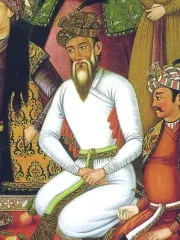
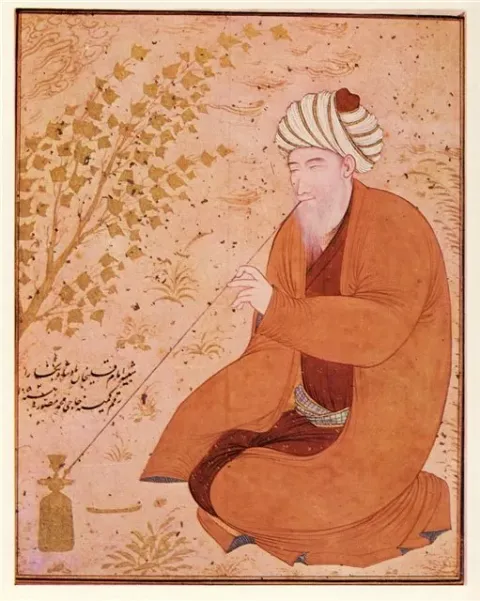
Late in life Imam Quli lost his sight. In 1642 he handed the throne to his brother Nadr Muhammad Khan and set out on the hajj, accompanied by Nadir Divan-Begi. On the way he was a guest at the court of the Safavid shah in Iran, where a painter made his portrait. Imam Quli died in 1644 near Mecca and was buried in the Baqi cemetery in Medina.
Career
Life path
- c. 1582Birth
Born into the family of Din Muhammad Khan of the Ashtarkhanid dynasty; sources give his birth year as 1582 or 1589.
- 1598Death of his father
His father, the commander Din Muhammad, died.
- 1605Governor of Samarkand
When Vali Muhammad Khan took the throne, he gave his nephew Imam Quli the government of Samarkand.
- 1611Accession in Bukhara
Took power from Vali Muhammad and became khan of Bukhara; appointed his brother Nadr Muhammad governor of Balkh.
- 1613Embassy to Moscow
Sent an embassy under Navruz-Khoja to Russia to establish trade and diplomatic ties.
- 1614–1615Embassy to India
Sent envoys to the Mughal emperor Jahangir, who replied with gifts and a poem of his own composition.
- 1628Victory near Tashkent
His commander Yalangtush Biy defeated the Kazakh sultan Abulay near Tashkent.
- 1642Abdication
After losing his sight he handed the throne to his brother Nadr Muhammad and set out on the hajj.
- 1644Death
Died in the Hejaz near Mecca and was buried in Medina.
Legacy
Imam Quli’s reign is remembered as the most powerful period of the Khanate of Bukhara under the Ashtarkhanids. In those years the Sherdor, Tillya-Kari and Nadir Divan-Begi madrasas and other buildings went up in Bukhara and Samarkand, and the khanate kept diplomatic relations with Russia, the Ottomans, the Safavids and the Mughals. Contemporary historians wrote that the khanate saw no rebellions under him, although he could not fully overcome the separatism of individual Uzbek tribes. The portrait of him painted in Iran is the only image of him that survives.
Era: Khanate of Bukhara, Ashtarkhanid period, 17th century- Imam Quli Khan took the throne of Bukhara (1611)
- Yalangtush Biy defeated the Kazakh sultan Abulay near Tashkent (1628)
- Imam Quli Khan handed the throne to his brother Nadr Muhammad and left on the hajj (1642)
- Imam Quli Khan died near Mecca and was buried in Medina (1644)