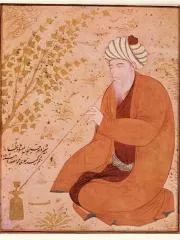
Nadr Muhammad Khan
Ashtarkhanid khan of Bukhara (1642–1645), earlier ruler of Balkh; he lost the throne to his son Abd al-Aziz, and is also remembered for the Mughal campaign against Balkh and his visit to Iran.
- Occupation:
- Historical figure, Politician
- Real name:
- Nadr Muhammad ibn Din Muhammad
- Born:
- c. 1594 — 1651
- Birthplace:
- Bukhara
- Father:
- Din Muhammad Khan
- Children:
- Abdulazizxon, Subhonqulixon
Biography
Nadr Muhammad Khan (Nodir Muhammad) belonged to the Ashtarkhanid, or Janid, dynasty. He was a son of Din Muhammad Khan and the younger brother of Imam Quli Khan of Bukhara. Sources give his birth year variously (1591 to 1594), so the approximate year 1594 is used here.
When his brother took the throne of Bukhara in 1611, he made Nadr Muhammad ruler of Balkh (some sources say from 1606), and he governed the province until 1642. He is reported to have tried to take Kabul in 1627 and to have sent an apology to the Mughal emperor Shah Jahan in 1633.
After Imam Quli went blind, he handed over power in 1642 and set out on the hajj. Nadr Muhammad became khan of Bukhara, with enthronement ceremonies held in both Samarkand and Bukhara. Under him the khanate kept up diplomatic contacts with Russia: in 1642 a Moscow embassy led by Gorokhov and Gribov came to Bukhara, and in 1644 the khan sent the envoy Qazi Nogay to Moscow. At his order the scholar Mahmud ibn Vali wrote the encyclopedia «Bahr al-asrar» («The Sea of Secrets»).
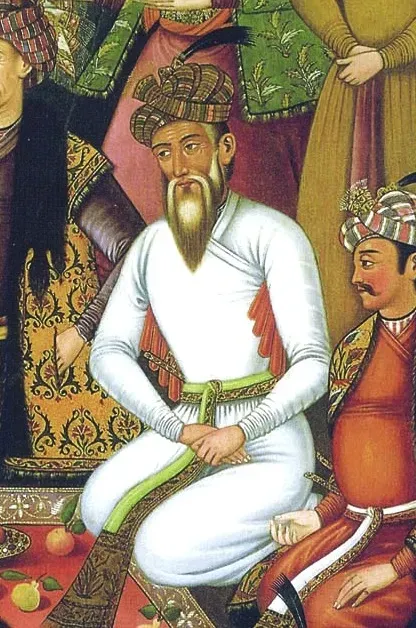
Discontent at home grew. In 1645 the nobles proclaimed his son Abd al-Aziz khan, and Nadr Muhammad lost power in Bukhara. He appealed to Shah Jahan, and in 1646–1647 a Mughal army occupied Balkh and Badakhshan. Nadr Muhammad went to Iran and in 1647 was received in Isfahan by Shah Abbas II; the meeting is shown in a fresco at the Chehel Sotoun palace.
When the Mughals withdrew in 1647, Balkh was returned to Nadr Muhammad, and he held it with a shaky grip. He died in 1651. Uzbek-language sources say he died on the way to the hajj and was buried in Medina beside his brother Imam Quli; other works describe his last years and the place of his death differently.
His sons Abd al-Aziz Khan (from 1645) and Subhan Quli Khan (from 1680) later ruled the Khanate of Bukhara.
Career
- Khanate of BukharaKhan (1642–1645); earlier ruler of Balkh · Bukhara · 1642–1645Everyone who held this post →
Life path
- c. 1594Birth
His birth year is given in sources as anywhere from 1591 to 1594.
- 1611Ruler of Balkh
Began governing Balkh when his brother Imam Quli took the throne of Bukhara (some sources say 1606).
- 1627Attempt on Kabul
Reported to have tried to take Kabul.
- 1642Khan of Bukhara
His blind brother handed over power; the accession was celebrated in Samarkand and in Bukhara.
- 1642–1644Contacts with Russia
A Moscow embassy came to Bukhara, and in 1644 the envoy Qazi Nogay was sent to Moscow.
- 1645Loss of the throne
The nobles proclaimed his son Abd al-Aziz khan.
- 1646–1647Mughal campaign and Iran
The Mughals occupied Balkh and Badakhshan; Nadr Muhammad went to Iran and was received in Isfahan by Shah Abbas II in 1647.
- 1647Return to Balkh
After the Mughals left, Balkh was returned to him.
- 1651Death
Died; Uzbek sources say he was buried in Medina.
Legacy
Under Nadr Muhammad the Khanate of Bukhara kept up diplomatic contacts with Russia and Iran, but internal strife and the clash with the Mughals over Balkh cost him his power. The encyclopedia «Bahr al-asrar» by Mahmud ibn Vali was written at his order. His sons Abd al-Aziz Khan and Subhan Quli Khan later ruled the khanate.
Era: Ashtarkhanid (Janid) period, mid-17th century- Imam Quli hands the throne to his brother and leaves for the hajj (1642)
- The nobles proclaim Abd al-Aziz khan (1645)
- Mughal campaign against Balkh and Badakhshan begins (1646–1647) (1646)
- Nadr Muhammad received by Shah Abbas II in Isfahan (1647)