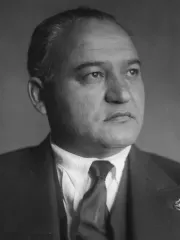
Karim Zokirov
Uzbek operatic baritone, a leading soloist of the Navoi Opera and Ballet Theatre from 1939 to 1977 and People’s Artist of the Uzbek SSR (1939), who founded the Zokirov musical dynasty.
- Occupation:
- Singer, Actor, Opera singer
- Born:
- March 12 1912(64 years old) ♓ — February 19, 1977
- Birthplace:
- Tashkent
- Father:
- Zokir oqsoqol
- Spouse:
- Shohista Saidova
- Children:
- Naufal ZokirovRavshan Zokirov
Biography
Karim Zakirovich Zokirov (Zakirov) was born in Tashkent on 12 March 1912. His father, Zokir oqsoqol, was a craftsman respected in his neighbourhood, and the family lived in the Hovuz mahalla in the old part of the city.
Zokirov came to the stage in the late 1920s as a dramatic actor, playing at the Uzbek State Drama Theatre in 1928–1929 and at the Workers’ Youth Theatre in 1930–1931. He then moved to the Uzbek State Musical Theatre, where an actor in musical drama also had to sing. From 1934 to 1936 he studied in Moscow at the Uzbek opera studio attached to the Moscow Conservatory, in the class of N. I. Speransky. His eldest son Botir was born there in 1936 to him and his wife, the singer Shohista Saidova.
At the musical theatre he created roles in musical dramas: Farhod in Khurshid’s “Farhad and Shirin” with music by Viktor Uspensky and Georgy Mushel, Ne’mat in “Halima” by Ghulom Zafari and Tokhtasin Jalilov, and Majnun in “Layli and Majnun” by Khurshid and Talib Sadykov. On 11 June 1939 the company began its life as the State Uzbek Opera and Ballet Theatre with the first Uzbek opera, “Buran” by Sergei Vasilenko and Mukhtar Ashrafi, and at the premiere the title role was sung by Zokirov and Mikhail Davydov. The same year he was named People’s Artist of the Uzbek SSR.
From 1939 until his death he remained one of the leading soloists of the theatre, which was named after Alisher Navoi in 1948, and sang more than thirty roles on its stage. In Uzbek operas they included Ibrahim in Reinhold Glière and Talib Sadykov’s “Gulsara”, Tahir in “Tahir and Zuhra” by Tokhtasin Jalilov and Boris Brovtsyn, the title role in Alexei Kozlovsky’s “Ulugbek”, Torobi in Alexander Chishko’s “Mahmud Torobi” and Shah Bahram in Ashrafi’s “Dilorom”. His best-known part was Mulla Dost in Sulaiman Yudakov’s comic opera “Maysara’s Tricks”, which the theatre staged in 1959. From the classical repertoire he sang Escamillo in Bizet’s “Carmen” and Yeletsky in Tchaikovsky’s “The Queen of Spades”, and he also took parts in operas by Yevgeny Brusilovsky, Uzeyir Hajibeyov and Alexander Spendiarov.
Zokirov was also a busy concert singer, performing folk songs, works by Uzbek composers and sections of the maqoms, among them “Istarman”, “Ey nigorim”, “Chorgoh”, “Navbahor”, “Kuchabogi”, “Girya”, “Karimqulbegi” and “Dugoh”. The National Encyclopedia of Uzbekistan notes the open sound of his voice and a manner rooted both in Uzbek folk tradition and in the modern school of performance. He was awarded the Order of Lenin, the Order of the Red Banner of Labour and the Order of the Badge of Honour.
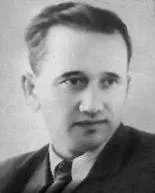
Karim Zokirov died in Tashkent on 19 February 1977. With his wife Shohista Saidova (1917–2000), an actress and folk singer who performed at the Muqimiy Theatre, he raised six children — Botir, Luiza, Naufal, Farrukh, Jamshid and Ravshan. Nearly all of them went on the stage, and the family entered the history of Uzbek music as the Zokirov dynasty: Botir Zokirov became one of the founders of Uzbek pop music, Luiza a pop singer, Farrukh the leader of the band Yalla and Jamshid an actor of the Hamza Theatre. Many of the grandchildren perform too, among them the singer Nargiz Zakirova.
Education
- Tchaikovsky Moscow State ConservatoryUniversity · 1934–1936 · Uzbek opera studio, class of N. I. Speransky
Career
- Uzbek National Academic Drama TheatreDramatic actor (then the Uzbek State Drama Theatre) · Tashkent · 1928–1929
- Alisher Navoi State Academic Bolshoi TheatreActor and singer of the Uzbek State Musical Theatre (1931–1934, 1936–1939), opera soloist (1939–1977) · Tashkent · 1931–1977
Awards
 People's Artist of the Uzbek SSR1939 · Uzbek SSR
 Order of LeninUSSR


Life path
- 1928–1931Drama stage
Actor at the Uzbek State Drama Theatre (1928–1929) and the Workers’ Youth Theatre (1930–1931).
- 1931–1939Musical theatre
Actor and singer at the Uzbek State Musical Theatre (with a break for studies in 1934–1936); roles of Farhod, Ne’mat and Majnun.
- 1934–1936Studies in Moscow
Uzbek opera studio at the Moscow Conservatory, class of N. I. Speransky.
- 1939Premiere of “Buran”
Sang the title role in the first Uzbek opera, with which the opera and ballet theatre opened.
- 1939People’s Artist of the Uzbek SSR
Awarded the honorary title.
- 1939–1977Opera soloist
One of the leading soloists of the theatre, named after Alisher Navoi from 1948; more than thirty roles.
- 1959“Maysara’s Tricks”
The theatre staged Sulaiman Yudakov’s opera; Mulla Dost became the singer’s best-known role.
- 1977Death
Died in Tashkent on 19 February.
Songs
| # | Song | Listen |
|---|---|---|
| 1 | Istarman | |
| 2 | Ey nigorim | |
| 3 | Chorgoh I–III | |
| 4 | Navbahor | |
| 5 | Kuchabogi I–II | |
| 6 | Girya | |
| 7 | Karimqulbegi I–II | |
| 8 | Dugoh |