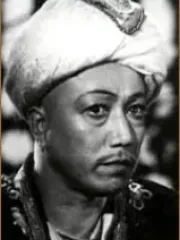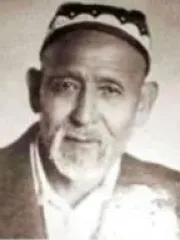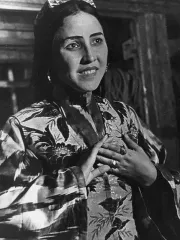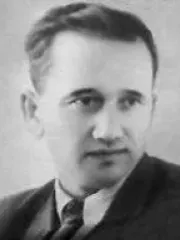
Muhiddin Qori-Yoqubov
Baritone singer, actor and theatre figure, a founder of the Uzbek musical theatre and the state philharmonic, the first People’s Singer of Turkestan; People’s Artist of the Uzbek SSR (1936).
Biography
Muhiddin Qori-Yoqubov was born on 1 May 1896 in what is now the city of Fergana, into a poor family with many children. He attended an old-method school and, in 1912–1914, a madrasa, where he mastered Quran recitation and became known as a qori; from his youth he also sang folk songs without notation. In 1916 he organised a brass band of local musicians, and in 1918 he took part, together with Hamza Hakimzoda Niyoziy, in founding the “Dramatic Troupe of Muslim Youth”.
In 1919–1921 he performed with the Fergana folk brass band for Red Army units on the Turkestan front and played dramatic roles in Hamza’s “Political Troupe”. He studied at K. Shorstein’s theatre studio in Tashkent (1919) and then in the vocal department of the State Institute of Theatre Arts (GITIS) in Moscow (1922–1924). In 1923 he was recognised as the first People’s Singer (hafiz) of the Turkestan Republic.
In 1925, together with Tamara Khanum, he performed Uzbek folk songs at the International Exhibition of Decorative Arts in Paris and on concert stages in Berlin; Europeans nicknamed him the “Uzbek Chaliapin”. In 1926 he formed a concert-ethnographic ensemble of Uzbeks, Armenians, Azerbaijanis, Kyrgyz and others, and toured many Soviet cities with it. The ensemble grew into the Uzbek State Musical Theatre, where Qori-Yoqubov was actor, director and artistic head (1929–1933); he also took part in shaping the musical theatres of Kokand and Andijan. In 1930 he received the title of Honoured Art Worker of the Uzbek SSR, and in 1936 that of People’s Artist of the Uzbek SSR.
In 1934 he organised an Uzbek opera studio in Moscow and led it for two years; future well-known artists such as Mukhtar Ashrafi, Halima Nosirova and Karim Zokirov came out of it. After the opera and ballet theatre opened, he was its leading soloist in 1939–1947, singing Khosrov in “Farhad and Shirin”, Naufal in “Layli and Majnun”, Ulugbek in “Ulugbek”, Mahmud Torobi in the opera of that name, Er Targ‘in in “Er Targ‘in” and the governor-general in the opera “Buran”, which premiered in June 1939. In the 1930s and again in 1946–1950 he was director and artistic head of the Uzbek State Philharmonic and built folk and classical ensembles within it.
In 1937 he was awarded the Order of the Red Banner of Labour. He was later repressed and was released in 1955. From January 1956 he again worked as a soloist of the philharmonic, and then sang folk songs, opera arias and romances at the Variety Theatre. In January 1957 he broke his hip in an accident and died two weeks later, on 2 February, in Tashkent; he is buried in the Chigatoy cemetery.
The Uzbek State Philharmonic bears his name, and the Academy of Folk Song and Dance and a street in Tashkent are named after him. On 25 August 2000 he was posthumously awarded the Order “Buyuk xizmatlari uchun”.
Education
- Russian Institute of Theatre Arts (GITIS)University · 1922–1924 · Vocal department
Career
- Uzbek State PhilharmonicDirector and artistic head (in the 1930s and in 1946–1950); soloist (1956–1957) · Tashkent · 1936–1957Everyone who held this post →
- Muqimiy Uzbek State Musical TheatreFounder, actor, director and artistic head · Tashkent · 1929–1933Everyone who held this post →
- Alisher Navoi State Academic Bolshoi TheatreLeading soloist · Tashkent · 1939–1947
Awards
 Order «For Outstanding Merit»2000, posthumously · Uzbekistan
 People's Artist of the Uzbek SSR1936 · Uzbek SSR
- Honoured Art Worker of the Uzbek SSR1930 · Uzbek SSR
 Order of the Red Banner of Labour1937 · USSR
Life path
- 1912–1914Studies at a madrasa
Mastered Quran recitation and became known as a qori.
- 1916Brass band
Organised a brass band of local musicians in Fergana.
- 1918Troupe with Hamza
Helped Hamza Hakimzoda Niyoziy found the “Dramatic Troupe of Muslim Youth”.
- 1922–1924GITIS
Studied in the vocal department of the State Institute of Theatre Arts in Moscow.
- 1923First People’s Singer of Turkestan
Recognised as the first People’s Singer (hafiz) of the Turkestan Republic.
- 1925Paris and Berlin
Performed Uzbek songs with Tamara Khanum at the International Exhibition of Decorative Arts and on Berlin stages.
- 1926Concert-ethnographic ensemble
Formed a multi-ethnic ensemble that became the basis of the Uzbek Musical Theatre.
- 1929–1933Uzbek State Musical Theatre
Was the theatre’s actor, director and artistic head.
- 1934–1936Opera studio in Moscow
Organised and led the Uzbek opera studio and studied in it himself.
- 1936People’s Artist of the Uzbek SSR
Received the title of People’s Artist of the Uzbek SSR.
- 1939–1947Soloist of the opera and ballet theatre
Sang leading roles in national operas; took part in the premiere of “Buran” in June 1939.
- 1946–1950Director of the philharmonic
Returned as director and artistic head of the Uzbek State Philharmonic.
- 1955Release
Released after being repressed; from January 1956 again a soloist of the philharmonic.
- 1957Death
Died in Tashkent on 2 February and was buried in the Chigatoy cemetery.
Songs
| # | Song | Listen |
|---|---|---|
| 1 | “Yo‘l bo‘lsin” | |
| 2 | “G‘ayra-g‘ayra” | |
| 3 | “Olmacha anor” | |
| 4 | “Ko‘cha bog‘i” | |
| 5 | “Hoy ishchilar” (a song by Hamza) |