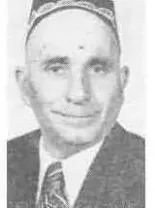
Manas Leviev
Uzbek composer of musical comedies, a ballet, film scores and songs; People’s Artist of the Uzbek SSR and Hamza Prize laureate, author of the waltz from the film “The Whole Neighbourhood Is Talking About It”.
Biography
Manas (Menashe) Betyanovich Leviev was born on 25 July 1912 in Namangan into a Bukharan Jewish family; his father was a tailor. He was the seventh son of a large family in which there was much singing and playing of the dutar, nay and doira. In 1922 the family was living in Samarkand, where the boy attended two schools at once — the Uzbek “Turon” school and School No. 26 for Bukharan Jewish children; in 1926 the Bukharan singer Levi Babakhanov heard him play and advised him to take up music seriously.
In 1930 Leviev entered the Samarkand institute of music and choreography, studying alongside the future composers Mukhtar Ashrafi, Mutal Burkhanov and Tolib Sodiqov. In 1933 he went to Leningrad, to the Mussorgsky music school; his graduation piece was the symphonic poem “Nurkhon”, in memory of the actress Nurkhon Yuldashbaeva. With it he entered the Leningrad Conservatory in 1937, in the composition class of Khrisanf Kushnarev; at the entrance examination the poem was played by Dmitri Shostakovich.
When the war began Leviev, a fifth-year student, volunteered for the 265th machine-gun battalion, was badly wounded and shell-shocked near Petrodvorets, and returned to Tashkent, where in 1942 he joined the musical life of the republic. His first song to Russian words, “For Leningrad”, was written in hospital. He graduated from the conservatory in 1944.
In Tashkent Leviev wrote songs to words by Ghafur Ghulam, Abdulla Qahhor, Hamid Olimjon and Komil Yashin, music for the drama “Jaloliddin”, the ballet “Suhayl and Mehri” (1945) and the musical comedy “The Golden Lake” (1949) to a libretto by Uyghun. His romances and songs, among them “Dilistonim, sen mening” and “O‘zbek qizi ovozi”, entered the republic’s concert repertoire; waltzes hold a special place, above all the waltz from the film “The Whole Neighbourhood Is Talking About It” (1960).
From 1955 Leviev was executive secretary of the board of the Union of Composers of Uzbekistan; he also took part in the work of the artistic councils of Uzbek television and radio and of the Muqimiy Theatre. He was named Honoured Art Worker of the Uzbek SSR (1962) and People’s Artist of the Uzbek SSR (1972); in 1979 he received the Hamza State Prize of the Uzbek SSR for his music to the productions “The Fair Princess of Tashkent” and “My Poplar in a Red Kerchief”, based on Chingiz Aitmatov’s novella.
Manas Leviev died on 12 May 1990 in Tashkent. His life and work are the subject of a book by the musicologist A. Jabborov, “Manas Leviev” (1986).
Education
- Uzbek Institute of Music and ChoreographyOther · Samarkand · 1930–1932
- Mussorgsky Leningrad Music SchoolCollege · 1933–1937
- Rimsky-Korsakov Leningrad ConservatoryUniversity · 1937–1944 · Composition (class of Kh. Kushnarev)
Career
- Union of Composers of UzbekistanExecutive secretary of the board · Tashkent · 1955–…
- Muqimiy Uzbek State Musical TheatreMember of the artistic council · Tashkent
Awards
 People's Artist of the Uzbek SSR1972 · Uzbek SSR
- Honoured Art Worker of the Uzbek SSR1962 · Uzbek SSR
 Hamza State Prize of the Uzbek SSR1979 · Uzbek SSR
Life path
- 1912Birth
Born on 25 July in Namangan into a Bukharan Jewish family.
- 1930–1932Institute of Music and Choreography in Samarkand
Studied alongside the future composers Ashrafi, Burkhanov and Sodiqov.
- 1933Leningrad music school
Entered the Mussorgsky school; his graduation piece was the poem “Nurkhon”, in memory of the actress Nurkhon Yuldashbaeva.
- 1937–1944Leningrad Conservatory
Studied composition in the class of Kh. Kushnarev; graduated in 1944.
- 1941–1942At the front
Volunteered for the 265th machine-gun battalion, was badly wounded and sent back to Tashkent; wrote the song “For Leningrad” in hospital.
- 1945Ballet “Suhayl and Mehri”
Created an Uzbek ballet whose idea had come to him as a student in Leningrad.
- 1949“The Golden Lake”
Wrote the musical comedy to a libretto by Uyghun.
- 1955Union of Composers of Uzbekistan
Became executive secretary of the Union’s board.
- 1960“The Whole Neighbourhood Is Talking About It”
Composed the music for Shukhrat Abbasov’s film; its waltz became the composer’s calling card.
- 1962–1972Honorary titles
Honoured Art Worker of the Uzbek SSR (1962), People’s Artist of the Uzbek SSR (1972).
- 1978–1979Musical dramas and the Hamza Prize
Wrote the music for “The Fair Princess of Tashkent” and “My Poplar in a Red Kerchief”; received the Hamza State Prize of the Uzbek SSR in 1979.
- 1990Death
Died on 12 May in Tashkent.
Works
- “Nurkhon”Symphonic poem
A poem in memory of the actress Nurkhon Yuldashbaeva; with it Leviev entered the Leningrad Conservatory.
- “Suhayl and Mehri” (1945)Ballet
An Uzbek ballet whose idea came to him while studying in Leningrad.
- “The Golden Lake” (1949)Musical comedy
Libretto by Uyghun; the last revision dates from 1958.
- “The Whole Neighbourhood Is Talking About It” (1960)Film score
Shukhrat Abbasov’s film; its waltz became the composer’s calling card.
- “Toshbolta in Love” (1961)Musical comedy
Libretto by Hamid Ghulam.
- “Enchanted by You” (1958)Film score
Yuldash Agzamov’s musical comedy; the score was written by Leviev, Mutal Burkhanov and Ikram Akbarov.
- “Days Gone By” (1969)Film score
A film based on Abdulla Qodiriy’s novel.
- “The Fair Princess of Tashkent” (1978)Musical comedy
Libretto by Khurshid Muhammad; the music for the Muqimiy Theatre production earned the Hamza Prize.
- “My Poplar in a Red Kerchief” (1978)Musical drama
After Chingiz Aitmatov’s novella, libretto by Hamid Ghulam; a production of the Andijan theatre, honoured with the Hamza Prize.
- Romances and songsVocal music
They include the romances “Dilistonim, sen mening”, “Go‘zal tong” and “Sadoi bulbul” and the songs “O‘zbek qizi ovozi” and “O‘rik gullaganda”.
Legacy
Leviev was one of the composers who shaped Uzbek music in the middle of the 20th century: he wrote for the musical theatre, film and the concert stage, combining Uzbek and Tajik melodies with the techniques of European polyphonic composition. The waltz from “The Whole Neighbourhood Is Talking About It” and his songs remain in the repertoire. The only monograph on him is A. Jabborov’s book (1986).
Era: Uzbek professional composition school, 1930s–1980s- Became executive secretary of the board of the Union of Composers of Uzbekistan (1955)
- Awarded the title People’s Artist of the Uzbek SSR (1972)
- Hamza State Prize of the Uzbek SSR (1979)
- A. Jabborov’s book “Manas Leviev” published (1986)
Filmography
| Title | Year |
|---|---|
| The Whole Mahalla Is Talking About It | 1960 |
| Where Are You, My Zulfiya? | 1964 |
| Listok iz bloknota | 1965 |
| The Bell of Sayat | 1966 |
| Bygone Days | 1969 |