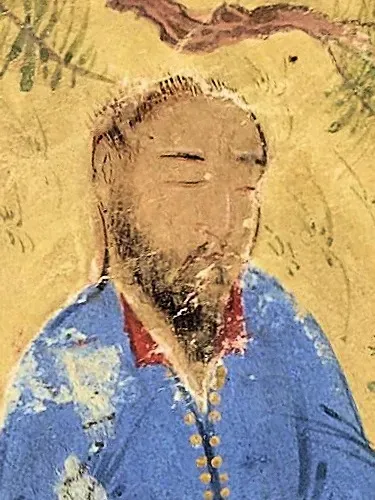
Muhammad II of Khwarazm
Khwarazmshah of the Anushtegin dynasty (1200–1220) who extended his empire across Khorasan and Transoxiana but could not defend it against Genghis Khan’s invasion.
- Occupation:
- Historical figure, Politician, Military officer
- Real name:
- Qutb ad-Din Muhammad
- Nickname:
- Second Alexander
- Born:
- c. 1169 — 1220
- Father:
- Tekish
- Mother:
- Terken Khatun
- Children:
- Qutbiddin O'zloqshoh
Biography
Muhammad II, whose full name was Ala ad-Dunya wa-d-Din Abu’l-Fath Muhammad ibn Tekish, ruled the Khwarazmian Empire. He was born around 1169 in Gurganj and was originally named Qutb ad-Din Muhammad. His father was the Khwarazmshah Tekish and his mother was Terken Khatun, the daughter of a Kipchak (Qangli) khan. In the 1190s his father made him governor of a province in Khorasan, and in 1197, after the death of his elder brother Malik-Shah, he became heir to the throne.
Tekish died on 3 July 1200, and Muhammad was crowned on 3 August, taking his father’s title Ala ad-Din. The first years of his reign were taken up by war with the Ghurids, who overran cities of Khorasan and besieged Gurganj, but were beaten near Andkhud in 1204 with the help of the Qara Khitai. After Mu’izz ad-Din of Ghur was murdered in 1206 the Ghurid state broke up, and its lands gradually came under Khwarazmian control.
The Khwarazmshah then turned on the Qara Khitai. In 1207 he was captured by them but escaped; in September 1210 he routed their army at the battle on the Ilamish plain and annexed Transoxiana. The victory was widely noted in the Muslim world, and he began to style himself the “Second Alexander”. A revolt in Samarkand in 1212 was put down with great cruelty, and Samarkand later became his residence and capital.
Between 1210 and 1215 Muhammad took Persian Iraq, Mazandaran, Azerbaijan, Ghazna and Bamiyan; his realm stretched from the Aral Sea in the north to the Caspian in the west and Semirechye in the east. In 1217 he marched on Baghdad, but a snowstorm in the mountains cost his army heavy losses. His mother Terken Khatun had great influence in government, and Muhammad named his younger son Qutb ad-Din Ozlagh-Shah as heir, which displeased his eldest son, Jalal ad-Din.
In 1218 a caravan of merchant-envoys sent by Genghis Khan was put to death at Otrar on the orders of its governor Inalchuq. Muhammad refused to hand Inalchuq over, and in 1219 a Mongol army invaded Khwarazm. The shah did not risk a battle in the field and spread his troops among the cities; in 1220 Otrar, Bukhara and Samarkand fell. He fled to Khorasan, then to the Caspian coast, and crossed to the island of Ashur-Ada in the sea.
There, gravely ill, Muhammad II died in December 1220. Before his death he named Jalal ad-Din Mingburnu as his successor. The Khwarazmian state was destroyed by the Mongols.
Career
- Khwarazmian EmpireKhwarazmshah (1200–1220) · 1200–1220
Life path
- c. 1169Birth
Born in Gurganj into the family of the Khwarazmshah Tekish and named Qutb ad-Din Muhammad.
- 1197Heir to the throne
Became his father’s heir after the death of his elder brother Malik-Shah.
- 1200Accession
After Tekish’s death on 3 July he was crowned on 3 August and took the title Ala ad-Din.
- 1201–1206War with the Ghurids
The Ghurids threatened Khorasan and Gurganj; they were beaten near Andkhud in 1204, and when their state broke up in 1206 its lands passed to Khwarazm.
- 1210Battle of Ilamish
Routed the Qara Khitai army on the Ilamish plain beyond the Syr Darya and annexed Transoxiana.
- 1212Samarkand revolt
Crushed a revolt in Samarkand; the city later became his residence.
- 1215–1217Conquest of Iran and Ghazna
Took Persian Iraq, Mazandaran, Azerbaijan, Bamiyan and Ghazna.
- 1217March on Baghdad
Marched against Caliph al-Nasir, but a snowstorm in the mountains forced him to abandon the campaign.
- 1218Incident at Otrar
A caravan of Genghis Khan’s merchant-envoys was executed at Otrar; the shah refused to hand over the governor Inalchuq.
- 1219–1220Mongol invasion
Divided his army among the cities; in 1220 Otrar, Bukhara and Samarkand fell and he fled to Khorasan and then to the Caspian coast.
- 1220Death
Died of illness in December on the island of Ashur-Ada in the Caspian Sea.
Legacy
Under Muhammad II the Khwarazmian Empire reached its greatest extent, from the Aral Sea to the Caspian and from Iraq and Ghazna to Semirechye. The empire, however, lacked centralized government, and the shah’s decision to spread his army among the cities is judged by historians a strategic blunder that led to defeat in the Mongol invasion. His son Jalal ad-Din Mingburnu later carried on the fight against the Mongols.
Era: Khwarazmian Empire, Anushtegin dynasty, late 12th – early 13th century- Muhammad took the throne of the Khwarazmshahs (1200)
- Qara Khitai army routed on the Ilamish plain (1210)
- Genghis Khan’s merchant-envoys executed at Otrar (1218)
- The Mongols took Otrar, Bukhara and Samarkand; the shah died on the island of Ashur-Ada (1220)