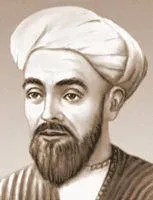
Muqimi
Kokand lyric poet and satirist, one of the founders of the democratic trend in Uzbek literature, known for the satire “The Land Surveyors”, his verse “Travelogue” and ghazals that became songs.
Biography
Muqimi was the pen name of Muhammad Aminkhoja, son of Mirzakhoja. He was born in the Begvachcha quarter of Kokand; the National Encyclopedia of Uzbekistan gives the year as 1850, while Soviet encyclopedias say 1850 or 1851. His father, a native of Tashkent, supported the family as a baker, and his mother Oyshabibi came from Khujand. She knew a great many tales and songs by heart and was the first to awaken her son's interest in poetry. The boy learned to read and write at the school of his neighbourhood.
Muhammad Aminkhoja went on to study at a madrasa in Kokand and in the early 1870s moved to Bukhara to continue his education at one of its madrasas, where he gained a thorough knowledge of Persian and of the rules of classical prosody. In 1876, the year the Kokand Khanate was abolished, he returned home and married. For a time he worked as a mirza, or clerk, in the office that surveyed land, and in the late 1870s he collected fares on the Oqjar ferry across the Syr Darya north-west of Kokand. Both posts showed him village life and the ways of officials at close range, and both found their way into his verse.
After his father's death the poet was left without means, his family life was unhappy, and around 1885 he moved into a cramped cell of the Hazrat madrasa in his home quarter. He lived there in near poverty for the rest of his life, earning his keep as a calligrapher and copyist of manuscripts. Together with his younger friend Furqat he led a circle of Kokand poets, among them Muhyi, Zavqiy and Nisbat, who met for literary gatherings. In 1887–1888 and again early in 1892 Muqimi travelled to Tashkent, his father's city, to see its cultural life, and on the second visit he met N. P. Ostroumov, editor of the Turkiston viloyatining gazeti (Turkestan Native Newspaper), which had first printed some of his poems in the autumn of 1891. He also travelled more than once through the Fergana Valley.
Lyric poetry is the core of Muqimi's legacy: ghazals, murabbas, mukhammases, and takhmises on ghazals by Navoi, Jami, Fuzuli and his contemporaries. He regarded Jami as his master, yet wrote of earthly love, friendship and loyalty in plain language close to folk song, and hafiz singers were performing many of his ghazals in his lifetime. His satire made him just as well known. In “The Land Surveyors”, “The Election” and poems about local rich men he mocked the extortion and high-handedness of colonial and local officials, the greed of merchants and the hypocrisy of some of the clergy; at times, following the views of his day, he also wrote against Dukchi Ishan, the leader of the Andijan uprising. Some thirty comic poems about a horse, a cart, mud, flies and fever sketch the daily life of a provincial town. His journeys produced the verse “Travelogue” in four parts, with which the travel sketch began in Uzbek literature. About ten of his letters in verse and twenty in prose also survive.
In his last years Muqimi was seriously ill but went on writing: in January and April 1903 the Turkestan Native Newspaper printed his poem about a rich man of Kokand and his verse chronicle of the devastating Andijan earthquake. The poet died in Kokand on 25 May 1903.
The first collection of his poems, “Divan-i Muqimi”, was published by Ostroumov in 1907, followed in 1910 and 1912 by “Divan-i Muqimi with Satires”. His work was studied by Ghafur Ghulam, Oybek, Hodi Zarif and other scholars; a two-volume edition of his works appeared in Tashkent in 1960, and a Russian volume, “Muqimi and Furqat. Selected Works”, in Leningrad in 1972. The Uzbek State Musical Theatre and a street in Tashkent and a town in Fergana Region bear his name, and his house museum is in Kokand. Sobir Abdulla wrote the novel “Mavlono Muqimiy” and the play “Muqimiy” about him.
Life path
- 1850Birth
Born in the Begvachcha quarter of Kokand, into the family of the baker Mirzakhoja.
- 1860sSchooling in Kokand
The neighbourhood school, then a Kokand madrasa.
- 1870sBukhara
Early in the decade continued his studies at a Bukhara madrasa and learned Persian.
- 1876Return to Kokand
Came home, married and worked as a clerk in the land-survey office.
- Late 1870sThe Oqjar ferry
Collected fares at a crossing of the Syr Darya.
- 1880sCircle of poets
Led a literary circle of Kokand poets together with Furqat.
- c. 1885A cell in the Hazrat madrasa
Settled in the cell where he lived for the rest of his life, copying manuscripts for a living.
- 1887–1888First visit to Tashkent
Got to know the cultural life of his father's city.
- 1891First publication
Several poems were printed in the Turkestan Native Newspaper.
- 1892Second visit to Tashkent
Met the newspaper's editor, N. P. Ostroumov.
- 1903Last poems and death
Wrote about the Andijan earthquake; died in Kokand on 25 May.
- 1907First collection
Ostroumov published the “Divan-i Muqimi”.
Works
- “The Land Surveyors” (“Tanobchilar”)Satire
A peasant's account of surveyors who inflate the measurement of fields and extort gifts from the village.
- “The Election” (“Saylov”)Satire
One of the first satires in Uzbek literature on elections held by the colonial administration.
- “Satire on Viktor-bay” (“Hajvi Viktor boy”)Satire
A portrait of a rich businessman; with his other poems on local bais it forms a gallery of satirical types.
- “Travelogue” (“Sayohatnoma”)Verse travel sketches
Four parts, among them “From Kokand to Shohimardon” and “From Kokand to Fergana”; light quatrains on the valley's villages, their headmen and their poverty.
- “Mud” (“Loy”)Comic poem
A joke about the impassable mud of the town's streets.
- “Curse the Cart” (“Aroba qursin”)Comic poem
On the ordeal of a journey by arba cart.
- “Divan-i Muqimi” (“Devoni Muqimiy”) (1907)Collected poems
The first edition of his poems, prepared by N. P. Ostroumov in Tashkent.
- “Divan-i Muqimi with Satires” (“Devoni Muqimiy maa hajviyot”) (1910)Collected poems
Lyrics together with satirical and comic poems; reprinted in 1912.
Legacy
The Great Soviet Encyclopedia names Muqimi, together with Furqat, as the leader of a circle of poets who gave lyric poetry a social content, and Uzbek scholarship links the rise of the democratic trend in late nineteenth-century Uzbek literature with his name. He brought into Uzbek poetry narrative satire with recognisable models, the theme of elections, and the travel sketch in verse. His ghazals and murabbas, written in the language of folk song, became songs.
Era: The end of the Kokand Khanate and the Russian Empire's Turkestan Krai, the last quarter of the 19th century to the early 20th- The Kokand Khanate was abolished; Muqimi returned from Bukhara to Kokand (1876)
- His first poems were printed in the Turkestan Native Newspaper (1891)
- The “Divan-i Muqimi” was published (1907)
- The “Divan-i Muqimi with Satires” was published (1910)
- A two-volume edition of his works appeared in Tashkent (1960)
- “Muqimi and Furqat. Selected Works” was published in Leningrad (1972)