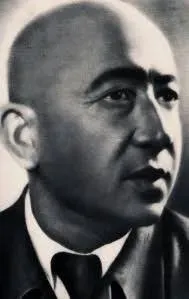
Nabi Ganiev
One of the founders of Uzbek cinema: a director, actor and screenwriter, the maker of “Yuksalish”, “Tahir and Zuhra” and “The Daughter of Fergana”.
- Occupation:
- Actor, Director, Film actor
- Born:
- 1904 — October 29, 1953
- Birthplace:
- Tashkent
- Spouse:
- Maqsuma
Biography
Nabi Ganiev was born in 1904 in Tashkent; sources give different days for his birth, so only the year is given here. As a boy he liked drawing and music and wanted to become a painter. In the early 1920s he went to Moscow and studied at VKhUTEMAS, the Higher Art and Technical Workshops; accounts of his life say it was there that he first saw films.
After returning to Tashkent in 1925 he began work at the newly founded Sharq Yulduzi film studio (later Uzbekfilm). He started as an assistant to directors, a consultant and an actor in small parts, appearing in films such as “The Last Bek”. To draw talented young people to the studio he wrote two books in Uzbek, “Film Scenario” and “Film Actor”, and he took part in founding a society of friends of Uzbek cinema and in opening a film technical school in Tashkent.
His first feature as an independent director, “Yuksalish” (“Ascent”), came out in 1931; “Ramazon” (1932) and “Yigit” (1934) followed. They show the fate of a person changed by Soviet rule, set in Uzbek life. The main difficulty was casting: there were no professional Uzbek film actors, and the clergy opposed the appearance of women on screen. According to the sources, in 1935 a decision of the Central Committee of the Communist Party removed Ganiev from directing, and the ban lasted until the war.
During the war he worked with Yakov Protazanov: he was second director on “Nasreddin in Bukhara” (1943), took part in making “We Shall Win” and directed “The Brave Friends”. In 1944 he received the title Honoured Art Worker of the Uzbek SSR. “Tahir and Zuhra” (1945) became the first Uzbek feature film shown abroad; its Moscow premiere was on 21 October 1945. He then made “The Adventures of Nasreddin” (1946) and “The Daughter of Fergana” (1948).
In 1949 he fell seriously ill. From 1949 to 1952 he worked on documentaries — “In the Land of Karakalpakstan”, “The Fergana Valley”, “Kanash” and “Masters of Uzbek Dance”. Nabi Ganiev died in Tashkent on 29 October 1953 and was buried at the Chigatay cemetery.
The Tashkent film technical school was named after him in 1965, and a street in Tashkent bears his name. In 2001 he was posthumously awarded the Order “For Outstanding Merit” (Buyuk xizmatlari uchun). The singer Rayhon is his great-granddaughter.
Education
Career
- Uzbekfilm studioAssistant director, actor, later director · Tashkent · 1925–1953
Awards
 Order «For Outstanding Merit»2001, posthumously · Uzbekistan
- Honoured Art Worker of the Uzbek SSR1944 · Uzbek SSR
Life path
- 1904Born in Tashkent
Sources give different days of birth.
- Early 1920sStudies in Moscow
Studied at VKhUTEMAS, the Higher Art and Technical Workshops.
- 1925Return to Tashkent
Began at the Sharq Yulduzi film studio as assistant director, consultant and actor.
- 1931“Yuksalish”
His first feature as an independent director.
- 1932–1934“Ramazon” and “Yigit”
Films of the first half of the 1930s.
- 1935Removed from directing
By decision of the Party's Central Committee, until the war.
- 1943–1944Work with Protazanov
Second director of “Nasreddin in Bukhara”; in 1944 named Honoured Art Worker of the Uzbek SSR.
- 1945“Tahir and Zuhra”
The first Uzbek feature shown abroad; premiere in Moscow on 21 October.
- 1946–1948“The Adventures of Nasreddin” and “The Daughter of Fergana”
Post-war feature films.
- 1949–1952Documentaries
Made documentary films despite his illness.
- 1953Death
Died in Tashkent on 29 October.
- 1965, 2001Memory
A Tashkent film technical school named after him; in 2001 posthumously awarded the Order “For Outstanding Merit”.
Filmography
| Title | Year |
|---|---|
| The Covered Wagon | 1928 |
| The Leper | 1928 |
| Yuksalish (Ascent) | 1931 |
| Ramazon | 1932 |
| Yigit | 1934 |
| Otvazhnye druzya | 1941 |
| Nasreddin in Bukhara | 1943 |
| Tahir and Zuhra | 1945 |
| The Adventures of Nasreddin | 1946 |
| The Daughter of Fergana | 1948 |