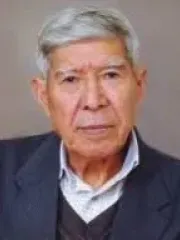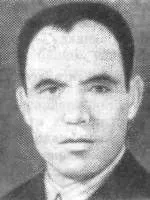
Qudrat Hikmat
Uzbek children’s poet and translator, author of the collections “My Homeland”, “Alisher and the Book”, “Soatjon’s Watch” and “The Tortoises’ Attack” and the poem “Child of the Chirchiq”; translated Marshak, Mikhalkov and Barto into Uzbek.
Biography
Qudrat Hikmat was born in 1925 in Sebzor, one of the old quarters of Tashkent. His mother, Muborak-aya, died in 1934 while he was still a child; his father made a living from farming and a craft. He went to secondary school in 1934–1944, and his first poems appeared in the school wall newspaper.
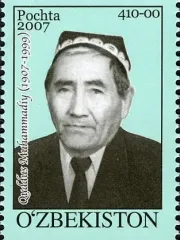
From 1945 his poems were printed in the magazines “Gulxan” and “Sharq yulduzi” and in the republic’s newspapers. The young poet was encouraged by Oybek and Quddus Muhammadiy. On Oybek’s advice he became, in 1947, the literary secretary of the celebrated bakhshi (epic singer) Islom-shoir Nazar oʻgʻli; literary scholars trace the folk intonation of his verse to those years.
His first collection, “My Homeland”, came out in 1950. In 1950–1953 he was a literary staff member of the newspapers “Lenin uchquni” and “Yosh leninchi”, and in 1957 he graduated from the evening department of the Tashkent Pedagogical Institute. From 1960 until his death he headed the children’s literature department of the fiction publishing house (later the Ghafur Ghulam Publishing House of Literature and Art). Colleagues remembered how hard he worked to get books by young poets into the publishing plan.
In the 1950s and 1960s he published books such as “Happy Children” (1951), “Prosperity” (1953), “Friendship” (1954), “The Three Friends’ Gift” (1957), “Alisher and the Book” (1962), “Soatjon’s Watch” (1964), “The Tortoises’ Attack” (1965) and “Wind the Hero” (1966). He also wrote the narrative poem “Child of the Chirchiq” (1961) and the verse “Tale of the Snake King and His Official the Wasp” (1963). A book of his poems in Russian translation, “Native Uzbekistan”, was published in Tashkent in 1955.
Hikmat’s main themes are the homeland, nature and the seasons, and children’s lives and upbringing — as in the poems “Morning”, “Mountain Landscape”, “What Season Is This?”, “Long Live the New Year” and “The Fir Tree We Planted”; “White Poplar or Blue Poplar?” and “The Chillak Game” are built on folk children’s game songs. The National Encyclopedia of Uzbekistan credits him with renewing the metre, stanza and rhyme of children’s poetry to suit a child’s mind. As a translator he rendered into Uzbek children’s verse by Vladimir Mayakovsky, Samuil Marshak, Sergey Mikhalkov, Aleksey Surkov, Mykola Bazhan, Agniya Barto and others.
In his last years he suffered from a severe kidney disease, and as it worsened he hurried to hand his publisher the manuscript of “A Talk with My Son”, a book of poems and narrative poems. Qudrat Hikmat died in Tashkent on 10 April 1968. “A Talk with My Son” came out in 1970, followed later by the collections “My Heart Is a Diamond” (1983) and “My Heart” (1986); in 1983 the Yosh Gvardiya publishing house brought out a book of his poems, tales and narrative poems in Russian translation, “Serdtse moyo almaznoye”.
His poems have been included in school textbooks and children’s anthologies. The literary scholar M. Qoʻshjonov devoted two books to him, “Quddus Muhammadiy and Qudrat Hikmat” (1969) and “Qudrat Hikmat” (1978). In April 2025 the Writers’ Union of Uzbekistan held a literary evening marking the centenary of his birth.
Education
- Nizami Tashkent State Pedagogical UniversityUniversity · Tashkent · 1957 · Evening department
Career
- Ghafur Ghulam Publishing House of Literature and ArtHead of the children's literature department (the house was then the fiction publishing house) · Tashkent · 1960–1968
- Yosh Leninchi newspaperLiterary staff member · Tashkent · 1950–1953
- Lenin uchquni newspaperLiterary staff member · Tashkent · 1950–1953
Life path
- 1925Birth
Born in the Sebzor quarter of Tashkent.
- 1934–1944School
Attended secondary school; his first poems appeared in the wall newspaper.
- 1945First publications
His poems began to appear in the magazines “Gulxan” and “Sharq yulduzi”.
- 1947Secretary to Islom-shoir
On Oybek’s advice became literary secretary to the bakhshi Islom-shoir Nazar oʻgʻli.
- 1950“My Homeland”
His first collection of poems came out.
- 1950–1953Newspapers
Literary staff member of “Lenin uchquni” and “Yosh leninchi”.
- 1957Higher education
Graduated from the evening department of the Tashkent Pedagogical Institute.
- 1960–1968Publishing house
Head of the children’s literature department of the fiction publishing house.
- 1961–1966Narrative poems and tales
Published “Child of the Chirchiq”, “Alisher and the Book”, the “Tale of the Snake King and His Official the Wasp”, “Soatjon’s Watch”, “The Tortoises’ Attack” and “Wind the Hero”.
- 1968Death
Died in Tashkent on 10 April.
- 1970“A Talk with My Son”
The collection he prepared at the end of his life appeared after his death.
- 2025Centenary
A literary evening for his centenary at the Writers’ Union of Uzbekistan.
Books
- “My Homeland”1950 · Poetry collection
His first book.
- “Happy Children”1951 · Poetry collection
Poems for children.
- “Friendship”1954 · Poetry collection
Poems for children.
- “The Three Friends’ Gift”1957 · Poetry collection
Poems for children.
- “Child of the Chirchiq”1961 · Narrative poem
A narrative poem for children.
- “Alisher and the Book”1962 · Poetry collection
A collection opening with the title poem about a boy who loves books.
- “Tale of the Snake King and His Official the Wasp”1963 · Verse tale
A verse tale for children.
- “Soatjon’s Watch”1964 · Poetry collection
Poems for children.
- “The Tortoises’ Attack”1965 · Poetry collection
Poems for children.
- “Wind the Hero”1966 · Poetry collection
Poems for children.
- “A Talk with My Son”1970 · Poems and narrative poems
Prepared at the end of his life and published after his death.