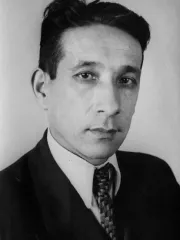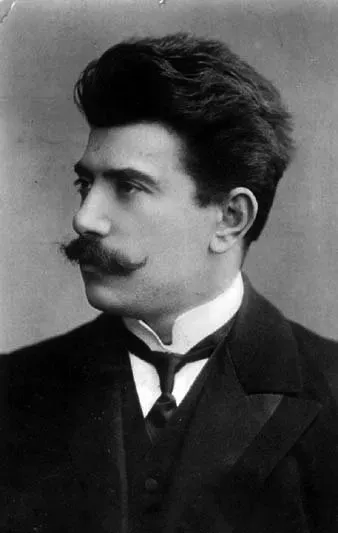
Reinhold Glière
Russian and Soviet composer, conductor and teacher, author of the ballets “The Red Poppy” and “The Bronze Horseman”; with Tolib Sodiqov he wrote the operas “Layli and Majnun” and “Gulsara”; People's Artist of the USSR and of the Uzbek SSR.
Biography
Reinhold Moritsevich Glière was born in Kyiv on 30 December 1874 by the old-style calendar, which is 11 January 1875 by the modern one. His father, a maker of brass wind instruments, had moved to Kyiv from the Saxon town of Klingenthal; his mother was Józefa Korczak. He had his first music lessons, including violin, at home and graduated from the Kyiv music school in 1894.
That same year he entered the Moscow Conservatory, first in the violin class (Nikolai Sokolovsky, then Jan Hřímalý). He completed the course in 1900, having studied counterpoint with Sergei Taneyev, harmony with Anton Arensky and Georgy Conus, and composition in the class of Mikhail Ippolitov-Ivanov. From 1900 he taught theory at the Gnessin music school, and in 1902–1903 he gave private lessons to Nikolai Myaskovsky and Sergei Prokofiev. He won the Glinka Prize three times, in 1905, 1912 and 1914 (for his First Sextet, the symphonic poem “The Sirens” and the Third Symphony “Ilya Muromets”). In 1906–1908 he studied conducting with Oskar Fried in Germany and from 1908 appeared as a conductor, mostly of his own works.
In 1913–1920 Glière was a professor at the Kyiv Conservatory, serving as its director from 1914; Borys Lyatoshynsky and Levko Revutsky were among his pupils. From 1920 to 1941 he was professor of composition at the Moscow Conservatory. In 1923 the People's Commissariat for Education of the Azerbaijan SSR invited him to Baku to write an opera on a national subject, which led to “Shahsenem”, staged in 1927. His ballet “The Red Poppy” (1926–1927) was one of the first Soviet ballets on a contemporary theme.
In the 1930s Glière turned to Uzbek music. In 1936 the musical drama “Gulsara”, with a text by Kamil Yashen and Muzaffar Muhamedov, was staged in Tashkent; Glière created it on folk melodies together with Toxtasin Jalilov and Tolib Sodiqov. A decade of Uzbek art was held in Moscow in the spring of 1937, and on 31 May Glière received the Order of the Red Banner of Labour for services to Uzbek music and dance; the same year he was named People's Artist of the Uzbek SSR. In 1937 he wrote the “Solemn Overture” on Russian, Ukrainian, Azerbaijani and Uzbek melodies, and in 1940 the overture “Fergana Festival”, a product of his study of Uzbek folklore. In 1940 he and Sodiqov created the opera “Layli and Majnun” after Navoi's poem (libretto by Khurshid), and in 1949 the operatic version of “Gulsara”. Sodiqov had studied at the Moscow Conservatory in Glière's class. Glière also wrote the music for the film “Alisher Navoi” (1947) together with Sodiqov.
He became People's Artist of the USSR on 17 April 1938; that year he also headed the Moscow Union of Composers, and in 1939–1948 he chaired the organizing committee of the Union of Soviet Composers. In 1941 he received a doctorate in art studies. His later works include the Concerto for coloratura soprano and orchestra (1943), the Fourth String Quartet (1946) and the ballet “The Bronze Horseman” (1949); for these three works he received first-class Stalin Prizes in 1946, 1948 and 1950. The ballet's “Hymn to the Great City” later became the anthem of Leningrad. He was awarded the Order of Lenin three times (1945, 1950, 1955).
Glière died in Moscow on 23 June 1956 and was buried at the Novodevichy Cemetery (plot 3). A monument by the sculptor Mikhail Anikushin was unveiled on the fifth anniversary of his death, 23 June 1961. His name is borne by the Kyiv Municipal Academy of Music and by children's music schools in Moscow, Kaliningrad, Tashkent, Almaty and Nukus; according to the National Encyclopedia of Uzbekistan, the republican specialised music boarding school in Tashkent is also named after him.
Education
- Tchaikovsky Moscow State ConservatoryUniversity · 1894–1900 · Composition, class of Mikhail Ippolitov-Ivanov
- Kyiv Music SchoolCollege · 1894 · Violin
Career
- Union of Composers of the USSRChairman of the organizing committee · 1939–1948Everyone who held this post →
- Gnessin Music SchoolTeacher of music theory (1900–1907, 1909–1913) · 1900–1913
- Kyiv ConservatoryProfessor of composition and, from 1914, director · 1913–1920Everyone who held this post →
- Moscow State ConservatoryProfessor of composition · 1920–1941
Awards
 People's Artist of the Uzbek SSR1937 · Uzbek SSR
 People's Artist of the USSR1938 · USSR
 Order of Lenin1945 · USSR
- Order of Lenin1950 · USSR
- Order of Lenin1955 · USSR
 Order of the Red Banner of Labour1937 · USSR
 Order of the Badge of Honour1938 · USSR
 Stalin Prize1946 · USSR
- Stalin Prize1948 · USSR
- Stalin Prize1950 · USSR
Life path
- 1894Graduation from the Kyiv music school
Entered the Moscow Conservatory.
- 1900Graduation from the Moscow Conservatory
Studied composition in Mikhail Ippolitov-Ivanov's class.
- 1900–1913Teaching at the Gnessin music school
Taught music theory (in 1900–1907 and 1909–1913); his pupils included Myaskovsky and Prokofiev.
- 1913–1920Kyiv Conservatory
Professor of composition and, from 1914, director.
- 1920–1941Professor at the Moscow Conservatory
Taught the composition class.
- 1927The opera “Shahsenem”
Invited to Baku in 1923, he wrote the opera in 1923–1925; it was staged in Baku.
- 1936The musical drama “Gulsara”
Staged in Tashkent; created on folk melodies with Toxtasin Jalilov and Tolib Sodiqov.
- 1937Uzbek art decade, an order and a title
After the decade of Uzbek art in Moscow he received the Order of the Red Banner of Labour on 31 May and the title People's Artist of the Uzbek SSR.
- 1938People's Artist of the USSR
Title conferred on 17 April; that year he also chaired the Moscow Union of Composers.
- 1939–1948Chairman of the Composers' Union organizing committee
Headed the organizing committee of the Union of Soviet Composers.
- 1940“Layli and Majnun” and “Fergana Festival”
An opera after Navoi's poem (with Tolib Sodiqov) and an overture on Uzbek melodies.
- 1949“The Bronze Horseman” and the opera “Gulsara”
The ballet was staged, and with Sodiqov he completed the operatic version of “Gulsara”.
- 1956Death
Died in Moscow on 23 June and was buried at the Novodevichy Cemetery.
Works
- “Shahsenem” (1927)Opera
An opera on an Azerbaijani subject, written in 1923–1925 and revised in 1934.
- “The Red Poppy” (1927)Ballet
A ballet on a contemporary theme; a second version followed in 1949.
- Symphony No. 3 “Ilya Muromets” (1911)Symphony
Written in 1909–1911; it earned him the Glinka Prize in 1914.
- “Gulsara” (1936)Musical drama
To a text by Kamil Yashen and Muzaffar Muhamedov, with Toxtasin Jalilov and Tolib Sodiqov.
- “Solemn Overture” (1937)Symphonic work
Built on Russian, Ukrainian, Azerbaijani and Uzbek melodies.
- “Layli and Majnun” (1940)Opera
With Tolib Sodiqov, after Navoi's poem (libretto by Khurshid).
- “Fergana Festival” (1940)Overture
A result of his study of Uzbek folk music.
- Concerto for coloratura soprano and orchestra (1943)Concerto
Awarded a first-class Stalin Prize in 1946.
- String Quartet No. 4 (1946)Chamber work
Awarded a first-class Stalin Prize in 1948.
- Music for the film “Alisher Navoi” (1947)Film score
Written with Tolib Sodiqov.
- “The Bronze Horseman” (1949)Ballet
After Pushkin's poem, written in 1945–1948; awarded a Stalin Prize in 1950. Its “Hymn to the Great City” became the anthem of Leningrad.
- “Gulsara” (opera) (1949)Opera
The operatic version of the musical drama, created with Tolib Sodiqov.
Filmography
| Title | Year |
|---|---|
| The Land Thirsts | 1930 |
| Alisher Navoi | 1947 |