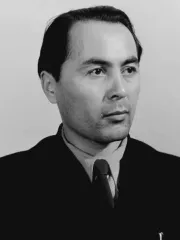
Shukur Sa'dulla
Uzbek children’s poet and playwright, author of the musical drama “Yoriltosh”, the comedy “Holiday in the Field” and many books of verse for children; an editor at the State Publishing House of Uzbekistan in 1931–1964.
- Occupation:
- Writer, Poet, Playwright, Children's writer
- Born:
- January 15 1912(60 years old) ♑ — September 14, 1972
- Birthplace:
- Jizzakh
Biography
Shukur Sa'dulla was born on 15 January 1912 in the Toshkentlik quarter of Jizzakh, into the family of an office worker. At seven he went to the old-style school of his neighbourhood, learned to read quickly and then continued at the newly opened Narimanov School. He finished it at twelve and in 1924 left for Samarkand to study further.
In 1924–1929 he studied at the Samarkand Pedagogical College, where he took up writing poetry in earnest. His first poems were mostly addressed to adults and responded to the social and political events of the time. Early in 1929 a conference on children’s literature was held in Samarkand; after it he, like Zafar Diyor, Ilyos Muslim and Sulton Jo'ra, began writing for children. In 1929–1931 he studied at the Faculty of Philology of the Pedagogical Academy.
In 1931 he was invited to join the children’s and youth literature department of the State Publishing House of Uzbekistan as an editor and stayed there until 1964. In those years he was one of the leaders of the literary circle at the Women’s Teacher-Training College: the first poem of one of its members, Zulfiya, “I Am a Daughter of Labour”, was printed through him in the newspaper “Ishchi” on 17 July 1931. His own first collection, “The Cry” (“Hayqiriq”), with eleven poems and a short narrative poem, came out in Tashkent in 1932.
In 1938 he wrote the musical drama “Yoriltosh” on the plots of Uzbek folk tales. The collections “What Have You Done?” (1942) and “Shohista” (1944), and the later “A Sweet Day” (1947) and “The Great City” (1951), reflect the events of the war. His plays “Our Soldier” (1942) and “The Campfire” (1943), about children’s lives in wartime, were staged at the Republican Young Spectators’ Theatre.
Later came his children’s books “Our Holiday” (1953), “Ko'kbuloq” (1957), “The Magnet” (1959), “The Helpful Girl” (1961) and “Ozoda” (1964). He retold folk tales such as “The Tailless Foxes”, “Three Foxes” and “The Fox and the Crane” and wrote short poems about toys and animals, among them “The Bear”, “The Calf”, “The Foal” and “Mitti”. His comedy “Holiday in the Field” (1954) was staged by many theatres. With the composer Sobir Boboyev he created the musical drama “Love for the Homeland”, written together with Z. Fatkhullin (1958, Muqimiy Musical Theatre), and the musical comedy “Two Bracelets” (1962). In 1967 he wrote the libretto of “Yoriltosh”, on which Boboyev based a children’s opera in 1969.
As a translator he rendered into Uzbek, with Ilyos Muslim, the poems and tales of S. Marshak (1950). He also translated H. C. Andersen, N. A. Nekrasov, A. S. Pushkin, L. Tolstoy, B. Zhitkov, S. Mikhalkov and A. Barto, B. Gorbatov’s novel “The Unvanquished” (1953), V. Oseyeva’s “Vasyok Trubachov and His Comrades” (1954) and K. Chukovsky’s “Doctor Aybolit” (1966).
In 1964–1972 he was a literary consultant at the Writers’ Union of Uzbekistan. In 1972 he was named an Honoured Art Worker of the Uzbek SSR. Shukur Sa'dulla died in Tashkent on 14 September 1972. In 1973 Sobir Boboyev turned “Love for the Homeland” into the opera “Fidoyilar” to a libretto by Shukur Sa'dulla and Z. Fatkhullin.
Education
- Samarkand Pedagogical CollegeCollege · Samarkand · 1924–1929
- Uzbek Pedagogical AcademyUniversity · Samarkand · 1929–1931 · Faculty of Philology
- Narimanov School, JizzakhSchool · Jizzakh · 1924
Career
- Writers' Union of UzbekistanLiterary consultant · Tashkent · 1964–1972
- State Publishing House of UzbekistanEditor · Tashkent · 1931–1964
Awards
- Honoured Art Worker of the Uzbek SSR1972 · Uzbek SSR
Life path
- 1919–1924School in Jizzakh
Studied at the old-style school of his quarter, then at the Narimanov School.
- 1924–1931Studies in Samarkand
The Samarkand Pedagogical College (1924–1929) and the Faculty of Philology of the Pedagogical Academy (1929–1931).
- 1931–1964State Publishing House of Uzbekistan
Editor in the children’s and youth literature department.
- 1931Literary circle
One of the leaders of the circle at the Women’s Teacher-Training College; Zulfiya’s first poem appeared through him in the newspaper “Ishchi”.
- 1932“The Cry”
His first poetry collection came out in Tashkent.
- 1938“Yoriltosh”
Wrote a musical drama based on folk tales.
- 1942–1943Wartime plays
“Our Soldier” and “The Campfire” were staged at the Republican Young Spectators’ Theatre.
- 1954“Holiday in the Field”
A comedy staged by many theatres.
- 1958“Love for the Homeland”
A musical drama written with Z. Fatkhullin, staged at the Muqimiy Musical Theatre with music by Sobir Boboyev.
- 1964–1972Writers’ Union
Literary consultant at the Writers’ Union of Uzbekistan.
- 1972Title and death
Named an Honoured Art Worker of the Uzbek SSR; died in Tashkent on 14 September.
Works
- “The Cry” (1932)Poetry collection
His first book: eleven poems and a short narrative poem, mostly for adults.
- “Yoriltosh” (1938)Musical drama
Based on the plots of Uzbek folk tales; in 1967 he wrote its libretto, on which Sobir Boboyev based a children’s opera in 1969.
- “Our Soldier” (1942)Play
About children’s lives during the war; staged at the Republican Young Spectators’ Theatre.
- “What Have You Done?” (1942)Poetry collection
A collection reflecting the events of the war.
- “The Campfire” (1943)Play
About children in wartime; staged at the Republican Young Spectators’ Theatre.
- “Shohista” (1944)Poetry collection
A collection of the war years.
- “The Great City” (1951)Poetry collection
A post-war collection that also carries memories of the war.
- “Holiday in the Field” (1954)Comedy
Staged by many theatres; the music was written by Sobir Boboyev and D. Zokirov.
- “Love for the Homeland” (1958)Musical drama
Written with Z. Fatkhullin and staged at the Muqimiy Musical Theatre; the opera “Fidoyilar” was based on it in 1973.
- “The Magnet” (1959)Children’s book
One of his children’s books of the late 1950s.
- “The Helpful Girl” (1961)Children’s book
A work of a didactic, instructive character.
- “Ozoda” (1964)Children’s book
Published in his last year at the publishing house.