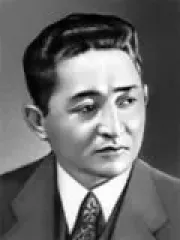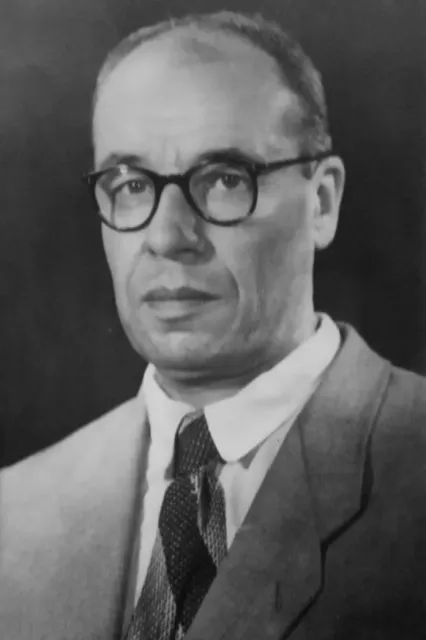
Sobir Abdulla
Uzbek poet, playwright and writer, People’s Poet of the Uzbek SSR; author of the musical drama “Tohir va Zuhra”, the “Devon” and many ghazals that became songs.
- Occupation:
- Writer, Poet, Playwright
- Real name:
- Sobirjon Abdullayev
- Born:
- September 18 1905(67 years old) ♍ — October 24, 1972
- Birthplace:
- Kokand, Fergana
- Father:
- Abdullajon Alimov
- Mother:
- Xo'jarbibi Muhammadamin qizi
- Spouse:
- Saodatxon Abdullayeva
- Children:
- Yashin Abdullayev, Yashna Abdullayeva, Gulshan Abdullayeva, Ravshan Abdullayeva
Biography
Sobir Abdulla (born Sobirjon Abdullayev) was born on 18 September 1905 (5 September Old Style) in Kokand into a clerk’s family. His father, Abdullajon Alimov (1863–1933), was a mirzo — a scribe — and a connoisseur of classical Uzbek, Persian and Tajik literature and an admirer of Bedil; his mother, Xo‘jarbibi Muhammadamin qizi, taught him to read and write early. His elder sister and an aunt also wrote ghazals.
By the age of eight he read Eastern poets freely in the original and tried to compose verse himself. He finished school in 1920 and went on studying in Kokand, and in 1924–1926 attended courses for training local cadres in Tashkent. From the mid-1920s he worked for the Kokand newspaper “Yangi Farg‘ona”, for “Yosh leninchi” and for the magazine “Mushtum”, publishing poems, feuilletons and stories; his first play, “Muxbirga hujum”, appeared in 1927.
In 1928, after a course for journalists, he became the Fergana Valley special correspondent of the republican newspaper “Qizil O‘zbekiston”. From that year until his death he contributed to the satirical magazine “Mushtum”, mocking ignorance, callousness and greed. In 1931 he was invited to head the literary department of the Uzbek State Music Theatre (now the Muqimiy Theatre), and later worked in the music-drama theatres of Samarkand, Andijan and again Tashkent.
Sobir Abdulla wrote about thirty stage works. The best known is the musical drama “Tohir va Zuhra” (1939), with music by Tokhtasin Jalilov, first staged in 1940; it gave rise to an opera libretto and to the screenplay of the film of the same name (1945, directed by Nabi Ganiyev), which he wrote together with A. Speshnev. His other plays include “Qurbon Umarov”, “Davron ota”, “Alpomish”, “Muqimiy” and “Gul va Navro‘z”.
His first poetry collection, “Erk ilhomlari”, came out in 1931. He wrote in classical forms, above all in the aruz metre, and was the first modern Uzbek poet to compile his own “Devon” (1965), which gathered ghazals, muxammas, rubais and other genres; many of his ghazals have been set to music. He also wrote story collections, the novel “Mavlono Muqimiy” (1965) and the tale “Besh sarguzasht” (1971), and translated verse from the “Thousand and One Nights” from Arabic and poems by Faiz Ahmad Faiz from Urdu.
In 1944 Sobir Abdulla was named Honoured Art Worker of the Uzbek SSR, in 1965 People’s Poet of the Uzbek SSR, and in 1971 he received the Hamza State Prize of the Uzbek SSR for the “Devon”. He was a member of the Communist Party of the Soviet Union from 1945. The poet died in Tashkent on 24 October 1972 and was buried in the Chig‘atoy cemetery; streets, schools and a library in Kokand and Tashkent bear his name.
Career
- Mushtum magazineContributor · 1928–1972
- Communist Party of the Soviet UnionMember · 1945–…
- Muqimiy Uzbek State Musical TheatreHead of the literary department · Tashkent · 1931–…
- Andijan Musical Drama TheatreLiterary staff member · Andijan
Awards
- People's Poet of the Uzbek SSR1965 · Uzbek SSR
- Honoured Art Worker of the Uzbek SSR1944 · Uzbek SSR
 Hamza State Prize of the Uzbek SSR1971 · Uzbek SSR
 Order of the Red Banner of Labour1959 · USSR
 Order of the Badge of Honour1939 · USSR
- Order of the Badge of Honour1950 · USSR
 Medal «For Labour Distinction»1944 · USSR
- Medal «For Labour Distinction»1946 · USSR
Life path
- 1905Birth
Born in Kokand on 18 September (5 September Old Style).
- 1920After school
Went on studying in Kokand; in 1924–1926 attended courses for local cadres in Tashkent.
- 1927First play
His play “Muxbirga hujum” appeared, staged by the Kokand drama troupe.
- 1928Correspondent of “Qizil O‘zbekiston”
Became the paper’s special correspondent in the Fergana Valley and began contributing to “Mushtum”.
- 1931Music theatre and first collection
Headed the literary department of the Uzbek State Music Theatre; the collection “Erk ilhomlari” was published.
- 1939“Tohir va Zuhra”
Wrote the musical drama first staged in 1940; received the Order of the Badge of Honour.
- 1944Honoured Art Worker of the Uzbek SSR
Received the title and the medal “For Labour Distinction”.
- 1945The film “Tohir va Zuhra”
The film was made from his screenplay, written with A. Speshnev; he joined the Communist Party that year.
- 1959Order of the Red Banner of Labour
Awarded the order on 18 March.
- 1965People’s Poet of the Uzbek SSR
Received the title; the first volume of the “Devon” and the novel “Mavlono Muqimiy” appeared.
- 1971Hamza Prize
Hamza State Prize of the Uzbek SSR for the “Devon”.
- 1972Death
Died in Tashkent on 24 October and was buried in the Chig‘atoy cemetery.
Works
- “Erk ilhomlari” (1931)Poetry collection
The poet’s first collection of verse.
- “Gulshan” (1939)Poetry collection
A collection of verse from the 1930s.
- “Tohir va Zuhra” (1939)Musical drama
A play based on the folk tale of Tohir and Zuhra, staged to music by T. Jalilov.
- “Tohir va Zuhra” (libretto) (1949)Opera libretto
The libretto of the opera drawn from his own drama.
- “Gul va Navro‘z” (1956)Play
A play based on the dastan by Lutfi.
- “Soyalar” (1963)Story collection
Satirical stories.
- “Devon” (1965)Poetry collection
A collection of ghazals, muxammas, rubais and other genres; it brought the Hamza Prize in 1971.
- “Mavlono Muqimiy” (1965)Novel
A novel about the life and times of the poet Muqimiy.
- “Tun va tong” (1971)Dastan
A narrative poem of his late years.
- “Besh sarguzasht” (1971)Novella
A tale on a historical subject.
Filmography
| Title | Year |
|---|---|
| “Tohir and Zuhra” | 1945 |
Legacy
Sobir Abdulla is known as a poet who wrote in the aruz metre and joined classical poetry with modern Uzbek literature. Many of his ghazals became songs, and the musical drama “Tohir va Zuhra” remains in the repertoire of Uzbek theatres. Streets, schools and a library in Kokand and Tashkent bear his name.
Era: Soviet-era Uzbek literature- First staging of “Tohir va Zuhra” (1940)
- Release of the film “Tohir va Zuhra” (1945)
- Hamza Prize for the “Devon” (1971)