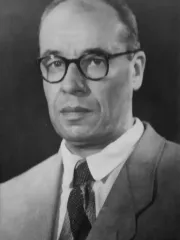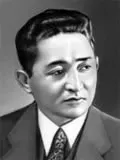
Hamid Olimjon
Uzbek poet, playwright and literary scholar, author of the narrative poems “Zaynab and Omon” and “Oygul and Baxtiyor” and the tragedy “Muqanna”; executive secretary of the Writers’ Union of Uzbekistan in 1939–1944.
- Occupation:
- Writer, Poet, Playwright
- Real name:
- Hamid Azimov
- Born:
- December 12 1909(34 years old) ♐ — July 3, 1944
- Birthplace:
- Jizzakh
- Mother:
- Komila
- Spouse:
- Zulfiya
- Children:
- Hulkar Olimjonova, Omon Olimjonov
Biography
Hamid Olimjon (born Hamid Olimjonovich Azimov) was born on 12 December 1909 in Jizzakh. His love of words began in childhood: his mother, Komila, told him many tales, and the storyteller Fozil Yo'ldosh o'g'li used to visit the house of his grandfather, Mulla Azim, so the boy grew up listening to his epics and songs. This interest in oral folk tradition later ran through both his long poems and his scholarly work.
From 1918 he went to school in Jizzakh, in 1923–1928 he studied at a college in Samarkand, and in 1928–1931 at the Faculty of Social and Economic Sciences of the Uzbek Pedagogical Academy. While still a student he headed a department of the newspaper “Zarafshon” (1926–1927), where his first poems were printed. His first poetry collection, “Spring” (“Ko'klam”), appeared in 1929, and the book of stories “Morning Breeze” in 1930.
In 1931 he moved to Tashkent. He was executive secretary of the magazines “Qurilish” and “Sovet adabiyoti”, a senior research fellow at the Research Institute of Cultural Development in 1932–1934 and at the Institute of Language and Literature in 1934–1937, and in 1938–1939 head of a department at the Educational and Pedagogical Publishing House. The National Encyclopedia of Uzbekistan notes that his articles of those years show the influence of vulgar sociologism and condemned the work of some writers as nationalist. In 1935 he married the poet Zulfiya; they had a daughter, Hulkar, and a son, Omon.
In the second half of the 1930s he wrote the narrative poems “The Story of Two Girls” (1937), “Oygul and Baxtiyor” (1937), “Zaynab and Omon” (1938) and “Semurg', or Parizod and Bunyod” (1939); “Oygul and Baxtiyor” and “Semurg'” draw on the motifs of folk tales. The lyric poems “When the Apricot Blossoms” and “Uzbekistan” and the collections “The Land” (1939) and “Happiness” (1940) date from the same years. He prepared for publication the epic “Alpomish” as recorded from Fozil Yo'ldosh o'g'li and, as executive secretary of the Navoi jubilee committee, studied Navoi’s legacy and wrote articles on Navoi and Muqimiy. He translated Pushkin’s “The Prisoner of the Caucasus” and “Rusalka”, Lermontov’s “Bela”, Gorky’s “Chelkash” and N. Ostrovsky’s novel “How the Steel Was Tempered” into Uzbek.
From 1939 until his death he was executive secretary of the Writers’ Union of Uzbekistan. During the war he published the collections “Take Up Arms!” and “Mother and Son” (1942) and “Trust” (1943), wrote the ballad “Roxana’s Tears” (1944) and, with N. Pogodin, Uyg'un and Sobir Abdulla, the play “The Sword of Uzbekistan” (1942). He wrote the historical tragedy “Muqanna” (1942–1943) about the 8th-century uprising against the Arab Caliphate. In February 1943 he travelled to the front. He joined the Communist Party in 1942 and was elected a corresponding member of the Academy of Sciences of Uzbekistan in 1943.
Hamid Olimjon was killed in a car accident on 3 July 1944, at the age of 34. He was buried in Tashkent; his remains were later moved to the Chig'atoy cemetery, next to Zulfiya’s grave. Zulfiya spent many years studying and publishing his legacy and wrote the libretto of an opera based on “Zaynab and Omon”.
In 2004 he was posthumously awarded the Order “For Outstanding Merit” (“Buyuk xizmatlari uchun”). A Tashkent metro station opened in 1980, a street in Tashkent and the Samarkand Regional Music and Drama Theatre bear his name. A monument to him was put up in Tashkent in 1990 and moved to the Alley of Writers in 2017. That same year the Hamid Olimjon and Zulfiya Museum opened in Jizzakh, in the restored Xo'ja Nuriddin madrasa.
Education
- Uzbek Pedagogical AcademyUniversity · Samarkand · 1928–1931 · Faculty of Social and Economic Sciences
Career
- Academy of Sciences of UzbekistanCorresponding member · Tashkent · 1943–1944
- Writers' Union of UzbekistanExecutive secretary · Tashkent · 1939–1944
- Zarafshon newspaperHead of department · Samarkand · 1926–1927
Awards
 Order «For Outstanding Merit»2004, posthumously · Uzbekistan
Life path
- 1918–1931Education in Jizzakh and Samarkand
School in Jizzakh; a college in Samarkand in 1923–1928; the Faculty of Social and Economic Sciences of the Uzbek Pedagogical Academy in 1928–1931.
- 1926–1927“Zarafshon” newspaper
Headed a department of the newspaper, which printed his first poems.
- 1929“Spring”
His first poetry collection came out.
- 1931–1939Journalism and research in Tashkent
Executive secretary of the magazines “Qurilish” and “Sovet adabiyoti”, senior research fellow at the Research Institute of Cultural Development and the Institute of Language and Literature, head of a department at the Educational and Pedagogical Publishing House.
- 1935Family
Married the poet Zulfiya.
- 1937–1939Narrative poems
Wrote “Oygul and Baxtiyor”, “Zaynab and Omon” and “Semurg', or Parizod and Bunyod”, and prepared the epic “Alpomish” for publication.
- 1939–1944Writers’ Union
Executive secretary of the Writers’ Union of Uzbekistan.
- 1942–1943War years
Wrote the collection “Take Up Arms!” and the historical tragedy “Muqanna”; travelled to the front in February 1943.
- 1943Academy of Sciences
Elected a corresponding member of the Academy of Sciences of Uzbekistan.
- 1944Death
Killed in a car accident on 3 July.
- 2004Order “For Outstanding Merit”
Awarded posthumously.
- 2017Museum in Jizzakh
The Hamid Olimjon and Zulfiya Museum opened.
Works
- “Spring” (1929)Poetry collection
The poet’s first collection.
- “Morning Breeze” (1930)Short stories
A book of stories from his early period.
- “Oygul and Baxtiyor” (1937)Narrative poem
A poem of freedom and loyalty based on the motifs of a folk tale.
- “Zaynab and Omon” (1938)Narrative poem
A poem about the love of two young contemporaries; later the basis of an opera with a libretto by Zulfiya.
- “Semurg', or Parizod and Bunyod” (1939)Narrative poem
A fairy-tale poem drawing on folk tales.
- “The Land” (1939)Poetry collection
A collection of his lyric poetry of the late 1930s.
- “Happiness” (1940)Poetry collection
One of his last pre-war collections.
- “Take Up Arms!” (1942)Poetry collection
Poems from the first years of the war.
- “Muqanna” (1943)Historical tragedy
About the 8th-century uprising led by al-Muqanna against the Arab Caliphate; written in 1942–1943.
- “Roxana’s Tears” (1944)Ballad
A romantic ballad of the war years.
Legacy
The Uzbek Soviet Encyclopedia calls Hamid Olimjon one of the founders of Uzbek Soviet literature. The text of “Alpomish” he prepared served for many years as the basis for the study and publication of Uzbek oral epics. His narrative poem “Zaynab and Omon” became an opera, and songs have been set to his poems. A Tashkent metro station, a street in the capital and the Samarkand Regional Music and Drama Theatre bear his name, and a museum devoted to him and Zulfiya operates in Jizzakh.
Era: Uzbek Soviet literature of the 1930s and 1940s- The “Hamid Olimjon” metro station opened in Tashkent (1980)
- A monument to the poet was put up in Tashkent (1990)
- Posthumously awarded the Order “For Outstanding Merit” (2004)
- The monument was moved to the Alley of Writers in Tashkent (2017)
- The Hamid Olimjon and Zulfiya Museum opened in Jizzakh (2017)