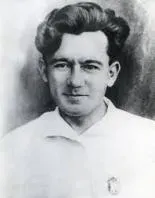
Sulton Jo'ra
Uzbek Soviet poet and teacher, author of the narrative poems “Bruno” and “Karim and Qunduz”, the collections “Selfless” and “Moscow” and verse for children; killed in action in Belarus in 1943.
- Occupation:
- Writer, Educator, Poet, Children's writer
- Born:
- January 15 1910(33 years old) ♑ — November 14, 1943
- Birthplace:
- Shofirkon District, Bukhara
- Spouse:
- Mohira Jo'rayeva
- Children:
- Botir, Nuriya, Rumiya, Ilhomiya
Biography
Sulton Jo'ra (born Sulton Jo'rayev) was born into a peasant family on 15 January 1910 in the village of Qog'oltom, in what is now the Shofirkon district of the Bukhara region. Orphaned early, he made his way to Bukhara to live with his elder sister and went to school there. In 1930 he graduated from the Bukhara Pedagogical College; as a student he helped to set up and teach literacy classes for adults. Besides his native Uzbek he knew Russian, Tajik, Tatar and Kazakh.
His first poem, “In the Embrace of Labour”, appeared in 1927 in the magazine “Yangi yo'l”, and his first collection, “Poems”, in 1933. From 1930 to 1936 he taught in schools, then moved to Andijan, where in 1936–1939 he studied at the Andijan Pedagogical Institute and taught Uzbek language and literature there and later at a teachers’ institute. He wrote a great deal for children: poems such as “The Parade of Letters”, “The Meeting of the Punctuation Marks”, “The Liar” and “How Many Moons?” turn school lessons and the rules of language into play.
The late 1930s were his most productive years. In 1938 he wrote “Bruno”, a narrative poem about the Italian thinker Giordano Bruno. The year 1939 brought the collection “Selfless”, the ballad “Parvoznoma”, the verse fairy tales “The Blue Carpet” and “The Swallow”, based on folk motifs, and the narrative poem “Karim and Qunduz”, devoted to the Great Fergana Canal that was dug that year. The Soviet “Literary Encyclopedia” of 1939 called Sulton Jo'ra an innovator in Uzbek versification and singled out his poems about Bruno and about the canal. The same year he was awarded the Order of the Badge of Honour.
His collection “Moscow” came out in 1941. When the war began he was exempt from call-up, but he kept applying to be sent to the front, volunteered for the army in 1942 and fought as a machine gunner. Poems he wrote at the front were printed in army newspapers, among them “The Machine Gunner’s Voice”, “Muhammad the Gunner”, “Our Spear”, “The Horseman” and “Greetings with Longing”, written for the people he missed. His last work, the play “Will” (1942), written with Vosit Sa'dulla, was staged at the Andijan regional theatre.
In November 1943, in the fighting of the Belorussian Front for the village of Borshchovka in the Loyev district of the Gomel region, Sulton Jo'ra was badly wounded, and on 14 November he died at a medical battalion in the village of Pustaya Gryada. He was first buried there; his remains were later moved to the mass grave in the village of Kozerogi in the same district. He was posthumously awarded the Order of the Patriotic War, 2nd class.
His books went on appearing after his death: a Russian collection, “Poems”, translated by Dmitry Kovalyov, in 1951, and in Uzbek “After the Rain” (1965) and “Poems” (1973); the literary scholar G'. Mo'minov devoted the book “A Poet with a Fiery Heart” (1970) to him. Streets in Andijan, Bukhara and Shofirkon, a school in the Shofirkon district and streets in Gomel and in the village of Kozerogi bear his name. He and his wife, Mohira Jo'rayeva, had four children — Botir, Nuriya, Rumiya and Ilhomiya; the youngest daughter died as a child.
Education
- Andijan Pedagogical InstituteUniversity · Andijan · 1936–1939
- Bukhara Pedagogical CollegeCollege · Bukhara · 1930
Awards
 Order of the Patriotic War, 2nd classposthumously · USSR
 Order of the Badge of Honour1939 · USSR
Life path
- 1910Birth
Born on 15 January in the village of Qog'oltom, now in the Shofirkon district of the Bukhara region.
- 1927First poem
“In the Embrace of Labour” is printed in the magazine “Yangi yo'l”.
- 1930Bukhara Pedagogical College
Graduates and teaches in literacy classes for adults.
- 1930–1936Schoolteacher
Teaches in schools; his first collection, “Poems”, appears in 1933.
- 1936–1939Andijan Pedagogical Institute
Studies at the institute and teaches Uzbek language and literature.
- 1938“Bruno”
Writes a narrative poem about Giordano Bruno.
- 1939“Selfless” and “Karim and Qunduz”
A collection, a poem on the Great Fergana Canal and verse fairy tales; awarded the Order of the Badge of Honour.
- 1941“Moscow”
His last collection before the war is published.
- 1942To the front
Volunteers for the army and fights as a machine gunner; his poems appear in army newspapers.
- 1943Death in action
Badly wounded in the Loyev district of the Gomel region, he dies on 14 November; he lies in the mass grave at Kozerogi.
Works
- “In the Embrace of Labour” (1927)Poem
His first published poem, printed in the magazine “Yangi yo'l”.
- “Poems” (1933)Collection
His first collection.
- “Bruno” (1938)Narrative poem
About the Italian thinker Giordano Bruno; the 1939 “Literary Encyclopedia” counted it among his main works.
- “Selfless” (1939)Collection
Poems of the late 1930s.
- “Karim and Qunduz” (1939)Narrative poem
About the building of the Great Fergana Canal.
- “The Blue Carpet” (1939)Verse fairy tale
Based on folk motifs.
- “The Swallow” (1939)Verse fairy tale
A fairy-tale poem drawn from folk legends.
- “Moscow” (1941)Collection
Published on the eve of the war.
- “Will” (1942)Play
Written with Vosit Sa'dulla and staged at the Andijan regional theatre.
- “Greetings with Longing”Poem
A poem from the front, written for the people he missed.
- “After the Rain” (1965)Collection
A posthumous collection.
Legacy
Sulton Jo'ra entered Uzbek literature in the 1930s alongside Usmon Nosir, Zulfiya and Zafar Diyor. His contemporaries regarded him as an innovator in Uzbek versification, and his narrative poems and playful verse for children form the core of his legacy. He is also remembered as one of the Uzbek writers killed in the Second World War: streets bear his name both in Uzbekistan and in Belarus, where he died.
Era: Uzbek Soviet poetry of the 1930s and 1940s- Writes the narrative poem “Bruno” (1938)
- Awarded the Order of the Badge of Honour (1939)
- Volunteers for the front (1942)
- Killed in the fighting in Belarus (1943)
- A Russian collection, “Poems”, is published (1951)
- G'. Mo'minov’s book “A Poet with a Fiery Heart” appears (1970)