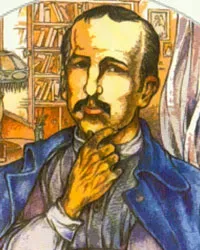
Literary critic, translator and Jadid educator from Samarkand; arrested in 1930 and 1937, he spent many years in camps and was later fully rehabilitated.
Biography
Vadud Mahmud was a literary scholar, critic, translator and Jadid educator from Samarkand. He was jailed in 1930 and again in 1937, spent many years in camps and was later fully rehabilitated. He was born in 1898 in the village of Toyloq in the Upper Dargom district of the Samarkand okrug (some sources give 1897). His father, the imam Mahmud Pirmuhammad, died in 1905, and his mother, Anbara, looked after the household and the children.
He first studied at the Samarkand school of Abduqodir Shakuriy, then at the Madrasa Aliya in Ufa (1917–1918) and on teacher-training courses in Samarkand (1918). In Moscow he attended the Bryusov Higher Institute of Literature (1925–1926), and in 1923 he sat in as an auditor on the economics faculty of Central Asian State University in Tashkent.
From 1919 to 1925 he worked as a teacher and in the education departments of Samarkand and Jizzakh. He was assistant editor of the journal “Maorif va o‘qituvchi” in 1926–1927 and, in 1926–1929, a translator and textbook compiler at the Tajik state publishing house. His way into literature ran through the Samarkand literary milieu, where he matured among editors, poets and teachers: Mahmudkhoja Behbudiy, Abduqodir Shakuriy, Vaslii, Siddiqiy Ajziy, Sadriddin Ayniy, Hoji Muin, Abdurauf Fitrat and Tamhid Samarqandiy.
His critical and publicist pieces came out often in “Kambag‘allar tovushi”, “Zarafshon”, “Turkiston”, “Inqilob”, “Maorif va o‘qituvchi” and “Yer yuzi”, signed “Vov”, “V.M.”, “Vadud Mahmudiy” or “Vadud Mahmud o‘g‘li”. He reflected on classical Eastern literature and the literary scene of his day in “Cho‘lpon's ‘Buloqlar’” (1923), “Indian Rebels” (1923), “The Turkish Poet Ajziy” (1924), “A Look at Literary Criticism” (1924), “Alisher Navoi” (1925) and “Fuzuli of Baghdad” (1925).
His house was searched on 17 August 1930 and he was taken into custody, accused of nationalism, of not reporting a counter-revolutionary organisation and of involvement in Baha'ism. On 3 October 1931 a special council of the OGPU condemned him to three years in a labour camp plus three more years of work in Kazakhstan; after being held in Tashkent he was exiled to Alma-Ata. He came back in late 1936 or early 1937, yet on 18 August 1937 he was seized once more as an active member of “Milliy Ittihod” and dispatched for ten years to the Kargopol camp in the Arkhangelsk region. In 1944 he was sentenced to another ten years there, accused of promoting Baha'ism in the camp.
Sources give different dates for his release (1954 or 1959). He was rehabilitated later: one source states full rehabilitation in 1960, another records reviews in 1959, 1961 and 1963. Afterwards he moved to Tajikistan and cooperated with the Rudaki Institute of Language and Literature of the republic’s Academy of Sciences, where as a research fellow he helped compile the “Farhangi zaboni tojiki” dictionary, studied classical Eastern poetry and wrote memoirs. Vadud Mahmud died in 1976 (some sources say 1975).
Education
- Madrasa Aliya in UfaMadrasa · 1917–1918
- Bryusov Higher Institute of Literature (Moscow)University · 1925–1926
Career
- Academy of Sciences of TajikistanResearch fellow
Life path
- 1898Born
In the village of Toyloq, Samarkand okrug.
- 1917–1918Madrasa Aliya in Ufa
Studied there on Fitrat's recommendation.
- 1919–1925Teaching and education work
Teacher and education official in Samarkand and Jizzakh.
- 1925–1926Studies in Moscow
At the Bryusov Higher Institute of Literature.
- 1926–1929At the publishing house
Translator and textbook compiler at the Tajik state publisher; in 1926–1927 assistant editor of “Maorif va o‘qituvchi”.
- 1923–1925Critical articles
“Cho‘lpon's ‘Buloqlar’”, “Alisher Navoi”, “Fuzuli of Baghdad” and others.
- 1930First arrest
Arrested on 17 August; in 1931 sentenced to three years in a camp and three years of work in Kazakhstan.
- 1937Second arrest
Arrested on 18 August and sentenced to ten years in Kargopol; received another ten years in 1944.
- 1950sRelease
The sources give the year of release as 1954 or 1959.
- 1960Rehabilitation
Fully rehabilitated (reviews in 1959–1963 are also noted in the sources).
- 1976Death
Died in Dushanbe (some sources say 1975).
Works
- “Cho‘lpon's ‘Buloqlar’” (1923)Article
- “Indian Rebels” (1923)Article
- “The Turkish Poet Ajziy” (1924)Article
- “A Look at Literary Criticism” (1924)Article
- “Alisher Navoi” (1925)Article
- “Fuzuli of Baghdad” (1925)Article
- “Farhangi zaboni tojiki”Dictionary
Took part in compiling it.
- Memoir of his teacher Abduqodir ShakuriyMemoir