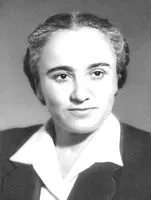
Zulfiya
Uzbek poet, People’s Poet of the Uzbek SSR and Hero of Socialist Labour, editor-in-chief of Saodat magazine for over thirty years; a state prize for young women bears her name.
Biography
Zulfiya (full name Zulfiya Isroilova) was born on 1 March 1915 in Tashkent into a craftsman’s family. Her mother, who knew many songs and tales by heart, gave her daughter a love of words. In 1931–1934 Zulfiya studied at a women’s teacher-training college, and in 1935 she began postgraduate studies at the Institute of Language and Literature under the Uzbek Committee of Sciences.
Her first poem was printed in the newspaper “Ishchi” in 1931, and in 1932, aged seventeen, she brought out her first collection, “Pages of Life”. It was followed by the books “Temiroy” (1934) and “Song of Girls” (1939). In 1935 she married the poet Hamid Olimjon; they had a daughter, Hulkar, and a son, Omon.
From 1938 she worked in publishing: as an editor at a publishing house for youth literature (1938–1940) and as head of a department at the State Publishing House of Uzbekistan (1941–1950). During the war her collections “They Called Him Farhod” (1943) and “In the Days of Separation” (1944) appeared. On 3 July 1944 Hamid Olimjon was killed in a car accident. In the poems written after his death — the collection “Hulkar” (1947) and the poem “Spring Has Come Asking for You” — she expressed, through her own grief, the pain of a people who had suffered heavy losses in the war.
After the party resolutions on art and literature of the late 1940s she was reproached for “pessimistic moods” and turned to poems on the themes of the day. From 1950 she worked at the magazine “O'zbekiston xotin-qizlari” (later “Saodat”), first as a department head and in 1954–1985 as its editor-in-chief; she joined the Communist Party in 1953. In her poems and articles she wrote about the lives of Uzbek women and defended their rights.
In the second half of the 1950s she took part in the movement of Asian and African writers, attending the Asian Writers’ Conference in Delhi in 1956 and the Afro-Asian Solidarity Conference in Cairo in 1957. Her travels to India, Egypt and Japan are reflected in poems such as “Mushoira” and “My Son, There Will Never Be War”. The books “Thoughts” (1965), “Visol” (1972) and “Years, Years…” (1975), and the long poem “The Sunlit Pen” (1970), dedicated to the last journey of her mentor Oybek, opened the mature period of her work. For the long poem “Shards of Memory” (1974) and the cycle “Rainbow” she received the USSR State Prize in 1976.
Zulfiya devoted much of her life to studying and publishing the legacy of Hamid Olimjon: from his long poem she wrote the puppet play “Semurg'” (with S. Somova) and the libretto of the opera “Zaynab and Omon”. She translated Pushkin, Lermontov, Nekrasov, Lesya Ukrainka, Mustai Karim and Amrita Pritam into Uzbek. She was People’s Poet of the Uzbek SSR (1965) and a Hero of Socialist Labour (1984), and received the Hamza State Prize of the Uzbek SSR (1970) and the International Jawaharlal Nehru Prize (1968).
Zulfiya died in Tashkent on 1 August 1996 and was buried in the Chig'atoy cemetery. In 1999 the Zulfiya State Prize was established, awarded every year to gifted young women. A street in Tashkent bears her name; a monument to her was unveiled in the capital in 2008, and in 2017 the Hamid Olimjon and Zulfiya Museum opened in Jizzakh.
Education
- Women’s Teacher-Training CollegeCollege · 1931–1934
- Institute of Language and LiteratureOther · Tashkent · 1935 · Postgraduate studies
Career
- State Publishing House of UzbekistanHead of department · Tashkent · 1941–1950
- Saodat magazineHead of department (1950–1953), editor-in-chief (1954–1985) · Tashkent · 1950–1985Everyone who held this post →
Awards
 Order «Do'stlik» (Friendship)1994 · Uzbekistan
- People's Poet of the Uzbek SSR1965 · Uzbek SSR
 Hamza State Prize of the Uzbek SSR1970 · Uzbek SSR
 Hero of Socialist Labour1984 · USSR
 Order of Lenin1959 · USSR
- Order of Lenin1984 · USSR
 Order of the Red Banner of Labour1957 · USSR
- Order of the Red Banner of Labour1965 · USSR
- Order of the Red Banner of Labour1971 · USSR
 Order of Friendship of Peoples1975 · USSR
 Order of the Badge of Honour1951 · USSR
 Medal «For Labour Distinction»1944 · USSR
- Medal «For Labour Distinction»1950 · USSR

 USSR State Prize1976 · USSR
Life path
- 1931First poem
Her first poem was printed in the newspaper “Ishchi”.
- 1931–1934Teacher-training college
Studied at a women’s teacher-training college.
- 1932“Pages of Life”
Her first poetry collection came out when she was seventeen.
- 1935Postgraduate studies and marriage
Began postgraduate studies at the Institute of Language and Literature and married the poet Hamid Olimjon.
- 1938–1950Publishing
Editor at a publishing house for youth literature (1938–1940), head of a department at the State Publishing House of Uzbekistan (1941–1950).
- 1944Death of Hamid Olimjon
Her husband was killed in a car accident on 3 July; the poems she wrote after his death went into the collection “Hulkar” (1947).
- 1950–1985Saodat magazine
Department head at the magazine “O'zbekiston xotin-qizlari” (later “Saodat”), editor-in-chief from 1954.
- 1956–1957Delhi and Cairo conferences
Attended the Asian Writers’ Conference in Delhi and the Afro-Asian Solidarity Conference in Cairo.
- 1965People’s Poet of the Uzbek SSR
Received the honorary title; the collection “Thoughts” came out the same year.
- 1976USSR State Prize
Awarded for the long poem “Shards of Memory” and the cycle “Rainbow”.
- 1984Hero of Socialist Labour
Received the title and the Order of Lenin.
- 1996Death
Died in Tashkent on 1 August and was buried in the Chig'atoy cemetery.
Works
- “Pages of Life” (1932)Poetry collection
Her first collection, published when she was seventeen.
- “They Called Him Farhod” (1943)Poetry collection
A wartime collection that marked the rise of her poetry.
- “In the Days of Separation” (1944)Poetry collection
Lyric poetry of the days of war and separation.
- “Hulkar” (1947)Poetry collection
Includes the poems written after the death of Hamid Olimjon.
- “Thoughts” (1965)Poetry collection
The book that began the philosophical turn in her lyric poetry.
- “The Sunlit Pen” (1970)Long poem
Dedicated to the last journey of her mentor Oybek.
- “Visol” (1972)Poetry collection
One of the books of her mature period.
- “Shards of Memory” (1974)Long poem
Together with the cycle “Rainbow”, awarded the USSR State Prize in 1976.
- “Years, Years…” (1975)Poetry collection
A collection of her philosophical lyric poetry of the 1970s.
- “Zaynab and Omon”Opera libretto
The libretto of an opera based on a work by Hamid Olimjon.
- “Semurg'”Play
A puppet play based on Hamid Olimjon’s long poem “Semurg', or Parizod and Bunyod”, written with S. Somova.
Legacy
For more than thirty years Zulfiya led the republic’s women’s magazine “Saodat” and made the lives of Uzbek women one of the main subjects of poetry and journalism. Her works have been translated into many foreign languages, including those of the Turkic peoples. The Zulfiya State Prize, established in 1999, is awarded every year to young women who have distinguished themselves in science, literature, the arts, sport and public life.
Era: 20th-century Uzbek Soviet literature- The Zulfiya State Prize was established (1999)
- A monument to Zulfiya was unveiled in Tashkent (2008)
- The Hamid Olimjon and Zulfiya Museum opened in Jizzakh (2017)
- The monument was moved to the Alley of Writers in Tashkent (2017)