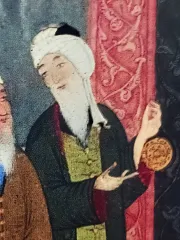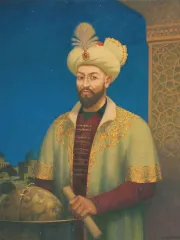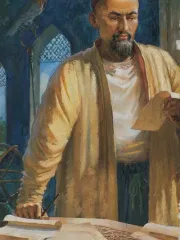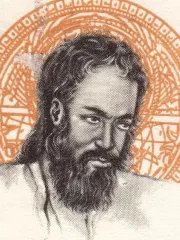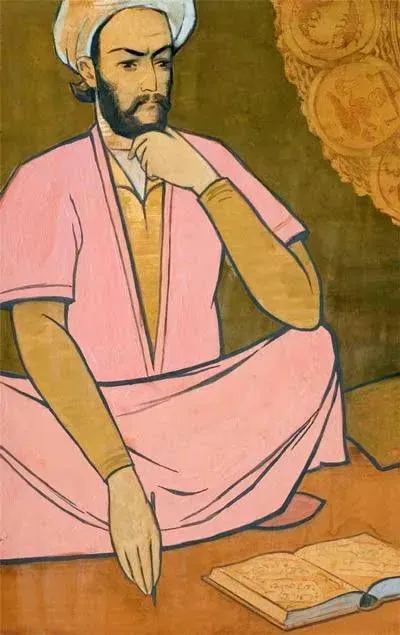
Qadi Zada al-Rumi
Mathematician and astronomer born in Bursa; in Samarkand the teacher of Ulugh Beg, head teacher of his madrasa and one of the directors of his observatory, and the teacher of Ali Qushji.
- Occupation:
- Scientist, Educator, Mathematician, Astronomer
- Real name:
- Salah al-Din Musa ibn Muhammad ibn Mahmud al-Rumi
- Nickname:
- Musa Pasha
- Born:
- c. 1364 — c. 1440
Biography
Salah al-Din Musa ibn Muhammad ibn Mahmud was born in Bursa, in present-day Turkey. The year of his birth is not known exactly: 1364 is the date most often given, while some sources say about 1359. The epithet Qadi Zada (“son of the judge”) goes back to his grandfather, the well-known judge of Bursa Mahmud Chelebi, who brought him up after his father’s death; “al-Rumi” points to Asia Minor, the land the East called Rum. He studied the religious and rational sciences with his grandfather and with the famous scholar Molla Fenari.
In the early fifteenth century, encouraged by Fenari and against the wishes of his family, he set out for Khurasan and Transoxiana. According to the sources he was in Samarkand from 1411, when the theologian and mathematician al-Sayyid al-Sharif al-Jurjani was lecturing there. But Qadi Zada judged every question by mathematical standards, disagreed with al-Jurjani and gave up his lessons.
In 1412 he wrote a commentary on Mahmud al-Jaghmini’s astronomical “Mulakhkhas” and a commentary on Shams al-Din al-Samarqandi’s geometrical “Ashkal al-ta’sis”, and presented both to the young Ulugh Beg. Ulugh Beg became his pupil and later spoke of his teacher with respect in his “Zij”. When Ulugh Beg built a madrasa in Samarkand in 1417–1420, Qadi Zada became its head teacher; Ulugh Beg himself regularly attended his lectures.
Together with Ghiyath al-Din Jamshid al-Kashi he supervised the building of Ulugh Beg’s Samarkand observatory. After al-Kashi’s death in 1429 he remained one of the directors of the observatory, took part in observations and calculations, and contributed to Ulugh Beg’s astronomical tables, the “Zij-i Gurgani”. He edited and developed al-Kashi’s unfinished treatise on calculating the sine of one degree.
His pupils included Ali Qushji and Fathallah al-Shirwani, both of whom later taught in Anatolia. Qadi Zada’s son married Qushji’s daughter, and their son was Miram Chelebi, a noted Ottoman scholar.
Qadi Zada died in Samarkand. Older reference works give 1436–1437 as the year of his death, but a licence (ijaza) he issued to a student in September 1440 survives, so he lived beyond that date. He is buried in a mausoleum in the Shah-i-Zinda complex. His commentaries on al-Jaghmini and al-Samarqandi were studied as textbooks in Ottoman madrasas for centuries.
Career
- Ulugh Beg Observatory in SamarkandAstronomer; from 1429 one of the directors of the observatoryEveryone who held this post →
Life path
- c. 1364Birth
Born in Bursa into a family of judges and scholars; his grandfather raised him after his father’s death. Sources place his birth between 1359 and 1364.
- YouthStudies in Bursa
Learned the religious and rational sciences from his grandfather and Molla Fenari; he also studied astronomy and mathematics with Fenari.
- Early 15th centuryJourney to Khurasan
Encouraged by Fenari and against the wishes of his family, he left for Khurasan and Transoxiana.
- 1411In Samarkand
Arrived in Samarkand and attended the lectures of al-Sayyid al-Sharif al-Jurjani before parting ways with him.
- 1412First commentaries
Presented his commentaries on al-Jaghmini and al-Samarqandi to the young Ulugh Beg, who became his pupil.
- 1417–1420Ulugh Beg’s madrasa
Became head teacher of the madrasa built in Samarkand.
- 1420sBuilding the observatory
Supervised the construction of Ulugh Beg’s observatory together with Ghiyath al-Din Jamshid al-Kashi.
- 1429Death of al-Kashi
Remained one of the directors of the observatory and edited al-Kashi’s unfinished treatise on the sine.
- September 1440The ijaza
Issued a licence (ijaza) to his student Fathallah al-Shirwani; the document shows he was alive at that date.
- After 1440Death
Died in Samarkand and was buried in a mausoleum in the Shah-i-Zinda complex.
Works
- “Sharh al-Mulakhkhas fi’l-hay’a” (Commentary on the “Mulakhkhas” on astronomy) (1412)Astronomical commentary
A commentary on al-Jaghmini’s astronomical manual, presented to Ulugh Beg. It was studied in Ottoman madrasas for centuries; more than 300 manuscripts survive.
- “Sharh Ashkal al-ta’sis” (“Tuhfat al-ra’is”) (1412)Geometrical commentary
A commentary on al-Samarqandi’s geometrical work, dedicated to Ulugh Beg. More than 200 manuscripts are known.
- “Treatise on determining the sine of one degree”Mathematical treatise
Edits and develops al-Kashi’s method for calculating the sine of one degree; published as a lithograph in Tehran.
- Glosses on the “Tahrir usul al-handasa”Geometrical commentary
Glosses on Nasir al-Din al-Tusi’s recension of Euclid’s “Elements”; according to Katib Chelebi they reach only the seventh book.
- “Treatise on determining the meridian line and the direction of the qibla”Astronomical treatise
His only known astronomical work written in Persian.
Legacy
Qadi Zada was one of the founders of the Samarkand school of mathematics and astronomy: the teacher of Ulugh Beg and a leading scholar of his madrasa and observatory. His students Ali Qushji and Fathallah al-Shirwani carried the achievements of the Samarkand school to Anatolia, and his commentaries served as textbooks in Ottoman madrasas for centuries. Taşköprüzade regarded him as the first true mathematician and astronomer produced in the Ottoman milieu.
Era: The Timurid era, late 14th – mid 15th century- Presented his commentaries to Ulugh Beg (1412)
- Building of Ulugh Beg’s madrasa in Samarkand (1420)
- After al-Kashi’s death, one of the directors of the observatory (1429)