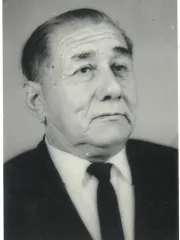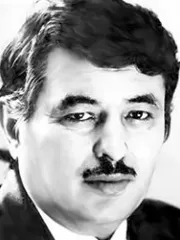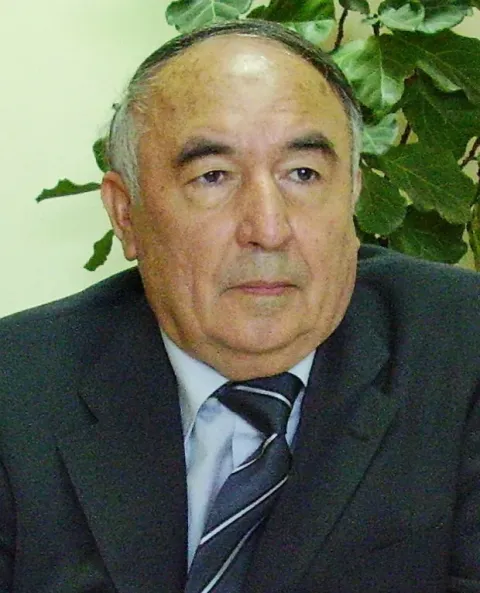
Erkin Vohidov
Uzbek poet, playwright and translator, author of the ode “Oʻzbegim” and the narrative poem “The Rebellion of the Spirits”, translator of Goethe’s “Faust” into Uzbek, People’s Poet of the Uzbek SSR and Hero of Uzbekistan.
- Occupation:
- Writer, Poet, Playwright
- Born:
- December 28 1936(79 years old) ♑ — May 30, 2016
- Birthplace:
- Oltiariq District, Fergana
- Mother:
- Roziyaxon Vohidova
- Spouse:
- Gulchehra Vohidova
Biography
Erkin Vohidov was born on 28 December 1936 in the Oltiariq district of the Fergana region, into a teacher’s family. His father fought in the Second World War and died soon after coming home; in 1945 the boy moved to Tashkent with his mother, Roziyaxon Vohidova, and before long lost her too. Orphaned at nine, he was raised in Tashkent by his maternal uncle Karimboy Sohiboyev, a lawyer by profession and a devoted lover of poetry. Poets and singers gathered at his house to discuss the couplets of Hafez, Navoi, Bedil and Fuzuli, and those evenings awakened the boy’s interest in literature.
He began writing poetry at school, and his first poem appeared in the magazine “Mushtum” when he was fourteen. From 1955 to 1960 he studied at the Faculty of Philology of Tashkent State University, now the National University of Uzbekistan. His first collection, “The Breath of Morning”, came out in 1961, followed by “My Songs Are for You” (1962), “The Heart and the Mind” (1963) and others. In the ghazals of “The Diwan of Youth” (1969) he carried the classical ghazal form into modern Uzbek poetry.
After university he spent many years in publishing: at the Yosh Gvardiya publishing house as an editor (1960–1963) and editor-in-chief (1975–1982), and at the Ghafur Ghulam Publishing House of Literature and Art as an editor and editor-in-chief (1963–1970) and later as its director (1985–1987). In 1982 he became the first editor-in-chief of the new magazine “Yoshlik”, which he led until 1985.
His ode “Oʻzbegim” (“My Uzbek People”), written in 1968, when every nationality was meant to call itself simply “the Soviet people”, celebrated the history and dignity of the Uzbeks; it became widely known and was turned into a song by Sherali Joʻrayev. His other works include the narrative poem “The Rebellion of the Spirits” (1980) about the Bengali poet Kazi Nazrul Islam, the collections “Living Planets” (1978) and “A Letter to the Future” (1983), and cycles of satirical verse. He wrote the comedy “The Golden Wall”, the drama “The Istanbul Tragedy” and the play “The Second Talisman”; “The Golden Wall” was also staged in Lahore, Pakistan. In 1983 he received the Hamza State Prize of the Uzbek SSR for the collection “The Eastern Shore”, and in 1987 he was named People’s Poet of the Uzbek SSR.
As a translator he rendered Goethe’s tragedy “Faust” into Uzbek in the 1970s and also translated poems by Sergei Yesenin, Alexander Blok, Alexander Tvardovsky, Muhammad Iqbal, Rasul Gamzatov and others. His own work has been translated into Russian, German, English, French, Urdu, Hindi, Arabic and Turkic languages, and the Russian poet Robert Rozhdestvensky spoke highly of his narrative poems.
From 1990 he held public office: in 1990–1995 he was a deputy of the Supreme Council of Uzbekistan and chaired its committee on glasnost (openness); in 1995–2005 he chaired the Oliy Majlis Committee on International Affairs and Inter-Parliamentary Relations; and in 2005–2009 he chaired the Senate Committee on Science, Education, Culture and Sport. He received the Soviet Order of the Badge of Honour (1984) and, after independence, the orders “Doʻstlik” (1994) and “Buyuk xizmatlari uchun” (1996); in 1999 he was made a Hero of Uzbekistan.
Erkin Vohidov died after a long illness in Tashkent on 30 May 2016, aged 79, and was buried in the Chigʻatoy cemetery. In December 2016 a presidential resolution ordered his 80th anniversary to be marked, and a park in Margilan was named after him; an Erkin Vohidov creative school opened in Margilan in 2018, and his memorial museum opened in the same park in 2019. His statue also stands in the Alley of Writers opened in Tashkent in 2020. In October of that year, for the 75th anniversary of the United Nations, a song in eight languages was recorded to his ode “Inson” (“Human”).
Education
- National University of UzbekistanUniversity · Tashkent · 1955–1960 · Faculty of Philology
Career
- Yosh Gvardiya publishing houseEditor (1960–1963), editor-in-chief (1975–1982) · Tashkent · 1960–1982Everyone who held this post →
- Ghafur Ghulam Publishing House of Literature and ArtEditor, editor-in-chief (1963–1970), director (1985–1987) · Tashkent · 1963–1987Everyone who held this post →
- Oliy Majlis of the Republic of UzbekistanDeputy, chairman of the Committee on International Affairs and Inter-Parliamentary Relations · Tashkent · 1995–2005
- Senate of the Oliy Majlis of UzbekistanSenator, chairman of the Committee on Science, Education, Culture and Sport · Tashkent · 2005–2009
- Supreme Soviet of the Uzbek SSRDeputy, chairman of the committee on glasnost (openness) · Tashkent · 1990–1995
Awards
 Hero of Uzbekistan1999 · Uzbekistan
 Order «For Outstanding Merit»1996 · Uzbekistan
 Order «Do'stlik» (Friendship)1994 · Uzbekistan
- People's Poet of the Uzbek SSR1987 · Uzbek SSR
 Hamza State Prize of the Uzbek SSR1983 · Uzbek SSR
 Order of the Badge of Honour1984 · USSR
Life path
- 1945Move to Tashkent
Orphaned early, he grew up in Tashkent in the home of his uncle Karimboy Sohiboyev.
- 1955–1960Tashkent State University
Studied at the Faculty of Philology.
- 1960–1963Yosh Gvardiya publishing house
Worked as an editor; his first collection, “The Breath of Morning”, came out in 1961.
- 1963–1970Ghafur Ghulam Publishing House
Editor and editor-in-chief at the publishing house of literature and art.
- 1968The ode “Oʻzbegim”
Wrote the ode later sung by Sherali Joʻrayev.
- 1975–1982Editor-in-chief of Yosh Gvardiya
Returned to head the publishing house; translated Goethe’s “Faust” in these years.
- 1982–1985“Yoshlik” magazine
First editor-in-chief of the new magazine; received the Hamza State Prize in 1983.
- 1985–1987Director of the publishing house
Ran the Ghafur Ghulam Publishing House of Literature and Art; named People’s Poet of the Uzbek SSR in 1987.
- 1990–1995Deputy of the Supreme Council
Chairman of the committee on glasnost (openness).
- 1995–2009Oliy Majlis and Senate
Chaired the Committee on International Affairs and Inter-Parliamentary Relations (1995–2005), then the Senate Committee on Science, Education, Culture and Sport (2005–2009).
- 1999Hero of Uzbekistan
Awarded the country’s highest title.
- 2016Death
Died in Tashkent on 30 May; buried in the Chigʻatoy cemetery.
Books
- “The Breath of Morning”1961 · Poetry collection
The poet’s first book (“Tong nafasi”).
- “My Songs Are for You”1962 · Poetry collection
His second collection (“Qoʻshiqlarim sizga”).
- “Oʻzbegim”1968 · Ode (qasida)
An ode to the history and dignity of the Uzbek people, also famous as a song (“My Uzbek People”).
- “The Diwan of Youth”1969 · Collection of ghazals
Poems in the classical ghazal form (“Yoshlik devoni”).
- “Living Planets”1978 · Poetry collection
One of his collections of the 1970s (“Tirik sayyoralar”).
- “The Rebellion of the Spirits”1980 · Narrative poem
On the life and struggle of the Bengali poet Kazi Nazrul Islam (“Ruhlar isyoni”).
- “The Eastern Shore”· Poetry collection
The collection that won the Hamza State Prize in 1983 (“Sharqiy qirgʻoq”).
- “A Letter to the Future”1983 · Poetry collection
A collection from the early 1980s (“Kelajakka maktub”).
- “The Golden Wall”· Comedy
A comedy staged, among other places, in Lahore, Pakistan (“Oltin devor”).
- “The Istanbul Tragedy”· Drama
One of the poet’s stage works (“Istanbul fojiasi”).
- “The Bitter Truth Is Better”1992 · Poetry collection
A collection from the first years of independence (“Yaxshidir achchiq haqiqat”).
- Goethe, “Faust”· Translation
An Uzbek translation of Goethe’s tragedy, made in the 1970s.
Legacy
Erkin Vohidov’s ode “Oʻzbegim” became known as a work that openly celebrated national identity in Soviet times, and dozens of his poems became songs performed by Sherali Joʻrayev and other singers. His translation of “Faust” gave Uzbek readers Goethe’s tragedy in their own language. A park, a creative school and a memorial museum in Margilan bear his name.
Era: Uzbek poetry of the late 20th and early 21st centuries- The ode “Oʻzbegim” was written (1968)
- Made a Hero of Uzbekistan (1999)
- A presidential resolution ordered his 80th anniversary to be marked (2016)
- The Erkin Vohidov Creative School opened in Margilan (2018)
- The Erkin Vohidov Memorial Museum opened in Margilan (2019)
- A song in eight languages based on his ode “Inson” marked the UN’s 75th anniversary (2020)