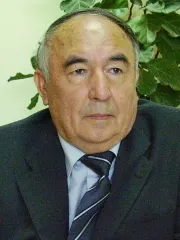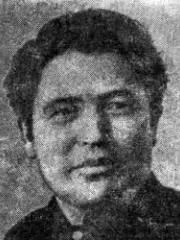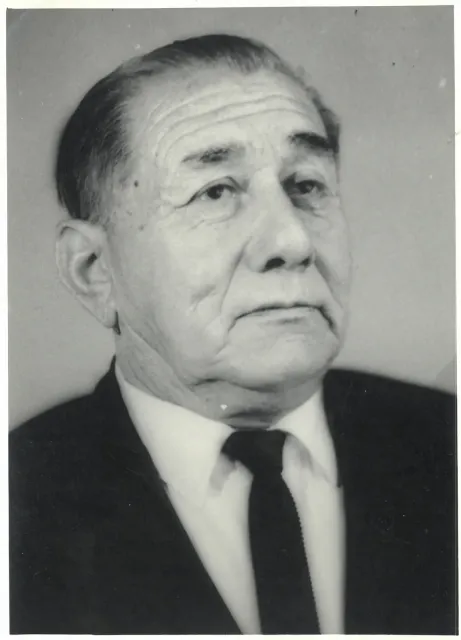
Gayratiy
Uzbek Soviet poet and prose writer, a leading figure of Uzbek children's literature, author of the narrative poems “A Letter to My Mother” and “Jinasta”, and for three decades head of a school literary circle.
- Occupation:
- Writer, Poet, Prose writer, Children's writer
- Real name:
- Abdurahim Abdullayev
- Born:
- February 15 1902(73 years old) ♒ — January 22, 1976
- Birthplace:
- Tashkent
Biography
Gayratiy (real name Abdurahim Abdullayev) was born on 15 February 1902 (2 February in the old style) in the Degrez neighbourhood of Tashkent, into an artisan’s family. His mother died early and a neighbour, Oyimkhon, looked after him and taught him to read. The pen name “Gayratiy” is said to have been given to him by the Tashkent poet Hislat Eshon.
Abdurahim studied at a traditional school and a madrasa (1915–1916), where he came to know the poetry of Navoi, Muqimi and Furqat. He then attended the Namuna school (1917–1918) and a teacher-training course (1918–1919) and taught for some years at an incomplete secondary school in Tashkent. His first poem appeared in 1921. In 1926 he went to Baku, studied at a teachers’ seminary and met Azerbaijani poets.
His first collection, “Voice of Freedom” (“Erk tovushi”), came out in 1927, followed by verse collections such as “Songs of Life”, “Tempo”, “Fiery Bodies”, “Love” and “Golden Youth”, and story collections including “Deliverance”, “Hashar” and “Black Hearts”. In the 1930s he became known for the narrative poems “A Letter to My Mother” (1935) and “Jinasta” (1937), about the hard past of the Uyghur people. He led a literary circle at a factory, worked as an editor at the Uzbek State Publishing House and as a literary assistant at the Navoi Opera and Ballet Theatre.
During the Second World War Gayratiy was accused of nationalism and expelled from the Writers’ Union, which weighed on the rest of his literary career. In an effort to clear himself he wrote poems devoted to Hamza, Furqat and Zavqiy: “The Immortal Song”, “The Poet”, “Furqat in Exile” and “Our Hamza”. After the war he turned mainly to children’s literature: the poems “The Lost Boy” and “The Toshsoqa Canal”, the novellas “Unforgettable Days” and “Rustam’s Adventure”, and plays such as “Omon”, “Winged Friends” and “In the Forest” were staged by the republic’s puppet theatres.
From 1946 until the end of his life he headed the literary circle at the Palace of Pupils. Erkin Vohidov, Khayriddin Saloh, Yusuf Shomansur, Anvar Eshonov, Tamilla Qosimova and other writers who later became known came from that circle.
In 1972 Gayratiy was given the title People’s Poet of the Uzbek SSR. He died in Tashkent on 22 January 1976.
Education
- Namuna schoolSchool · Tashkent · 1917–1918
- Baku Teachers’ Seminary (Darulmuallimin)College · 1926–1926
Career
- State Publishing House of UzbekistanEditor · Tashkent · 1931–1935
- Alisher Navoi State Academic Bolshoi TheatreLiterary assistant · Tashkent · 1942–1942
- Republican Palace of PupilsHead of the literary circle · Tashkent · 1946–1976
Awards
- People's Poet of the Uzbek SSR1972 · Uzbek SSR
 Order of the Badge of Honour1959 · USSR
- Order of the Badge of Honour1972 · USSR
Life path
- 1915–1916Madrasa studies
After a traditional school he studied at a madrasa and came to know the works of Navoi, Muqimi and Furqat.
- 1917–1919Namuna school and teacher courses
Studied at the Namuna school and on a two-year teacher-training course.
- 1919–1923School teacher
Taught at an incomplete secondary school in Tashkent.
- 1921First poem published
His first poem appeared in print.
- 1926Studies in Baku
Studied at a teachers’ seminary in Baku.
- 1927“Erk tovushi” collection
His first poetry collection was published.
- 1928–1931Head of a factory literary circle
Worked at a Tashkent agricultural machinery plant and led its literary circle.
- 1931–1935Editor at the state publishing house
Worked as an editor at the Uzbek State Publishing House.
- 1935–1937Poems on Uyghur themes
Wrote the narrative poems “A Letter to My Mother” and “Jinasta”.
- 1942Literary assistant at the opera and ballet theatre
Worked as a literary assistant at the Navoi Opera and Ballet Theatre.
- 1946–1976Literary circle at the Palace of Pupils
Headed the literary circle at the Palace of Pupils until the end of his life.
- 1972People’s Poet of the Uzbek SSR
Given the title People’s Poet of the Uzbek SSR.
Works
- “Erk tovushi” (Voice of Freedom) (1927)Poetry collection
The poet’s first book of poems.
- “Yashash taronalari” (Songs of Life) (1928)Poetry collection
His second poetry collection.
- “Qutulish” (Deliverance) (1928)Story collection
One of his first books of stories.
- “Onamga xat” (A Letter to My Mother) (1935)Narrative poem
A poem about the hard past of the Uyghur people.
- “Jinasta” (1937)Narrative poem
A second poem on a Uyghur theme.
- “Oltin yoshlik” (Golden Youth) (1940)Poetry collection
A collection of pre-war poems.
- “G'urbatda Furqat” (Furqat in Exile) (1959)Narrative poem
A poem about the life of Furqat.
- “Unutilmas kunlar” (Unforgettable Days) (1957)Novella
A novella for children about the war years.
- “Rustamning sarguzashti” (Rustam’s Adventure) (1961)Novella
An adventure novella for children.
- “Bizning Hamza” (Our Hamza) (1966)Narrative poem
A poem devoted to Hamza Hakimzoda Niyoziy.
- “Asr sadosi” (Voice of the Century) (1972)Poetry collection
A collection of late poems.