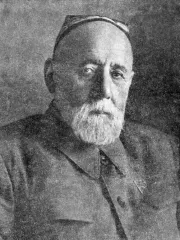
Ibragim Muminov
Philosopher and historian, founder of the philosophical school in Uzbekistan, academician and vice-president of the Uzbek SSR Academy of Sciences, a scholar of Central Asia's philosophical and historical heritage.
- Occupation:
- Scientist, Historian, Philosopher
- Born:
- November 7 1908(65 years old) ♏ — July 22, 1974
- Birthplace:
- Shofirkon District, Bukhara
- Father:
- Abdulmo'min Fayzullabayev
- Mother:
- Mag'firat
- Children:
- Muxtor Mo'minov, Akram Mo'minov, Axtam Mo'minov, Zulfiya Mo'minova
Biography
Ibragim Muminov was born on 7 November 1908 in the village of Tezguzar in the Shafirkan district of the Emirate of Bukhara, into the family of a trader, Abdulmumin Fayzullabayev. His mother, Magfirat, opened a school for girls in the village. He studied first at a traditional maktab and, after 1920, at a Soviet school; from 1922 to 1927 he attended the Institute of Education in Bukhara, and from 1925 he taught at a school himself.
In 1927 Muminov moved to Samarkand and in 1931 graduated from the socio-economic faculty of the Uzbek Pedagogical Academy as a historian and philosopher. His teachers included the orientalist V. L. Vyatkin, Sadriddin Aini and Abdurauf Fitrat. He began teaching in Samarkand in 1931; when the academy was converted into the Uzbek State University in 1933 he became dean of the combined literature faculty, then dean of the history faculty in 1933–1935, and he headed the philosophy department until 1941 and again in 1944–1955. In August 1937 the NKVD arrested his elder brother Arabboy Muminov, and Muminov took in the brother's three children.
In 1941 he defended a candidate's dissertation on the philosophy of Hegel; in 1943 he was elected a corresponding member of the newly founded Academy of Sciences of the Uzbek SSR, and in 1950 he defended his doctoral dissertation at the Institute of Philosophy of the USSR Academy of Sciences. In 1955–1956 he directed the Institute of History and Archaeology of the Uzbek SSR Academy of Sciences. In 1956 he became a full academician and vice-president of the Academy, a post he held until 1974. In 1958–1959 he organised the Institute of Philosophy and Law and served as its first director; from 1959 he was a professor at Tashkent State University, and in 1958–1974 he chaired the republican «Znanie» (Knowledge) Society. As a deputy of the Supreme Soviet of the Uzbek SSR over four convocations, he chaired its standing commission on foreign affairs in 1966–1974.
His main field was the philosophical heritage of Central Asia and the East: he wrote on Mirza Bedil, Ahmad Donish, Navoi, Jami, Ali Qushchi, al-Biruni and Ibn Sina, and took part in organising Russian and Uzbek translations of their works. In 1968 his book on the role and place of Amir Timur in Central Asian history appeared; attempts to study the Timurid heritage met resistance from Soviet ideological bodies, and the book was reprinted only in 1993. More than a hundred candidate's and about thirty doctoral dissertations were defended under his supervision.
Muminov was chief editor of the journal «Social Sciences in Uzbekistan» (1957–1974) and the first chief editor of the Uzbek Soviet Encyclopedia, whose first nine volumes were prepared under him. He edited «The History of Samarkand» (two volumes, 1969) and the four-volume «History of the Uzbek SSR» in Uzbek (1967); he was one of the organisers of the first All-Union conference of orientalists in Tashkent (1957), led the Uzbek delegation at the 25th International Congress of Orientalists in Moscow (1960), and initiated the UNESCO symposium on the art of the Timurid era in Samarkand (1969) and the conference marking the city's 2,500th anniversary (1970).
Muminov received two Orders of Lenin, two Orders of the Red Banner of Labour (1950, 1954), the Badge of Honour (1965) and Soviet medals, was a laureate of the Beruni State Prize of the Uzbek SSR (1967), and held the title of Honoured Scientist of the Uzbek SSR. He died in Tashkent on 22 July 1974 and was buried at the Chigatay Cemetery. In 2003 he was posthumously awarded the Order «Buyuk xizmatlari uchun». Streets in Tashkent, Samarkand and Bukhara and schools in Bukhara and Shafirkan bear his name; the Institute of Philosophy and Law he founded was named after him from 1975 until it was closed in 2016.
Education
- Institute of Education in BukharaOther · Bukhara · 1922–1927
- Uzbek Pedagogical AcademyUniversity · Samarkand · 1927–1931 · Historian, philosopher
Career
- Academy of Sciences of UzbekistanCorresponding member (1943), academician and vice-president (1956–1974) · Tashkent · 1943–1974
- Supreme Soviet of the Uzbek SSRDeputy; chairman of the standing commission on foreign affairs in 1966–1974 · Tashkent · 1966–1974
- National University of UzbekistanProfessor (then Tashkent State University) · Tashkent · 1959–1974
- Institute of History and Archaeology of the Uzbek SSR Academy of SciencesDirector · Tashkent · 1955–1956Everyone who held this post →
- Samarkand State UniversityLecturer, dean, head of the philosophy department · Samarkand · 1931–1955
- Social Sciences in Uzbekistan journalChief editor · Tashkent · 1957–1974Everyone who held this post →
- Institute of Philosophy and Law of the Uzbek SSR Academy of SciencesOrganiser and first director · Tashkent · 1958–1959Everyone who held this post →
Awards
 Order «For Outstanding Merit»2003, posthumously · Uzbekistan
 Beruni State Prize of the Uzbek SSR1967 · Uzbek SSR
 Order of LeninUSSR
 Order of the Red Banner of Labour1950 · USSR
- Order of the Red Banner of Labour1954 · USSR
 Order of the Badge of Honour1965 · USSR
Life path
- 1922–1931Years of study
Studied at the Institute of Education in Bukhara (1922–1927; teaching at a school from 1925), then at the Uzbek Pedagogical Academy in Samarkand.
- 1931–1941Teaching in Samarkand
Taught in Samarkand from 1931; from 1933 dean of the combined literature faculty, in 1933–1935 dean of the history faculty, and until 1941 head of the philosophy department.
- 1941–1950Dissertations and the Academy
1941 candidate's dissertation on Hegel's philosophy; 1943 corresponding member of the Uzbek SSR Academy of Sciences; 1944–1955 again head of the philosophy department at Samarkand State University; 1950 doctoral dissertation.
- 1955–1956Director of the Institute of History and Archaeology
Directed the Institute of History and Archaeology of the Uzbek SSR Academy of Sciences; new departments were opened there on his initiative.
- 1956Academician and vice-president
Elected a full member of the Uzbek SSR Academy of Sciences; he served as its vice-president until 1974.
- 1957–1974Journal «Social Sciences in Uzbekistan»
Chief editor of the journal, the first periodical in Central Asia devoted to the humanities; in the same years he was also chief editor of the first Uzbek Soviet Encyclopedia.
- 1958–1959Institute of Philosophy and Law
Organised the Institute of Philosophy and Law of the Uzbek SSR Academy of Sciences and was its first director; the institute was named after him in 1975.
- 1958–1974«Znanie» Society
Chairman of the republican «Znanie» (Knowledge) Society, which promoted scientific knowledge.
- 1959–1974Professor at Tashkent State University
Worked as a professor at Tashkent State University; from the 1960s he set up a sector of aesthetics at the Academy of Sciences.
- 1966–1974Supreme Soviet foreign affairs commission
Chairman of the standing commission on foreign affairs of the Supreme Soviet of the Uzbek SSR; a deputy of the Supreme Soviet over four convocations.
- 1968–1970Amir Timur, the UNESCO symposium and Samarkand's jubilee
His book on Amir Timur appeared in 1968; he initiated the UNESCO symposium on the art of the Timurid era in Samarkand (1969) and the conference for the city's 2,500th anniversary (1970).
- 1974Death
Died in Tashkent on 22 July and was buried at the Chigatay Cemetery.
Works
- «Philosophical Views of Mirza Bedil» (1958)Monograph
A book on the philosophical views of Mirza Abdulqadir Bedil; a first edition appeared in Samarkand in 1946.
- «From the History of Social and Philosophical Thought in Uzbekistan in the Late 19th and Early 20th Centuries» (1957)Monograph
A study of the history of social and philosophical thought in Uzbekistan at the turn of the twentieth century.
- «Essays on the History of Philosophical and Socio-Political Thought of the Peoples of the USSR» (1956)Collective work
A two-volume work (Moscow, 1955–1956) listed among Muminov's publications.
- «History of the Uzbek SSR» (1967)Edited work
A four-volume history in Uzbek published under Muminov's editorship.
- «The Role and Place of Amir Timur in Central Asian History» (1968)Book
A book on Amir Timur's place in Central Asian history; reprinted in 1993.
- «The History of Samarkand» (1969)Edited work
A two-volume history of the city prepared under Muminov's direction.
- «The Great Encyclopaedist from Khorezm» (1973)Book
A book on the life and scholarly legacy of al-Biruni.
- «Selected Works» (four volumes) (1978)Collected works
A four-volume edition of selected writings published in Tashkent after his death.