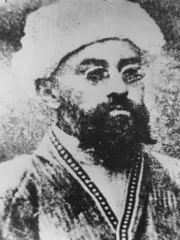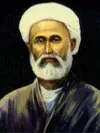
Biography
Saidahmad Hasankhoja ugli Siddiqiy, known by the pen name Ajziy, was born in 1864 (some sources say 1865) in the village of Halvoyi near Samarkand, in what is now the Jomboy district, into a craftsman’s family. He lost his father early and grew up with his grandfather; to earn a living he was apprenticed to a watchmaker.
He studied in madrasas of Samarkand and Bukhara, mastered Arabic, Persian and Azerbaijani, and later learned Russian. In 1901 he set out on the hajj, then travelled to the Caucasus, Arab lands and Russian cities; for a time he was an interpreter at the Russian embassy in Jeddah. In the Caucasus he came to know the Azerbaijani press, and his poems appeared in the magazines “Molla Nasreddin” and “Dirilik”.
Back in Samarkand he opened a new-method school in Halvoyi and taught there, and he compiled textbooks for schools. The school he built still stands and bears his name. In 1908–1910 he translated stories by Leo Tolstoy, fables by Ivan Krylov and Nikolai Gogol’s “The Overcoat” into Uzbek and Tajik; in 1914 he opened a bookshop called “Zarafshon” in Samarkand.
He began writing poetry in the 1880s, working in Tajik, Azerbaijani and Uzbek in a manner close to Bedil and Fuzuli. In the dastan “Mir’oti ibrat” he described the condition of Turkestan and ways out of it, arguing that a nation without learning, a state, a language and law has no future; in “Anjumani arvoh” he criticised the stagnation of the khanate and its officials. According to Tajik encyclopedic sources, in 1914 the clergy of Bukhara and Samarkand declared him an unbeliever for this poem. The verse collections “Ganjinai hikmat” and “Ayn ul-adab” are also his.
After the February Revolution of 1917 he took part in public life; in 1918–1921 he worked in the Samarkand regional justice department (as commissioner of justice). From 1922 he returned to teaching. He helped to set up the Samarkand satirical magazines “Mashrab” and “Mulla Mushfiqiy”, published in Uzbek and Tajik, and the newspaper “Zarafshon”, where he printed satire under the signatures Mayna, Ginagina, Shashpar, Tir, Gumnom and Olmos.
Ajziy died in Samarkand in 1927. His legacy was collected and prepared for publication by the literary scholar Begali Qosimov: a volume of selected works appeared in 1973, and “Ibrat, Ajziy, Sufizoda. Selected Works” in 1999.
Career
- Zarafshon newspaperActive participant in founding the newspaper, contributor · Samarkand
- Samarkand regional justice departmentCommissioner of justice · Samarkand · 1918–1921
Life path
- 1864Born in the village of Halvoyi
Born in a village near Samarkand into a craftsman’s family (some sources give 1865).
- 1880sBegins writing poetry
Wrote verse in Tajik, Azerbaijani and Uzbek.
- 1901Hajj and travels
After the hajj he visited the Caucasus, Arab lands and Russian cities; for a time he was an interpreter at the Russian embassy in Jeddah.
- Early 1900sNew-method school in Halvoyi
Opened a new-method school in his village and taught there; the school now bears his name.
- 1908–1910Translations of Russian authors
Translated stories by Tolstoy, fables by Krylov and Gogol’s “The Overcoat” into Uzbek and Tajik.
- 1912The dastan “Anjumani arvoh”
Published a dastan criticising the stagnation of the khanate and its officials.
- 1914The dastan “Mir’oti ibrat” and the collection “Ganjinai hikmat”
A dastan on the state of Turkestan and a verse collection appeared; the same year he opened the “Zarafshon” bookshop in Samarkand.
- 1918–1921Samarkand regional justice department
Served as commissioner of justice.
- 1922Return to teaching
Taught at school again and took part in launching Samarkand satirical magazines and the newspaper “Zarafshon”.
- 1927Death
Died in Samarkand.
Works
- “Mir’oti ibrat” (1914)Dastan
An allegorical dastan about the state of Turkestan and the ways out of it.
- “Anjumani arvoh” (1912)Dastan
A dastan criticising the stagnation of the khanate and its officials.
- “Ganjinai hikmat” (1914)Verse collection
A collection of poems of counsel (“Treasury of Wisdom”).
- “Ayn ul-adab”Verse collection
“Source of Good Manners”, a collection of poems.
- Translation of “The Overcoat” (1926)Translation
The Uzbek translation of Gogol’s story was printed in the journal “Maorif va o‘qituvchi”.
- Satirical piecesSatire
Printed in the magazines “Mashrab” and “Mulla Mushfiqiy” under signatures such as Mayna, Tir, Gumnom and Olmos.
Legacy
Ajziy is one of the figures of the national revival in Samarkand, who promoted learning through his verse, translations and a new-method school. The school in Halvoyi still bears his name, and his works were reissued at the end of the 20th century.
Era: Samarkand in the age of the jadids- Selected works published (1973)
- “Mir’oti ibrat” reprinted in the collection “Milliy uyg‘onish” (1993)